
One Throne, Two Stories: Love vs War Explained
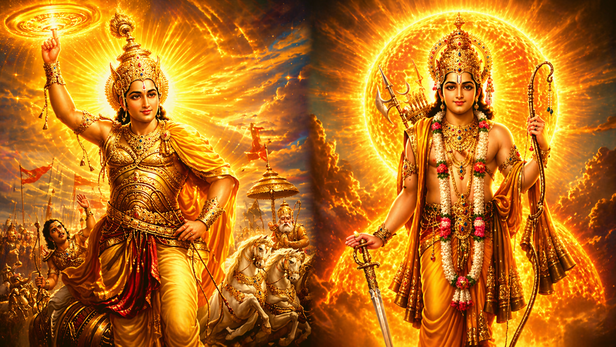
What if the same situation could lead to completely opposite outcomes? One throne. One kingdom. One decision. In one story, brothers were ready to give up power for each other. In another, brothers were ready to destroy everything for it. Why? The answer lies not in the throne but in the mindset behind it. Because sometimes, it’s not what you fight for it’s how you choose to see it.
One Throne, Two Different Mindsets
Both epics revolve around a throne. But the reactions were completely different. In the Ramayana, the throne became a symbol of duty, not desire. In the Mahabharata, it became a symbol of power and control. This shows a simple truth situations don’t create conflict, mindsets do. The same opportunity can lead to peace or war depending on how it is viewed. When power is seen as responsibility, it unites. When seen as possession, it divides.
When Love Becomes Greater Than Power
Bharata had the chance to rule the kingdom. But instead of accepting power, he chose devotion. He placed Lord Rama’s sandals on the throne and ruled as a caretaker. This act was not weakness it was strength. It showed that relationships matter more than authority. In today’s world, people often fight for position. But Bharat’s choice reminds us that true greatness lies in letting go when needed. Love, when genuine, removes the need for conflict.
When Ego Turns Desire Into War
In contrast, Duryodhana could not accept sharing power. His desire for control turned into ego, and ego turned into war. Even when offered peace, he refused. This shows how dangerous unchecked ambition can be. It blinds judgment and destroys relationships. The Mahabharata is not just a story of war it is a warning. When respect disappears and ego takes over, even families can fall apart.
The Hidden Truth Behind Both Stories
The real difference between these epics is not the throne it is emotion. In Ramayana, love and respect guided decisions. In Mahabharata, ego and insecurity controlled actions. This is the hidden truth. Every conflict in life follows the same pattern. When people focus on understanding, problems get solved. When they focus on winning, conflicts grow. These stories mirror our lives. The outcomes we face are often shaped by the emotions we choose to act on.
The Lesson That Still Applies Today
Today, we may not fight wars for kingdoms, but we fight for status, success, and recognition. The lesson remains the same. Wherever there is greed for control, conflict will follow. Wherever there is respect and understanding, peace will grow. The choice is always ours. We can create our own Ramayana or our own Mahabharata through our actions. Every decision becomes a turning point. The question is will you choose love or ego?
Unlock insightful tips and inspiration on personal growth, productivity, and well-being. Stay motivated and updated with the latest at My Life XP.
Frequently Asked Questions (FAQs)
1. What is the main difference between Ramayana and Mahabharata?
The core difference lies in values. The Ramayana shows sacrifice, love, and duty, while the Mahabharata highlights conflict, ego, and consequences of greed.
2. Why did Mahabharata war happen?
The war happened mainly due to the ego and greed of Duryodhana, who refused to share power and chose conflict over peace.
3. Why didn’t Bharat take the throne in Ramayana?
Bharata refused the throne out of love and respect for Lord Rama, showing that relationships were more important than power.
4. What lesson do these two epics teach us?
They teach that mindset matters more than situations. Love and respect lead to peace, while ego and greed lead to destruction.
5. Is the throne really the cause of conflict?
No, the throne is just a symbol. The real cause is how people think about power—whether they see it as responsibility or control.