
Phalgun Purnima 2026 Meets Chandra Grahan: Blessing or Warning
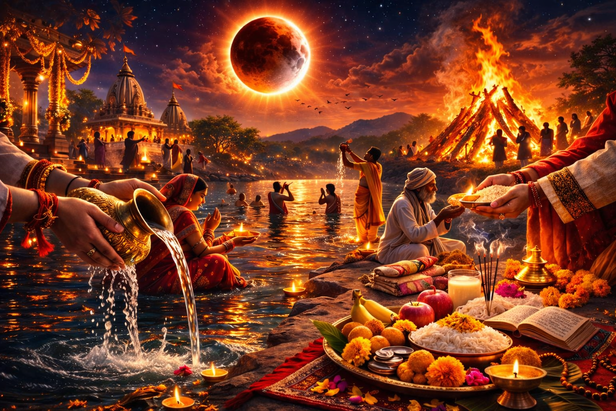
A Chandra Grahan occurs when Earth comes between the Sun and the Moon, casting a shadow on the Moon. Scientifically, it is a natural celestial event. Spiritually, however, it holds profound meaning in Hindu tradition. In 2026, this eclipse falls on Phalgun Purnima, the full moon associated with Holika Dahan, devotion, and blessings of Goddess Lakshmi. When an eclipse and a sacred festival combine, the day becomes spiritually charged. Devotees see it as a powerful time for reflection, mantra chanting, charity, and inner purification. Let us understand why this eclipse is considered special.
Rare Eclipse on Phalgun Purnima
Phalgun Purnima marks the victory of devotion over evil, remembered through the story of Prahlad and Holika. When a lunar eclipse happens on this sacred night, many believe spiritual energies become intense. Scriptures say full moons already amplify emotions and karma. An eclipse adds a layer of cosmic cleansing. Devotees use this time for silent prayers, mantra chanting, and meditation. Instead of fear, it becomes a night of awareness and spiritual awakening. The combination of festival energy and eclipse shadow makes March 3, 2026 deeply symbolic.
Connection With Holika Dahan
Phalgun Purnima is also the night of Holika Dahan, when bonfires symbolize the burning of negativity. The eclipse occurring near this ritual strengthens the meaning of destruction of ego and darkness. Just as Holika was defeated and Prahlad’s faith survived, the eclipse reminds people that truth remains even in shadow. Many spiritual teachers explain that eclipse time is best for internal cleansing, while Holika fire represents external cleansing. Together, they create a powerful moment to let go of fear, anger, and old habits.
Mythological Link to Rahu and Ketu
According to Hindu mythology, eclipses occur when Rahu and Ketu swallow the Moon. The story comes from the Samudra Manthan episode, where Rahu disguised himself to drink nectar. When exposed, Lord Vishnu cut him in half, but he became immortal. During eclipses, Rahu is believed to temporarily capture the Moon. Spiritually, this symbolizes illusion covering truth. Devotees chant mantras during the eclipse to overcome confusion and karmic blockages. The myth reminds us that shadows are temporary, but light always returns.
Lakshmi Blessings on a Full Moon
Phalgun Purnima is also associated with Goddess Lakshmi, symbol of prosperity and abundance. Many households perform prayers for wealth and harmony on this day. Though eclipses are traditionally considered sensitive periods, spiritual experts say sincere chanting during this time multiplies benefits. Instead of beginning new tasks, devotees focus on gratitude and charity. Donating food, clothes, or money after the eclipse is believed to remove financial obstacles. The rare alignment of full moon devotion and eclipse intensity makes this night spiritually rich and meaningful.
Scientific and Spiritual Balance
Astronomically, a lunar eclipse happens when Earth blocks sunlight from reaching the Moon. It is safe to watch and does not harm the eyes. Scientists explain it as a predictable orbital alignment. Spiritually, Hindus observe fasting, avoid eating during the eclipse, and chant sacred mantras. Both science and spirituality offer different perspectives. One explains how it happens. The other explains what it means emotionally and culturally. Understanding both views allows people to respect tradition while appreciating astronomical beauty.
Goddess Lakshmi on a Bright Full Moon Night
March 3, 2026, is not just a date on the calendar. It is a rare meeting of Chandra Grahan and Phalgun Purnima, blending science, mythology, and devotion into one powerful night. For some, it will be a celestial event to photograph. For others, it will be a sacred moment to pray, fast, and reflect. Whether you see it through astronomy or faith, the message remains beautiful: even when the Moon is covered in shadow, it never stops shining. This eclipse invites us to release negativity, strengthen devotion, and welcome light back into our lives.
Unlock insightful tips and inspiration on personal growth, productivity, and well-being. Stay motivated and updated with the latest at My Life XP.
Frequently Asked Questions (FAQs)
1. When is the Chandra Grahan on Phalgun Purnima in 2026?
The Chandra Grahan will occur on March 3, 2026, coinciding with the sacred night of Phalgun Purnima, which is also associated with Holika Dahan rituals.
2. Why is this lunar eclipse considered spiritually important?
This eclipse falls on a highly sacred full moon. In Hindu belief, when an eclipse happens on a festival night, spiritual energies are believed to intensify, making prayers and mantra chanting more powerful.
3. Is it safe to watch the lunar eclipse?
Yes. A lunar eclipse is completely safe to view with the naked eye. Unlike a solar eclipse, it does not harm your vision.
4. What should devotees do during Chandra Grahan?
Many devotees observe fasting, chant mantras, meditate, and avoid eating during the eclipse period. After it ends, they take a bath and perform charity.
5. Can we perform Lakshmi Puja on this day?
Yes, but most traditions suggest performing prayers either before the eclipse begins or after it ends. Chanting during the eclipse is considered especially beneficial.