
Was Mahabharata a Game of Shiva and Shakti?
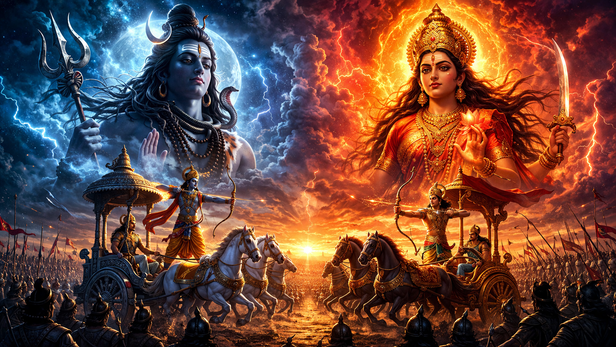
What if the Mahabharata is not just a story of war but a divine design? Most people see it as a battle between right and wrong.
But what if it was something deeper a cosmic play between Shiva and Parvati? A beginning shaped by grace and an ending sealed by destruction. From the birth of a dynasty to its complete destruction everything may have been part of a larger plan. And once you see it this way Mahabharata feels completely different.
The Curse That Created a Dynasty
The story begins in a mystical forest where Shiva and Parvati created a powerful illusion. Anyone entering would transform into a woman. King Ila unknowingly entered and was transformed. When he prayed for relief, Parvati softened the curse. Ila could now switch between male and female forms each month, but would forget the other state. During one such phase, Ila met Budha, son of the Moon, and their union gave birth to a lineage. This marked the beginning of the Chandravansh a dynasty born not from power, but from divine intervention and transformation.
Grace Built the Beginning
The Chandravansh did not begin through conquest or war. It began through compassion. Parvati, representing Shakti, chose grace over complete punishment. This single decision allowed a new lineage to emerge. It shows how creation often starts with softness, not force. The dynasty grew, carrying divine influence within it. This was not just a family line it was a spiritual continuation. Grace became its foundation. And this is important, because what begins with Shakti’s blessing often carries a deeper purpose beyond human understanding.
When Power Turns Into Ego
As time passed, the Chandravansh expanded. Kings became powerful, kingdoms flourished, and influence spread. But with growth came ego. The same lineage that started with grace slowly moved towards imbalance. Conflicts increased, pride took over, and dharma began to weaken. This is a pattern seen throughout history what begins in purity can drift into chaos. The Mahabharata war was not sudden. It was the result of years of imbalance. When power loses direction, destruction becomes inevitable.
The Night Rudra Took Over
On the final night of the war, something extraordinary happened. Ashwatthama, filled with rage, prayed to Shiva. In response, Shiva entered him as Rudra the force of destruction. What followed was not just revenge. It was annihilation. Warriors were defeated in ways beyond human capability. This was not Ashwatthama alone. It was Rudra acting through him. Even Krishna later revealed that this act was not human it was divine justice unfolding.
The End Was Always Planned
The same dynasty that began with Shakti’s grace ended with Shiva’s destruction. This completes the cycle. Creation and destruction are not opposites they are connected. What starts must end. What rises must fall. The Mahabharata was not just a war. It was a reset. A necessary ending to restore balance. And this is the deeper truth destruction is not always negative. Sometimes, it clears the path for a new beginning.
Unlock insightful tips and inspiration on personal growth, productivity, and well-being. Stay motivated and updated with the latest at My Life XP.
Frequently Asked Questions (FAQs)
1. Was the Mahabharata really guided by divine forces?
Many interpretations suggest that the events of the Mahabharata were influenced by higher cosmic forces. The roles of Shiva and Parvati are often seen symbolically, representing creation (Shakti) and destruction (Rudra), forming a complete cycle.
2. What is the significance of Chandravansh in this story?
Chandravansh is believed to have originated through divine intervention and transformation. It represents how a lineage can begin with grace and blessing, but over time, can drift toward imbalance if not guided by dharma.
3. How did Ashwatthama gain such immense power?
According to traditional beliefs, Ashwatthama invoked Shiva and became a vessel for Rudra’s destructive energy. This is why his actions during the final night of the war are described as beyond human capability.
4. Why was destruction necessary in the Mahabharata?
The destruction is often seen as a way to restore balance. When adharma increases beyond control, a reset becomes necessary. This reflects the natural cycle of creation, preservation, and destruction.