
Were the Pandavas the Real Culprits? Truth Revealed
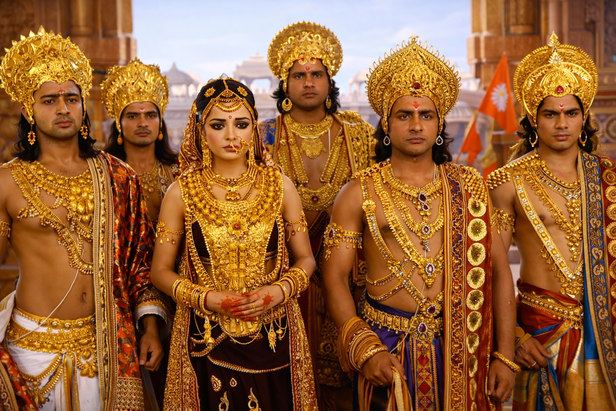
What if one of the most widely believed stories about Draupadi is not true at all? For years, people have accepted that her words triggered the Mahabharata war. But what if this belief itself is the real injustice? What if the truth was changed over time to shift blame onto her? Sometimes, history is not just recorded, it is reshaped to fit narratives that society finds convenient. And when that happens, the real story gets buried under assumptions. Understanding this truth can completely change how you see Draupadi, her strength, and the events that followed.
The Lie Society Still Believes
Many people believe that Draupadi insulted Duryodhana by calling him the “blind son of a blind father,” but this line is not found in the original Mahabharata by Maharshi Ved Vyasa. It is a later addition that became popular over time. This change in narrative subtly shifts the focus from the injustice she faced to blaming her for it. It creates the impression that her humiliation was a reaction to her words, rather than a grave wrongdoing. The real issue lies not in the past itself, but in how society reshapes stories and accepts them without questioning the deeper truth behind them.
When Silence Became the Real Crime
The most painful truth is not only what happened to Draupadi, but who chose to remain silent. The Pandavas, known for their strength and righteousness, did nothing in that crucial moment. Great warriors like Bhishma and Drona also stood still, bound by their own beliefs and limitations. This reveals a harsh reality that injustice is not sustained only by those who commit wrong, but also by those who witness it and stay quiet. Silence can become a form of support for wrongdoing. Even today, many injustices continue because people choose comfort over courage and remain silent instead of standing up for what is right.
The Question That Shook Everything
When Draupadi was dragged into the royal court, she did not remain silent or helpless. Instead of breaking down, she raised a powerful question that shook everyone present. She asked Yudhishthira how he could stake her after losing himself. This question was not just about her dignity, but about justice and logic. It challenged the very idea of dharma that the सभा claimed to protect. In that moment, Draupadi transformed from a victim into a fearless voice. Her courage exposed the hypocrisy around her. Even today, her question continues to inspire people to stand against injustice and speak without fear.
A Story That Still Repeats Today
Even today, when something wrong happens to a woman, society often asks what she did to deserve it. The blame shifts quickly, turning the victim into the accused. Just like Draupadi, many women are judged instead of being supported in difficult moments. Questions replace empathy, and silence replaces justice. This pattern reveals that the mindset has not changed as much as we believe. The story of Draupadi is not just a tale from the past. It reflects the reality of today’s world. That is why it feels uncomfortable, because deep down, we know it is still happening around us.
What This Story Teaches You
Draupadi’s story is not only about suffering, it is about awakening inner strength. It shows that staying silent during injustice only makes it stronger. Her courage reminds us to question what is wrong, even when it comes from people we trust or respect. She did not accept humiliation quietly, she raised her voice with clarity and dignity. This teaches that self respect is not given by others, it is protected by you. In life, support may not always come when you need it. That is why standing for yourself becomes your greatest power. Real strength begins the moment you choose not to stay silent.
Unlock insightful tips and inspiration on personal growth, productivity, and well-being. Stay motivated and updated with the latest at My Life XP.
Frequently Asked Questions (FAQs)
1. Did Draupadi really insult Duryodhana?
No, according to the original Mahabharata by Maharshi Ved Vyasa, there is no mention of Draupadi calling Duryodhana “blind son of a blind father.” This is believed to be a later addition.
2. Why is Draupadi’s story still relevant today?
Her story reflects how society often blames victims instead of questioning injustice, a pattern that still exists today.
3. What was Draupadi’s powerful question in the सभा?
She questioned Yudhishthira by asking how he could stake her after losing himself, challenging the logic and morality of the situation.
4. Who were responsible for Draupadi’s humiliation?
While Duryodhana and Dushasana committed the act, many believe that the silence of the Pandavas and elders also played a major role.
5. What lesson does Draupadi’s story teach?
It teaches that silence in the face of injustice is dangerous and that one must stand up for their dignity.