
What Hindu Scriptures Say About The Universe Will Shock You
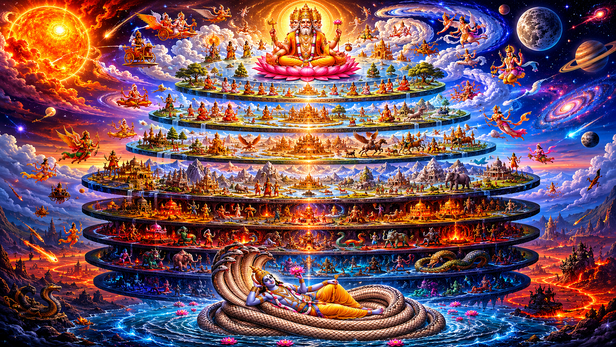
What if the universe is far bigger than galaxies, stars, and planets? What if ancient Hindu scriptures described invisible worlds long before modern science began exploring cosmic mysteries? The concept of the 14 Lokas is one of the most fascinating ideas in Hindu philosophy. These realms are not just places above or below Earth. They represent consciousness, karma, spiritual growth, temptation, and the eternal journey of the soul. From divine heavenly worlds to mysterious underground dimensions filled with Nagas and hidden powers, the 14 Lokas create a cosmic map unlike anything most people have ever imagined. And the deeper you explore them, the more mysterious they become.
The Cosmic Map Hidden Inside Hindu Scriptures
The idea of the 14 Lokas shows that ancient Hindu thinkers viewed the universe as multidimensional rather than limited to physical space alone. These realms are divided into higher lokas and lower lokas, each connected to different levels of consciousness and karma. Unlike simple ideas of heaven and hell, the lokas reflect spiritual evolution, emotional states, desires, wisdom, and illusion. This cosmic structure suggests that existence is layered far beyond what humans can normally perceive. For many people today, this concept feels surprisingly modern because it connects spirituality, psychology, and the universe into one deeply symbolic system of understanding life itself.
Why The Higher Lokas Fascinate Spiritual Seekers
The seven higher lokas are believed to represent increasing spiritual purity and divine awareness. Realms like Janaloka and Tapoloka are associated with enlightened sages, meditation, and sacred wisdom. At the very top stands Satyaloka, the realm of Lord Brahma and ultimate truth. Hindu philosophy describes these worlds as spaces where souls rise through spiritual discipline and positive karma. Unlike temporary worldly success, these lokas symbolize liberation from suffering and ignorance. For seekers exploring meditation and self-awareness today, the higher lokas feel deeply symbolic because they represent the soul’s longing to move beyond fear, attachment, and endless material distractions.
The Lower Lokas Carry A Deeper Meaning
Many people mistakenly think the lower lokas are simply “hell,” but Hindu scriptures describe them much differently. Realms like Sutala and Patala are mysterious, powerful, and sometimes even prosperous. They symbolize hidden desires, ego, illusion, and subconscious instincts buried deep within existence. Some lokas are ruled by Nagas, mystical beings connected with hidden knowledge and underground energies. These realms remind humans about the dangers of excessive attachment to power, pleasure, and material obsession. Rather than terrifying punishment zones, the lower lokas reflect the darker psychological and emotional layers of consciousness that every soul must eventually confront and understand.
Why Vishnu Resting On Sheshnag Matters
At the base of many cosmic illustrations, Lord Vishnu is shown resting peacefully upon Sheshnag in the cosmic ocean. This image carries profound symbolic meaning. Vishnu represents preservation, stability, and balance in the universe, while Sheshnag symbolizes infinity and endless cosmic time. Together, they reflect the idea that creation and destruction happen in continuous cycles. Even during chaos, the universe remains balanced through divine order. For spiritual thinkers, this image is deeply calming because it suggests that existence is not random. Behind every rise, fall, creation, and destruction, there is an eternal rhythm silently maintaining cosmic harmony.
Why The 14 Lokas Still Fascinate Modern Minds
In today’s world, people are constantly searching for deeper meaning beyond everyday life. That is why the concept of the 14 Lokas continues attracting attention online, in spiritual discussions, and through ancient artwork. Some people see them as literal dimensions, while others interpret them psychologically or spiritually. Interestingly, the idea of multiple realities and unseen dimensions also appears in modern scientific theories and philosophical debates. This connection makes Hindu cosmology feel surprisingly timeless. The lokas remind people that life may be much bigger than visible reality, encouraging curiosity about consciousness, karma, and the soul’s endless journey through existence.
Unlock insightful tips and inspiration on personal growth, productivity, and well-being. Stay motivated and updated with the latest at My Life XP.
Frequently Asked Questions (FAQs)
1. What are the 14 Lokas in Hinduism?
The 14 Lokas are the different planes of existence described in Hindu scriptures. They are divided into seven higher worlds and seven lower worlds that together form the cosmic structure of the universe.
2. What do the higher lokas represent?
The higher lokas symbolize spiritual growth, wisdom, meditation, enlightenment, purity, and closeness to divine consciousness.
3. What do the lower lokas symbolize?
The lower lokas represent material attachment, illusion, hidden desires, ego, subconscious instincts, and powerful underground energies.
4. Is Patala considered hell in Hinduism?
No. Patala is often misunderstood as hell, but Hindu scriptures describe it as a mysterious subterranean realm associated with Nagas, hidden treasures, and powerful energies.
5. Which is the highest loka in Hindu cosmology?
Satyaloka, also known as Brahmaloka, is considered the highest realm where Lord Brahma resides. It represents ultimate truth and liberation from rebirth.