
What If Your Problems Aren't the Real Problem?
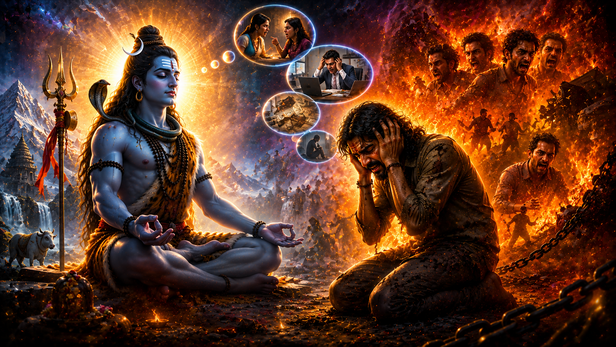
What if the thing disturbing you right now isn't actually the problem? Sounds impossible, doesn't it? Yet every day, people suffer not because of what happened, but because of what they imagine might happen next. A simple message, a missed call, a delayed reply, or a strange look from someone can create hours of anxiety. The situation stays the same. But the stories inside our minds become bigger and bigger. This powerful insight is at the heart of an ancient shift in understanding: life affects us far less than our interpretation of life.
And once you understand this, everything begins to change.
The World You See Is Not the World
Most people assume they see reality exactly as it is. But the mind works differently. Every experience passes through personal beliefs, past memories, fears, and expectations before it reaches our awareness. Two people can witness the same event and walk away with completely different conclusions. One sees opportunity while another sees danger. The event remains unchanged, but perception transforms it. This is why understanding your mind is so important. The world you experience is often a reflection of your inner programming rather than an objective picture of reality itself.
One Message, Many Realities
Imagine your boss sends a message: "See me in my cabin." Nothing more. Instantly, one employee worries about making a mistake. Another imagines receiving praise. A third fears losing their job. A fourth expects a promotion. Yet the reality has not changed. The message is identical for everyone. The difference lies in each person's interpretation. Their past experiences, confidence levels, and fears create unique mental stories. This simple example reveals how often people react not to facts, but to the meanings they assign to those facts.
The Movie Your Mind Creates
A two-second event can trigger a two-hour mental movie. Someone doesn't answer your call, and suddenly your mind creates endless possibilities. Maybe they're upset. Maybe something went wrong. Maybe you've done something terrible. None of these stories are necessarily true. Yet they feel real because the mind fills gaps with assumptions. This habit creates unnecessary stress and emotional exhaustion. Often, the suffering comes not from reality itself but from the fictional scenarios we continuously replay in our heads without realizing it.
Why Fear Loves Uncertainty
The human brain dislikes uncertainty. Whenever information is missing, the mind rushes to complete the picture. Unfortunately, it often fills the gaps with fear rather than facts. This survival mechanism once protected humans from danger. Today, it often creates anxiety instead. A delayed email becomes a crisis. A simple conversation becomes a threat. Understanding this pattern helps us regain control. The moment you recognize fear's tendency to exaggerate uncertainty, you begin separating reality from imagination and create space for calmer thinking.
The Hidden Power of Inner Programming
Every person carries invisible mental programming. Childhood experiences, social conditioning, successes, failures, and beliefs quietly influence perception. Someone with confidence sees challenges as opportunities. Someone filled with doubt sees the same challenges as threats. This programming determines how situations are interpreted long before conscious thinking begins. The good news is that mental programming can be changed. Awareness allows you to question automatic reactions and replace limiting beliefs with healthier perspectives. When inner programming shifts, the experience of reality shifts as well.
Learning to Question Your Thoughts
The next time stress appears, pause and ask a simple question: "Is this a fact or my interpretation?" This single habit can transform emotional reactions. Many worries disappear when examined closely because they are based on assumptions rather than evidence. Learning to challenge automatic thoughts creates mental clarity. Instead of becoming trapped inside emotional stories, you begin responding to situations with wisdom. This shift does not remove problems, but it prevents the mind from turning small issues into overwhelming crises.
The Shift That Changes Everything
True freedom begins when you realize that not every thought deserves your trust. The world becomes lighter when you stop treating every assumption as reality. Challenges still exist, but they no longer control your emotions. Instead of reacting automatically, you respond consciously. This is the essence of the Shift Sutra. Change your interpretation, and your experience changes. Change your inner world, and your outer world begins to look different too. The greatest transformation often starts not by changing circumstances, but by changing the lens through which you view them.
Unlock insightful tips and inspiration on personal growth, productivity, and well-being. Stay motivated and updated with the latest at My Life XP.
Frequently Asked Questions (FAQs)
1. What does "You see the world as you are" really mean?
It means that your thoughts, beliefs, emotions, and past experiences influence how you interpret reality. Often, what you experience is shaped more by your mindset than by the actual situation.
2. Why do different people react differently to the same event?
Every person has a unique history, personality, and set of beliefs. These internal factors act like filters, causing people to interpret the same situation in completely different ways.
3. Is the problem always in our interpretation?
Not always. Real problems do exist. However, much of our emotional suffering comes from the stories we create around those problems rather than the facts themselves.
4. What is the Shift Sutra trying to teach?
The Shift Sutra teaches that changing your perspective can change your experience. When you learn to observe your thoughts instead of blindly believing them, life becomes less stressful and more peaceful.
5. Why does the mind assume negative outcomes so quickly?
The human brain is naturally wired to look for threats and dangers. This survival mechanism often causes people to imagine worst-case scenarios even when there is little evidence.