
What Lies Behind Dhumavati’s Covered Face?
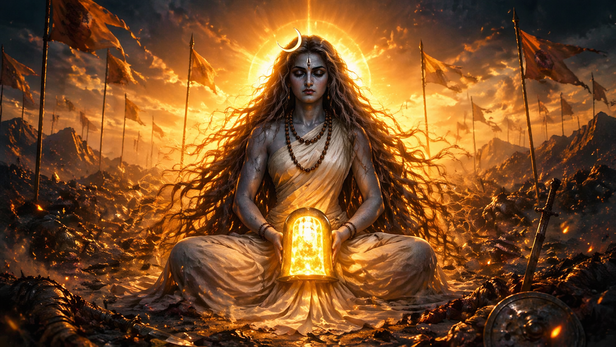
What kind of goddess hides her own face? In a world where divinity is often shown as beauty, light, and perfection, Dhumavati stands in complete contrast. No ornaments. No charm. No celebration. Only silence, emptiness, and a veiled presence. Many fear her, some even avoid looking at her. But this fear is not about her it is about what she represents. She reflects the parts of life people avoid: loss, endings, and truth without illusion. Her covered face is not weakness, but a reminder that reality is not always beautiful. Sometimes, what we fear the most is what we need to understand the most.
THE FACE THAT HIDES ILLUSION
Dhumavati covers her face not out of shame, but to remove illusion. Most people are attached to outer beauty and form. Her hidden face breaks this attachment. It forces you to look beyond appearance. Because truth is not always beautiful it is raw and real. By hiding her face, she rejects superficial identity. This is her message: what you see is not always what exists. And what is hidden may carry deeper reality than what is visible.
THE SYMBOL OF EMPTINESS, NOT WEAKNESS
Many believe Dhumavati represents loss or misfortune. But in deeper understanding, she represents emptiness a state where all attachments are gone. This is not weakness. It is freedom. When nothing binds you, nothing controls you. Her widow form is symbolic of independence from all relationships and identities. She exists as pure being, without dependence. This challenges the idea that completeness comes from others. Instead, she shows that completeness can exist even in emptiness.
WHY PEOPLE FEAR HER
The fear around Dhumavati does not come from her it comes from what she represents. She reflects truths people avoid aging, loss, loneliness, and death. These are uncomfortable realities. So instead of understanding, people label her as inauspicious. But avoiding truth does not remove it. Her presence forces awareness. And awareness often feels uncomfortable before it becomes wisdom. This is why she is feared—not because she is negative, but because she is honest.
BREAKING THE MYTH OF “INAUSPICIOUS”
Calling Dhumavati inauspicious is a misunderstanding. Divinity cannot be limited to human ideas of good or bad. She represents a phase of life that is necessary but ignored the phase of endings. Every beginning needs an ending. Without it, growth is impossible. Her form reminds us that even loss has purpose. Even emptiness has meaning. She is not against life she completes it.
THE REAL LESSON FOR YOU
The deeper lesson of Dhumavati is acceptance. Life will bring loss, change, and endings. Instead of resisting, understanding them brings strength. When you stop depending on external things for happiness, you become stable. Her symbolism teaches resilience the ability to stand alone without fear. This is not easy, but it is powerful. Because true strength is not in holding on it is in letting go.
Unlock insightful tips and inspiration on personal growth, productivity, and well-being. Stay motivated and updated with the latest at My Life XP.
Frequently Asked Questions (FAQs)
1. Who is Maa Dhumavati?
Dhumavati is one of the Ten Mahavidyas and represents the aspect of life connected with emptiness, detachment, and ultimate truth. Unlike other goddesses, she is shown without beauty or adornment, symbolizing a state beyond illusion.
2. Why does Dhumavati cover her face?
The veiled face of Dhumavati is symbolic. It represents truth beyond appearance. By hiding her face, she removes the distraction of beauty and forces deeper understanding of reality.
3. Is Dhumavati considered inauspicious?
She is often misunderstood as inauspicious because she represents loss, endings, and isolation. However, in deeper spiritual meaning, these are necessary phases of life that lead to growth and transformation.
4. Why is Dhumavati associated with widowhood?
Dhumavati is depicted as a widow to symbolize complete independence and detachment. It reflects a state where identity is not dependent on relationships or external support.
5. Is it wrong or sinful to see or worship Dhumavati?
No, it is not inherently wrong. Such beliefs come from traditional interpretations and fear of her symbolism. In reality, understanding Dhumavati requires maturity, as she represents deeper and uncomfortable truths.
6. What life lesson does Dhumavati teach?
The biggest lesson is acceptance of reality. She teaches that life is not always perfect or beautiful, and true strength comes from embracing change, loss, and uncertainty.