What No One Tells You About Mahabharata’s Beginning
Noopur Kumari | Mon, 20 Apr 2026
What if the greatest war in history began with a decision no one questioned? Mahabharata didn’t start with weapons it started with a quiet choice rooted in love. A single emotional decision slowly turned into a generational conflict. The real twist is that the biggest mistake was so subtle, most people never notice it. It shows how small choices, when left unchecked, can grow into massive consequences over time. This story isn’t just about the past it’s a powerful reminder of responsibility, foresight, and how one decision today can shape the future forever.

Mahabharata
Image credit : ChatGPT(ai)
We often believe great disasters come from big, obvious mistakes. But reality is quieter and more dangerous. Sometimes, it’s the small emotional decisions that create the deepest cracks. A choice made in love, a promise made under pressure, a decision taken without thinking long-term and slowly, everything begins to shift. This is exactly how the Mahabharata began. Not with war, but with imbalance. Not with weapons, but with choices driven by emotion over wisdom. And once those choices were set in motion, they didn’t stay limited to one moment. They echoed across generations, until every wrong decision demanded its price.
![King Shantanu Meeting Ganga]()
King Shantanu’s life changed when he fell in love with Ganga. He accepted her condition without question, even when it went against his instincts. Later, his love for Satyavati led to another major decision that shaped the future of the kingdom. These choices were not wrong in intention, but they lacked foresight. When emotions guide decisions without balance, consequences follow silently. Shantanu’s story shows that even wise people can make choices that feel right in the moment but create long-term instability. And sometimes, those consequences are not immediate but inevitable.
To fulfill his father’s desire, Bhishma took a lifelong vow of celibacy. It was a moment of extreme sacrifice and loyalty. But this one decision created a major problem the lack of a stable heir. While the vow solved an immediate issue, it opened the door to future chaos. This is the hidden truth: not all sacrifices lead to balance. Some create deeper imbalance over time. Bhishma’s vow is respected, but its consequences shaped the entire Mahabharata. It reminds us that even noble decisions must be seen from a long-term perspective.
Dhritarashtra’s love for his son Duryodhana became his biggest weakness. He knew what was right, yet he chose silence. This silence allowed injustice to grow. When leaders ignore truth for personal attachment, it creates imbalance in the system. Duryodhana’s arrogance was not born overnight it was allowed to grow. This is how small negligence becomes a major crisis. Dhritarashtra’s story teaches that love without discipline becomes harmful. And when power is involved, the consequences are far greater than expected.
Duryodhana’s ego didn’t appear suddenly. It grew over time, fueled by comparison and insecurity. He couldn’t accept the success of the Pandavas. Instead of learning, he chose jealousy. And jealousy turned into hatred. This is a pattern we still see today. When ego is not controlled, it begins to destroy everything around it. Duryodhana’s biggest mistake was not his strength it was his inability to control his mind. His story shows that the real battle is always internal. Lose that, and everything else follows.
By the time the Pandavas reached Kurukshetra, the damage was already done. Every attempt for peace had failed. Krishna himself tried to prevent war, but injustice had grown too deep. At that point, war was no longer a choice it was a necessity. This is the final lesson of Mahabharata: when imbalance is ignored for too long, correction becomes painful. The battlefield was not just about victory it was about restoring dharma. And sometimes, to rebuild balance, destruction becomes unavoidable
Unlock insightful tips and inspiration on personal growth, productivity, and well-being. Stay motivated and updated with the latest at My Life XP.
1. Did Mahabharata really start with King Shantanu’s decisions?
Yes, the roots of Mahabharata trace back to King Shantanu. His personal decisions especially regarding marriage and succession created a chain of events that later led to conflict in the Kuru dynasty.
2. What was the biggest mistake that led to the war?
There wasn’t just one mistake. It was a series of small, emotional decisions like Bhishma’s vow, Dhritarashtra’s silence, and Duryodhana’s ego that gradually built up into a major crisis.
3. Why didn’t anyone stop the injustice earlier?
Many knew what was right, but chose silence due to attachment, fear, or duty. This allowed injustice to grow unchecked over time.
4. Was the Mahabharata war avoidable?
In the beginning, yes. But as wrong decisions kept piling up, the situation reached a point where war became unavoidable to restore balance and dharma.
5. What is the main lesson from Mahabharata’s beginning?
That small decisions matter. Choices made without foresight can create long-term consequences that affect not just individuals, but entire generations.
When Love Overruled Wisdom
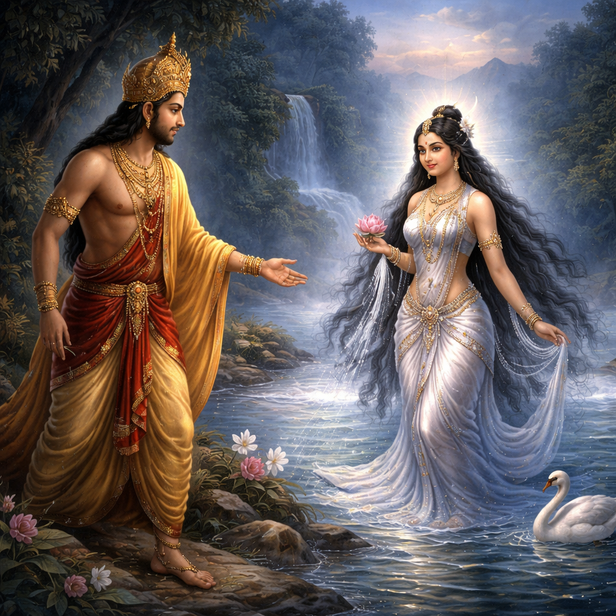
King Shantanu Meeting Ganga
Image credit : chatgpt(ai)
King Shantanu’s life changed when he fell in love with Ganga. He accepted her condition without question, even when it went against his instincts. Later, his love for Satyavati led to another major decision that shaped the future of the kingdom. These choices were not wrong in intention, but they lacked foresight. When emotions guide decisions without balance, consequences follow silently. Shantanu’s story shows that even wise people can make choices that feel right in the moment but create long-term instability. And sometimes, those consequences are not immediate but inevitable.
The Vow That Changed Everything
When Blind Love Became Dangerous
The Rise of Unchecked Ego
Why War Became the Only Option
Unlock insightful tips and inspiration on personal growth, productivity, and well-being. Stay motivated and updated with the latest at My Life XP.
Frequently Asked Questions (FAQs)
Yes, the roots of Mahabharata trace back to King Shantanu. His personal decisions especially regarding marriage and succession created a chain of events that later led to conflict in the Kuru dynasty.
2. What was the biggest mistake that led to the war?
There wasn’t just one mistake. It was a series of small, emotional decisions like Bhishma’s vow, Dhritarashtra’s silence, and Duryodhana’s ego that gradually built up into a major crisis.
3. Why didn’t anyone stop the injustice earlier?
Many knew what was right, but chose silence due to attachment, fear, or duty. This allowed injustice to grow unchecked over time.
4. Was the Mahabharata war avoidable?
In the beginning, yes. But as wrong decisions kept piling up, the situation reached a point where war became unavoidable to restore balance and dharma.
5. What is the main lesson from Mahabharata’s beginning?
That small decisions matter. Choices made without foresight can create long-term consequences that affect not just individuals, but entire generations.