
What Triggered Vishnu’s Endless Earth Avatars? Hidden Truth
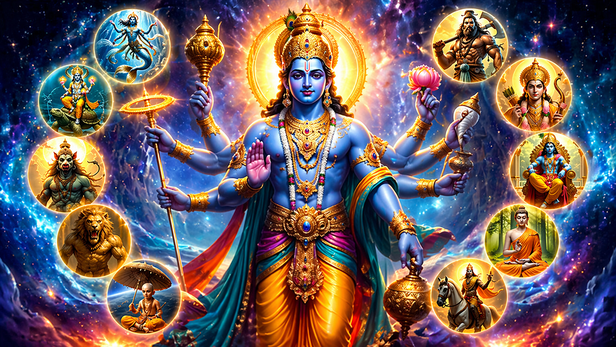
What if the repeated avatars of Lord Vishnu are not just divine play but connected to a deeper cosmic consequence? Many stories in mythology speak of balance, karma, and choices that shape destiny beyond time itself. And one such lesser-known narrative suggests that a powerful incident involving sacrifice, misunderstanding, and grief may have led to a divine consequence. A consequence that continues to echo across ages.
The Moment That Changed Everything
The story begins with conflict and confusion. In a moment of urgency, a powerful action was taken to restore balance. But what seemed necessary at that time carried emotional weight. In many spiritual narratives, even actions taken for protection are not free from consequence. This moment becomes the turning point where divine intent and cosmic law intersect. It is not about blame, but about the complexity of duty, timing, and perception in higher realms of existence.
The Curse and Its Meaning
According to the tale, grief transformed into anger, and anger became a curse. This curse is often described as the reason behind repeated earthly manifestations of divinity. But symbolically, it reflects something deeper. It suggests that even divine forces engage with the law of cause and effect. Every action, no matter how pure the intention, carries impact. The “curse” is not just punishment it is a representation of responsibility within cosmic balance.
Why Avatars Continue to Appear
The idea of repeated avatars like Rama, Krishna, or Narasimha is often seen as divine intervention in times of imbalance. But in this narrative layer, it also reflects continuity of responsibility. Whenever imbalance rises in the world, correction becomes necessary. The cycle of appearance symbolizes that duty does not end it evolves. Each form represents a response to a unique situation, shaped by time, emotion, and necessity rather than repetition alone.
The Deeper Spiritual Message
Beyond stories and interpretations lies a simple teaching: every action has depth. Even powerful beings are part of universal balance. The narrative reminds us that awareness, compassion, and timing matter more than force. Whether taken literally or symbolically, it encourages reflection on responsibility and consequence. It teaches that higher wisdom is not about avoiding action but about acting with complete awareness of its ripple effects.
Unlock insightful tips and inspiration on personal growth, productivity, and well-being. Stay motivated and updated with the latest at My Life XP.
Frequently Asked Questions (FAQs)
Q1. Are Vishnu’s avatars really because of a curse?
Different traditions explain avatars differently. Some stories describe symbolic events or moral lessons, while mainstream belief sees avatars as divine appearances to restore balance, not as punishment.
Q2. Why does Vishnu take multiple avatars?
In Hindu philosophy, Vishnu incarnates whenever there is a rise of adharma (imbalance) to restore dharma (order and righteousness).
Q3. Are Rama and Krishna historical or symbolic?
They are considered both divine figures and deeply symbolic representations of ideals like duty, truth, and compassion. Interpretations vary across scholars and traditions.
Q4. Is Shukracharya’s curse mentioned in all scriptures?
No, this specific narrative appears mainly in folk storytelling and interpretive traditions, not in all primary scriptures.
Q5. What is the deeper message of these stories?
The core message is about karma, balance, and responsibility—showing that actions have consequences and harmony must always be restored.