When Garuda Challenged Hanuman Truth Will Shock You
Noopur Kumari | Fri, 24 Apr 2026
This story goes beyond strength it reveals the clash between ego and devotion. Garuda arrives with speed, power, and confidence, ready to prove superiority. In contrast, Hanuman stands calm, aware, and surrendered. One chooses to attack, the other simply responds. And in that brief moment, everything shifts. The outcome is not decided by force, but by control. It shows a deeper truth real power is not always about action; sometimes, it lies in stillness, awareness, and the ability to remain unmoved.

When Ego Faced Devotion
Image credit : ChatGPT(ai)
What happens when unmatched speed meets unshakable stillness? When pride challenges peace who truly wins? In a powerful encounter, Garuda known for his speed and strength decides to test the might of Hanuman. What follows is not a loud battle, but a silent revelation. No clash of force. No display of aggression. Just calm presence meeting intense power. And in that moment, everything changes. Because sometimes, true strength doesn’t need to prove itself it simply stands still and that is enough.
![Garuda’s Lightning Speed Attack]()
Garuda, known for his unmatched speed and divine strength, had heard stories about Hanuman’s power. But hearing was not enough he wanted proof. This moment reflects a common human tendency. We often question others’ abilities, driven by our own pride. Garuda’s challenge was not just curiosity it was ego seeking validation. He wanted to see if Hanuman truly deserved the praise he received. This set the stage for a powerful lesson.
![Hanuman in Calm Awareness]()
When challenged, Hanuman did not react with aggression. He simply opened his eyes, calm and composed. There was no anger, no need to prove anything. His words were simple his strength was not his own, but his Lord’s. This shows a deeper truth. Real power does not shout. It does not rush to defend itself. It remains steady, grounded, and aware. Hanuman’s stillness was not weakness it was complete control.
Garuda attacked with full force. His speed was like lightning, his strength capable of shaking mountains. It was a moment of pure intensity. But what happened next was unexpected. Hanuman did not move. He simply raised his hand and the attack stopped instantly. No struggle. No effort. This single action shocked Garuda. It showed that sometimes, the greatest strength is not in overpowering but in effortlessly neutralizing.
For the first time, Garuda felt something unexpected surprise. His power, which had never failed him, was stopped with ease. In that moment, realization began. Strength is not just about speed or force. It is about awareness, balance, and control. Hanuman did not defeat Garuda he awakened him. This is the difference between victory and understanding. One ends a battle, the other transforms it.
Hanuman never claimed victory. He never displayed pride. His strength came from devotion to Rama, not from ego. This is the core message of the story. Power without humility leads to conflict. Power with devotion leads to peace. Hanuman’s example shows that true greatness is not in proving yourself to others but in staying connected to something higher.
Unlock insightful tips and inspiration on personal growth, productivity, and well-being. Stay motivated and updated with the latest at My Life XP.
1. Who are Garuda and Hanuman?
Garuda is the divine eagle and mount of Lord Vishnu, known for speed and strength. Hanuman is the symbol of devotion, courage, and wisdom in Hindu tradition.
2. Is this story mentioned in original scriptures?
This story is found mainly in regional and devotional traditions. It is not a central narrative in major scriptures like the Ramayana but is shared to convey deeper spiritual lessons.
3. What was the purpose of Garuda’s challenge?
Garuda wanted to test Hanuman’s strength after hearing about his powers. It reflects how pride often seeks validation through comparison.
4. Why didn’t Hanuman react aggressively?
Hanuman represents calmness and self-control. His strength comes from devotion and awareness, not from the need to prove himself.
WHEN PRIDE SEEKS PROOF
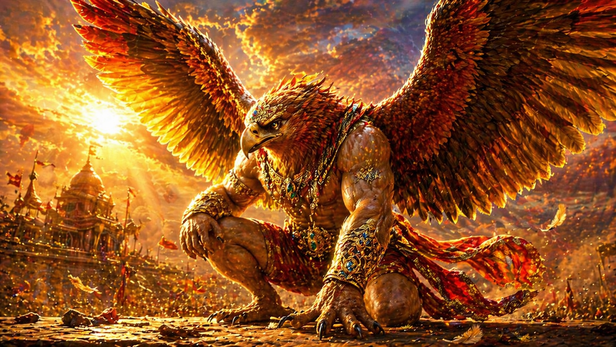
Garuda’s Lightning Speed Attack
Image credit : chatgpt(ai)
Garuda, known for his unmatched speed and divine strength, had heard stories about Hanuman’s power. But hearing was not enough he wanted proof. This moment reflects a common human tendency. We often question others’ abilities, driven by our own pride. Garuda’s challenge was not just curiosity it was ego seeking validation. He wanted to see if Hanuman truly deserved the praise he received. This set the stage for a powerful lesson.
THE STILLNESS OF TRUE POWER
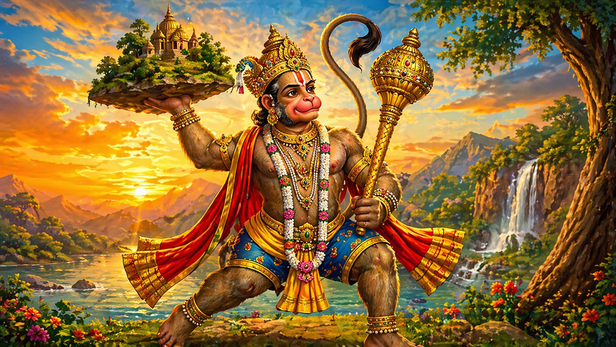
Hanuman in Calm Awareness
Image credit : ChatGPT(ai)
When challenged, Hanuman did not react with aggression. He simply opened his eyes, calm and composed. There was no anger, no need to prove anything. His words were simple his strength was not his own, but his Lord’s. This shows a deeper truth. Real power does not shout. It does not rush to defend itself. It remains steady, grounded, and aware. Hanuman’s stillness was not weakness it was complete control.
THE ATTACK THAT CHANGED EVERYTHING
THE REALIZATION OF TRUE STRENGTH
DEVOTION OVER POWER
Unlock insightful tips and inspiration on personal growth, productivity, and well-being. Stay motivated and updated with the latest at My Life XP.
Frequently Asked Questions (FAQs)
Garuda is the divine eagle and mount of Lord Vishnu, known for speed and strength. Hanuman is the symbol of devotion, courage, and wisdom in Hindu tradition.
2. Is this story mentioned in original scriptures?
This story is found mainly in regional and devotional traditions. It is not a central narrative in major scriptures like the Ramayana but is shared to convey deeper spiritual lessons.
3. What was the purpose of Garuda’s challenge?
Garuda wanted to test Hanuman’s strength after hearing about his powers. It reflects how pride often seeks validation through comparison.
4. Why didn’t Hanuman react aggressively?
Hanuman represents calmness and self-control. His strength comes from devotion and awareness, not from the need to prove himself.