
Everyone Follows This Rule, But Why Are Kids Kept Away From Dead Bodies?
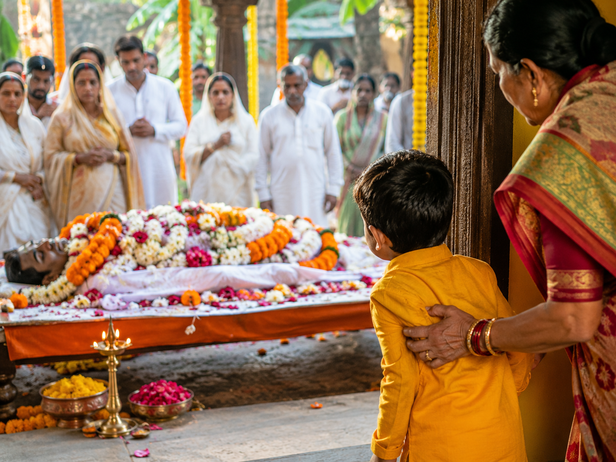
Most of us have seen it happen. When there's a death in the family, elders often tell children to stay away from the body or avoid funeral rituals altogether. But have you ever wondered why this age-old rule still exists? Is it simply tradition, or is there a deeper meaning behind it? Ancient Hindu texts, especially Garud Puran, offer an interesting explanation that combines emotions, spirituality, and practical wisdom.
It's a Rule Most Families Never Question
In many Indian households, children are often asked to stay in another room or remain at home during funeral rituals. Most elders simply say, “Children shouldn't be there.” Over time, this has become an unwritten rule that people follow without asking questions.
But behind this practice lies a belief that children are emotionally sensitive and can be deeply affected by witnessing death for the first time. Garud Puran, an important Hindu scripture associated with life, death, and the journey of the soul, suggests that young minds need protection during such moments.
Garud Puran Believes Children Are More Sensitive
According to traditional beliefs mentioned in Garud Puran, children have pure and impressionable minds. Unlike adults, they may not fully understand the concept of death. Witnessing a dead body can create fear, confusion, anxiety, or disturbing memories that may stay with them for years.
The idea is not to hide reality from children forever but to introduce difficult subjects at an age when they can emotionally process them. Many families still follow this guidance to protect a child's sense of security.
There Is Also a Spiritual Belief
Garud Puran describes death as a transition rather than an ending. According to traditional interpretations, the soul takes time to detach from the physical world after death. Because children are believed to have a pure and sensitive energy, some traditions advise keeping them away from these rituals.
It is important to remember that these are religious beliefs and not scientifically proven facts. Families follow them out of faith and cultural respect rather than fear.
The Emotional Impact Can Be Strong
Even adults struggle to process grief. For children, seeing a lifeless body without proper explanation can be overwhelming. Psychologists also agree that children may need age-appropriate explanations about death instead of sudden exposure to intense situations.
Some children may become fearful, have nightmares, or develop anxiety if they are not prepared for what they are seeing. This is one reason many families choose to shield younger children from funerals.
It's About Protection, Not Superstition
Many people assume this rule is based purely on superstition, but that's not always the case. At its core, the practice is often about protecting a child's mental and emotional well-being. Elders may not always explain the reason, but their intention is usually to provide comfort and safety.
As children grow older, families often begin involving them in rituals and explaining their significance. The goal is to help them understand death with maturity rather than fear.
Every Family Handles It Differently Today
Modern families have different approaches. Some choose to involve children in funeral ceremonies, while others wait until they are older. Experts generally recommend honest, age-appropriate conversations instead of completely hiding the truth.
The most important thing is to provide emotional support and answer a child's questions patiently. Whether a family follows Garud Puran traditions or a modern approach, compassion remains the key.
The practice of keeping children away from dead bodies has existed for centuries, but its purpose is often misunderstood. According to Garud Puran, it is less about fear and more about protecting a child's emotional and spiritual sensitivity. Whether viewed as tradition, faith, or practical wisdom, the underlying message remains the same: children deserve gentle guidance while learning about life's most difficult realities.
Unlock insightful tips and inspiration on personal growth, productivity, and well-being. Stay motivated and updated with the latest at My Life XP.