
Why Blowing a Conch During Shiv Puja Is Avoided
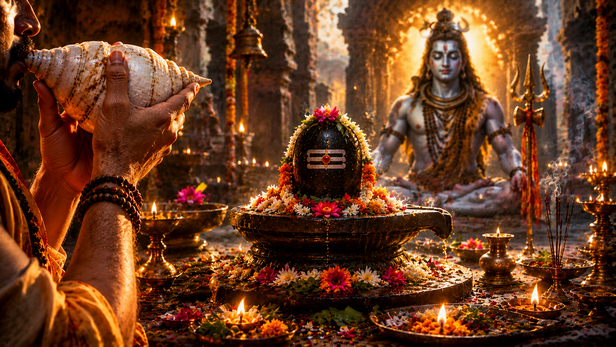
The sound of a conch shell is one of the most sacred sounds in Hinduism. It echoes through temples, homes, weddings, and religious ceremonies, symbolizing purity, prosperity, and divine blessings. But have you ever noticed something unusual? In most Hindu rituals, the conch is welcomed with reverence. Yet during Shiv Puja, this sacred object is traditionally absent. Why would an item considered so holy be avoided in the worship of Lord Shiva? The answer lies in an ancient mythological story involving a powerful demon, divine battles, unwavering devotion, and a tradition that has survived for centuries.
The Sacred Sound Heard Across India
The conch shell holds a special place in Hindu worship. Its sound is believed to purify the environment, remove negativity, and invite divine energy. From grand temple ceremonies to simple household prayers, the conch is used to mark auspicious beginnings. Many devotees associate its powerful vibration with spiritual awakening and positive transformation. Because of this, most people assume the conch is welcomed in every form of worship. However, when it comes to Lord Shiva, tradition follows a different path, creating one of the most intriguing mysteries in Hindu rituals.
The Demon Behind the Tradition
According to Hindu mythology, Shankhachuda was a mighty demon who gained extraordinary powers through intense penance. Blessed with divine protection, he became nearly invincible and eventually disturbed cosmic balance. The gods struggled to stop him and turned to Lord Shiva for help. A fierce battle followed, ending with Shiva defeating Shankhachuda. Ancient texts narrate that the conch shell originated from the remains of this powerful demon. Because of this association, many traditions believe that the conch should not be used during Shiva worship, making this practice deeply rooted in mythology.
Why Vishnu Worship Embraces the Conch
The story takes an unexpected turn when Lord Vishnu enters the narrative. Mythological traditions describe Shankhachuda as a devoted follower of Vishnu in a previous birth. Because of this connection, the conch became one of Vishnu's most sacred symbols. It is often seen in Vishnu's hands and is closely linked with Goddess Lakshmi, prosperity, and divine blessings. This explains why the conch is celebrated during Vishnu worship, yajnas, and auspicious ceremonies. The same object that is avoided in Shiv Puja becomes a symbol of devotion and purity in Vaishnav traditions.
The Other Offerings Shiva Refuses
The conch is not the only item traditionally avoided during Shiv Puja. Tulsi leaves, which are considered highly sacred in Vishnu worship, are generally not offered to Shiva. Mythological stories connect Tulsi with Vrinda, the devoted wife of Shankhachuda. Similarly, Ketaki flowers are also avoided because of another famous legend involving Lord Shiva. These traditions highlight how mythology shapes ritual practices. Every offering carries symbolic meaning, and understanding these stories helps devotees appreciate the deeper spiritual significance behind Hindu worship customs.
The Simplicity That Defines Shiva Worship
Unlike elaborate rituals associated with some forms of worship, Shiv Puja is often marked by simplicity and heartfelt devotion. Devotees perform Abhishek using water, milk, curd, honey, ghee, and sugar. Bel leaves, dhatura flowers, ak flowers, and white sandalwood are considered especially dear to Lord Shiva. Instead of the sound of a conch, the atmosphere resonates with bells and the powerful chant of "Om Namah Shivaya." This simplicity reflects Shiva's nature as the ascetic deity who values sincerity and devotion above material offerings.
Can You Still Keep a Conch at Home?
Although it is traditionally not used during Shiva worship, the conch remains a highly respected spiritual object. Many Hindu households keep a conch in their prayer room as a symbol of purity, positivity, and divine energy. It is often placed in the northeast direction and treated with reverence. Devotees believe its presence creates an auspicious atmosphere and attracts blessings. The tradition does not discourage keeping a conch at home; it simply distinguishes between its role in general worship and its specific absence in rituals dedicated to Lord Shiva.
The Hidden Lesson Behind the Tradition
The story of the conch teaches an important lesson about Hindu traditions. Rituals are not merely customs passed down through generations; they often preserve ancient stories, spiritual symbolism, and cultural wisdom. Understanding the reasons behind these practices transforms worship from routine action into meaningful devotion. Whether one views the story historically, spiritually, or symbolically, it reveals the rich depth of Hindu mythology. Sometimes, the most fascinating truths are hidden within the traditions we follow without ever questioning why.
Unlock insightful tips and inspiration on personal growth, productivity, and well-being. Stay motivated and updated with the latest at My Life XP.
Frequently Asked Questions (FAQs)
1. Why is the conch shell generally not used in Shiv Puja?
According to a popular Hindu mythological belief, the conch shell is associated with the demon Shankhachuda, who was defeated by Lord Shiva. Because of this connection, many traditions avoid using the conch during Shiva worship.
2. Is it forbidden to blow a conch during Shiv Puja?
It is not a universal prohibition across all Hindu traditions. However, many devotees and temples follow the custom of not blowing a conch or offering water through it during Shiv Puja due to the associated mythology.
3. Who was Shankhachuda?
Shankhachuda was a powerful demon mentioned in Hindu scriptures. Through penance and divine blessings, he gained immense strength before eventually being defeated by Lord Shiva to restore cosmic balance.
4. How is the conch connected to Shankhachuda?
Ancient mythological accounts state that the conch shell originated from the remains of Shankhachuda after his death. This belief forms the basis of the tradition surrounding its absence in Shiva worship.
5. Why is the conch considered sacred in Vishnu worship?
Shankhachuda is believed to have been a devoted follower of Lord Vishnu in a previous birth. As a result, the conch became one of Vishnu's sacred symbols and is closely associated with prosperity, purity, and divine blessings.