
Why Brahma’s Sons Chose Childhood Forever
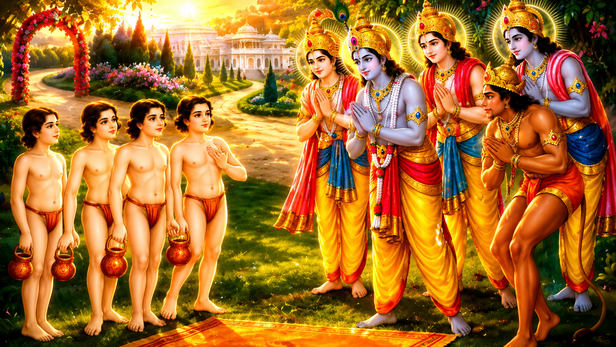
In every family, children are expected to follow their parents’ wishes. But imagine the shock if the very first sons in creation refused their own father’s command. Not out of anger. Not out of ego. But because they wanted something greater than the universe itself. After creating worlds, mountains, oceans, and time, Brahma believed the hardest part of creation was over. But he never expected the biggest challenge to come from his own sons the four divine child sages known as Sanaka, Sanandana, Sanatana, and Sanat Kumara.
When Creation Finally Began
After defeating the chaos created by Madhu and Kaitabha, Brahma started building the universe in its true form. He divided existence into fourteen worlds seven higher realms and seven lower realms. Then came the cycle of four yugas: Satya Yuga, Treta Yuga, Dwapar Yuga, and Kali Yuga. Massive divine mountains were created to stabilize the earth, while seven great islands shaped the world further. Among them, Jambu Dweep became the most important because it would later become the land of humans. Everything was ready. Only one thing was missing life itself.
The Four Sons Born From Thought
To expand creation, Brahma created four divine sons directly from his mind Sanak, Sanandan, Sanatan, and Sanat Kumar. These were not ordinary children. They carried extraordinary wisdom from birth itself. Brahma Ji gave them a powerful responsibility: become householders, create future generations, and help life spread across the universe. Everything seemed perfect. The creator believed his sons would complete the mission he had started. But hidden inside those innocent child forms was a decision that would shock even the creator of the universe.
The Refusal That Changed Everything
When Brahma Ji ordered them to enter worldly life and continue creation, the four Kumaras calmly refused. They said they did not want to be trapped in attachment, desire, and illusion. Instead of creating families, they wanted only one thing the truth of the Supreme Brahman. They chose meditation over marriage and spiritual freedom over worldly responsibility. This was the first great rejection in creation itself. Imagine Brahma Ji’s shock. The sons born to continue existence had decided to walk away from the world completely. And yet, their refusal came without anger only pure detachment.
Why They Chose To Remain Children Forever
The Kumaras then asked for a strange blessing they wanted to remain five-year-old children forever. But why five years old? Because a child at that age carries innocence without ego, desire, or greed. The Kumaras believed adulthood could pull them toward attachment and worldly temptation. By remaining children eternally, they could stay spiritually pure forever. This decision carried a deeper meaning hidden inside Hindu philosophy. Sometimes true wisdom is not becoming powerful, but becoming untouched by power itself. Their childlike form became a symbol of absolute purity and complete freedom from illusion.
The Anger That Was About To Be Born
Although Brahma granted the blessing, deep disappointment grew inside him. His grand vision for creation had suddenly stopped before it could truly begin. In that painful moment, a powerful anger started rising within Brahma Ji an anger so intense that it would soon give birth to a force connected with destruction itself. The universe had just begun, yet conflict had already entered creation. This moment teaches something deeply human: even divine beings experience disappointment when expectations break. But sometimes, destiny changes direction through refusal, not obedience.
Unlock insightful tips and inspiration on personal growth, productivity, and well-being. Stay motivated and updated with the latest at My Life XP.
Frequently Asked Questions (FAQs)
1. Who were the four sons of Brahma Ji?
The four mind-born sons of Brahma were Sanaka, Sanandana, Sanatana, and Sanat Kumara. Together, they are known as the Four Kumaras in Hindu mythology.
2. Why did the Kumaras refuse Brahma Ji’s command?
The Kumaras refused because they did not want to become trapped in worldly attachment, desires, and illusion. They chose spiritual knowledge and devotion over family life and material creation.
3. Why did the Kumaras want to remain children forever?
They believed the innocence of a five-year-old child is free from ego, greed, and worldly temptation. Remaining children symbolized eternal purity and detachment from material desires.
4. What was Brahma Ji’s reaction to their refusal?
Although Brahma Ji granted their wish, he became deeply disappointed and angry because his plan to expand creation had suddenly stopped. This anger later gave rise to powerful cosmic consequences.
5. What is the deeper meaning behind this story?
The story represents the conflict between worldly duty and spiritual freedom. It teaches that true wisdom sometimes means walking away from attachment to seek higher truth.