
Why Even Shiva Did Not Forgive Ravana
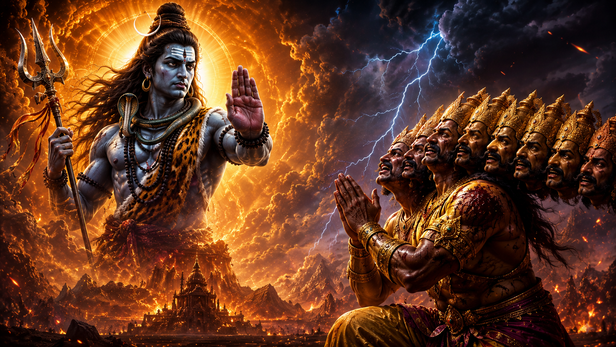
Most people believe Ravana’s greatest crime was abducting Goddess Sita. But according to a powerful spiritual belief connected to Sanatan tradition, that was not his biggest sin. Because Ravana committed something far deeper. Something that affected not just one person but the faith of generations. Despite being one of Lord Shiva’s greatest devotees, despite sacrificing his own heads in devotion, despite possessing immense knowledge and power, Ravana still could not escape the consequences of one action. And according to this belief, even Lord Shiva refused to forgive him completely. The reason behind that punishment reveals a terrifying spiritual lesson many people still overlook today.
Ravana Was Not an Ordinary Villain
Ravana was not simply a cruel king without wisdom. Scriptures describe him as a highly intelligent scholar, powerful ruler, musician, and one of Lord Shiva’s greatest devotees. He performed severe penance and offered immense devotion to gain divine blessings. Many stories describe how he sacrificed his own heads repeatedly in worship and shook Mount Kailash through his strength. That is why Ravana’s downfall feels spiritually complex. A man with such knowledge, devotion, and power still destroyed himself through ego and misuse of dharma. His story reminds people that spiritual strength alone cannot protect someone who eventually misuses righteousness for selfish actions.
The Sin Was Bigger Than Personal Desire
According to spiritual belief, Ravana’s greatest mistake was not only kidnapping Sita Mata but the method he used to do it. He approached her disguised as a saintly figure asking for alms. In Sanatan Dharma, saints and sages are symbols of purity, trust, wisdom, and spiritual protection. By misusing that sacred appearance for deception, Ravana damaged society’s faith in one of its holiest identities. The effect was larger than one personal crime. It created fear, doubt, and suspicion around spiritual figures themselves. That is why some interpretations describe this act as a Mahapaap a sin whose consequences continue affecting society across generations.
Why Shiva Did Not Forgive Completely
One spiritual interpretation explains that sins are not judged only by personal intention but also by how deeply they damage society and faith. Mistakes done unknowingly may be forgiven through repentance. Even severe wrongdoing may eventually find mercy through realization and suffering. But actions that corrupt sacred trust and influence generations spiritually are believed to carry heavier consequences. Ravana’s devotion to Shiva was immense, but devotion alone could not erase the damage caused through misuse of dharma. This belief teaches that spirituality without righteousness becomes dangerous. True devotion is not only worship it is protecting truth, trust, and sacred values through actions.
The Story Still Feels Relevant Today
The deeper reason this story still emotionally connects with people is because trust remains one of society’s most fragile foundations. Whenever sacred roles, spiritual authority, or positions of respect are misused, public faith weakens slowly. People become more fearful, suspicious, and emotionally distant. Ravana’s story symbolically reflects what happens when power and intelligence lose moral direction. It shows how one selfish action can damage collective trust far beyond the immediate moment. That is why many spiritual teachers continue discussing Ravana not only as a villain defeated by Lord Rama, but also as a warning about ego, deception, and the misuse of sacred identity.
Devotion Without Humility Becomes Dangerous
Ravana possessed extraordinary qualities that could have made him spiritually महान. He was knowledgeable, powerful, disciplined, and deeply devoted. But slowly, ego began overpowering wisdom. Instead of protecting dharma, he began believing his intelligence placed him above moral boundaries. That transformation changed devotion into arrogance. His downfall teaches a painful lesson repeated throughout spiritual history knowledge without humility becomes destructive. Even the strongest person can collapse when ego replaces self-control. Ravana’s life is remembered not because he lacked greatness, but because he allowed pride to corrupt the greatness he already possessed. And that is what ultimately destroyed both his kingdom and spiritual peace.
Unlock insightful tips and inspiration on personal growth, productivity, and well-being. Stay motivated and updated with the latest at My Life XP.
Frequently Asked Questions (FAQs)
1. What was Ravana’s greatest sin according to this belief?
According to this spiritual interpretation, Ravana’s greatest sin was not only abducting Sita Mata, but disguising himself as a holy sage to commit deception. It symbolized the misuse of a sacred identity trusted by society.
2. Why is Ravana considered a great devotee of Lord Shiva?
Ravana was known for intense penance, deep spiritual knowledge, and extreme devotion toward Lord Shiva. Scriptures describe him as a brilliant scholar and powerful worshipper despite his eventual downfall.
3. Did Lord Shiva really refuse to forgive Ravana?
This idea comes from spiritual storytelling and interpretations shared in some devotional traditions. It symbolically explains that certain actions causing long-term damage to faith and trust carry extremely heavy consequences.
4. What is meant by Mahapaap in Sanatan Dharma?
Mahapaap refers to an extremely severe sin whose impact goes beyond personal harm and affects society, faith, morality, or spiritual values on a larger scale.