Why Even Shiva Worships Ganesha Before Certain Rituals (Belief Explained)
Deepak Rajeev | Wed, 15 Apr 2026
This article explores the belief linking Lord Shiva and Lord Ganesha, explaining why Ganesha is worshipped first in Hindu tradition. Rather than a literal act, it highlights a symbolic truth that clarity, wisdom and removal of inner obstacles must come before any action. The idea reflects a deeper philosophical principle about awareness preceding all beginnings.

Lord Shiva, Parvathi Devi, Lord Ganesha (Image Credit: AI)
In Hindu tradition, one principle appears so consistently across rituals, temples, and daily life that it almost feels universal: before any auspicious beginning, before any puja, journey or new chapter, the name of Ganesha is invoked first. This practice is so deeply embedded that it naturally leads to a fascinating and often misunderstood question- if Ganesha is worshipped before all, does that include even the gods themselves, including Shiva?
The answer, rooted in belief and symbolism rather than literal documentation, reveals something far more profound than a simple hierarchy of gods. It opens a window into how Hindu philosophy understands order, consciousness and the removal of obstacles- not just externally, but within the human mind.
![Lord Ganesha (Image Credit: AI)]()
According to widely known Puranic traditions, Ganesha’s position as the one who is worshipped first is not accidental. It is believed to have been established through a divine recognition of his unique qualities- intelligence, awareness and the ability to remove obstacles before they arise. One of the most popular narratives describes how Ganesha earned this status through wisdom rather than physical power. When asked to circle the world in a divine contest, while others rushed outward, Ganesha simply circled his parents, Shiva and Parvati, recognising them as the embodiment of the universe itself. This act was not just clever- it symbolised a deeper understanding of reality, one that placed awareness above action.
Impressed by this insight, it is believed that Shiva and the divine assembly granted Ganesha the status of being invoked first in all rituals, ensuring that no undertaking begins without clarity and alignment.
![Lord Shiva (Image Credit: AI)]()
It is important to clarify that there is no widely accepted primary scripture that explicitly states that Shiva performs rituals to worship Ganesha in the same way humans do. However, what exists across traditions is something more symbolic and philosophically rich. In many devotional interpretations, even Shiva- who represents pure consciousness- acknowledges the necessity of Ganesha’s principle before any action unfolds. This is not about a father worshipping a son in a literal sense, but about cosmic order, where every action must begin with clarity, removal of obstacles, and alignment of intention.
In this sense, the idea that “even Shiva worships Ganesha first” is a metaphorical expression, emphasising that no force, however powerful, bypasses the fundamental need for awareness and preparation before action.
Ganesha is known as Vighnaharta, the remover of obstacles, but this concept is often misunderstood as purely external. In deeper interpretation, the “obstacles” are not just problems in the world- they are confusion, ego, impatience and lack of focus within the individual. Before any meaningful action can take place, these internal barriers must be addressed. This is why Ganesha is invoked first: he represents the state of mind required to begin anything successfully. Without that clarity, even the most powerful effort can fail. When viewed this way, the belief that even Shiva aligns with Ganesha’s principle is not about divine hierarchy, but about universal truth: awareness must precede action.
The relationship between Shiva and Ganesha is one of the most symbolically rich dynamics in Hindu thought. Shiva represents pure, unchanging consciousness, while Ganesha represents applied intelligence- the ability to navigate the world with awareness and balance. Their connection reflects a deeper philosophical idea: consciousness alone is not enough; it must be expressed through intelligent action. And intelligent action must begin with the removal of confusion.
This is why, in many traditions, the idea of Ganesha being invoked first is seen as the activation of the mind before the execution of any task, even in a cosmic sense.
What makes this belief so powerful- and why it continues to resonate even in modern life- is that it reflects a universal human experience. Before starting anything meaningful, whether it is a career decision, a relationship, or a personal transformation, individuals often face internal resistance- doubt, distraction, fear or lack of clarity. The act of invoking Ganesha, in this context, becomes more than ritual. It becomes a psychological reset, a moment of alignment where the mind is prepared, focused, and stabilised before action begins.
This is why the idea that “even Shiva worships Ganesha first” continues to carry weight- not as a literal event, but as a reminder that no level of power or knowledge eliminates the need for clarity and readiness.
Ultimately, the belief that Shiva is linked to honouring Ganesha before certain rituals is not about rewriting divine roles, but about expressing a deeper truth through symbolic storytelling. It reinforces the idea that beginnings matter, and that the quality of a beginning is determined not by external conditions, but by the state of the mind. In that sense, Ganesha’s place at the start of every ritual is not just a tradition- it is a principle. And the suggestion that even Shiva aligns with this principle is a way of saying that this truth applies to all levels of existence. Because before anything truly begins, clarity must come first- and that is the essence of Ganesha.
Unlock insightful tips and inspiration on personal growth, productivity, and well-being. Stay motivated and updated with the latest at My Life XP.
The answer, rooted in belief and symbolism rather than literal documentation, reveals something far more profound than a simple hierarchy of gods. It opens a window into how Hindu philosophy understands order, consciousness and the removal of obstacles- not just externally, but within the human mind.
The Origin of “First Worship”: A Story Beyond Ritual
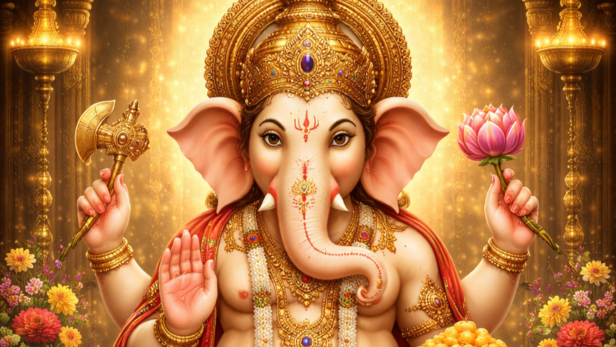
Lord Ganesha (Image Credit: AI)
According to widely known Puranic traditions, Ganesha’s position as the one who is worshipped first is not accidental. It is believed to have been established through a divine recognition of his unique qualities- intelligence, awareness and the ability to remove obstacles before they arise. One of the most popular narratives describes how Ganesha earned this status through wisdom rather than physical power. When asked to circle the world in a divine contest, while others rushed outward, Ganesha simply circled his parents, Shiva and Parvati, recognising them as the embodiment of the universe itself. This act was not just clever- it symbolised a deeper understanding of reality, one that placed awareness above action.
Impressed by this insight, it is believed that Shiva and the divine assembly granted Ganesha the status of being invoked first in all rituals, ensuring that no undertaking begins without clarity and alignment.
Does Shiva Literally Worship Ganesha? Understanding the Belief
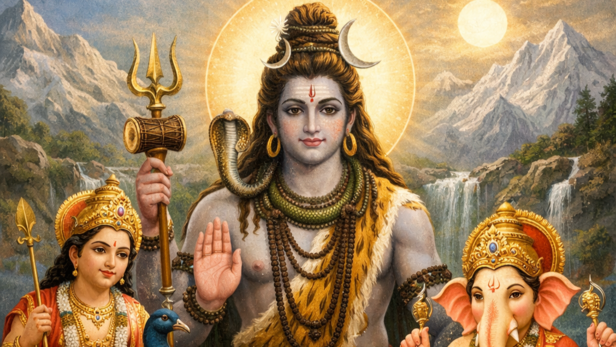
Lord Shiva (Image Credit: AI)
It is important to clarify that there is no widely accepted primary scripture that explicitly states that Shiva performs rituals to worship Ganesha in the same way humans do. However, what exists across traditions is something more symbolic and philosophically rich. In many devotional interpretations, even Shiva- who represents pure consciousness- acknowledges the necessity of Ganesha’s principle before any action unfolds. This is not about a father worshipping a son in a literal sense, but about cosmic order, where every action must begin with clarity, removal of obstacles, and alignment of intention.
In this sense, the idea that “even Shiva worships Ganesha first” is a metaphorical expression, emphasising that no force, however powerful, bypasses the fundamental need for awareness and preparation before action.
The Deeper Meaning: Why Ganesha Comes First
Ganesha is known as Vighnaharta, the remover of obstacles, but this concept is often misunderstood as purely external. In deeper interpretation, the “obstacles” are not just problems in the world- they are confusion, ego, impatience and lack of focus within the individual. Before any meaningful action can take place, these internal barriers must be addressed. This is why Ganesha is invoked first: he represents the state of mind required to begin anything successfully. Without that clarity, even the most powerful effort can fail. When viewed this way, the belief that even Shiva aligns with Ganesha’s principle is not about divine hierarchy, but about universal truth: awareness must precede action.
The Symbolism of Shiva and Ganesha Together
The relationship between Shiva and Ganesha is one of the most symbolically rich dynamics in Hindu thought. Shiva represents pure, unchanging consciousness, while Ganesha represents applied intelligence- the ability to navigate the world with awareness and balance. Their connection reflects a deeper philosophical idea: consciousness alone is not enough; it must be expressed through intelligent action. And intelligent action must begin with the removal of confusion.
This is why, in many traditions, the idea of Ganesha being invoked first is seen as the activation of the mind before the execution of any task, even in a cosmic sense.
Why This Belief Still Feels Relevant Today
What makes this belief so powerful- and why it continues to resonate even in modern life- is that it reflects a universal human experience. Before starting anything meaningful, whether it is a career decision, a relationship, or a personal transformation, individuals often face internal resistance- doubt, distraction, fear or lack of clarity. The act of invoking Ganesha, in this context, becomes more than ritual. It becomes a psychological reset, a moment of alignment where the mind is prepared, focused, and stabilised before action begins.
This is why the idea that “even Shiva worships Ganesha first” continues to carry weight- not as a literal event, but as a reminder that no level of power or knowledge eliminates the need for clarity and readiness.
Conclusion: A Belief Rooted in Universal Truth
Ultimately, the belief that Shiva is linked to honouring Ganesha before certain rituals is not about rewriting divine roles, but about expressing a deeper truth through symbolic storytelling. It reinforces the idea that beginnings matter, and that the quality of a beginning is determined not by external conditions, but by the state of the mind. In that sense, Ganesha’s place at the start of every ritual is not just a tradition- it is a principle. And the suggestion that even Shiva aligns with this principle is a way of saying that this truth applies to all levels of existence. Because before anything truly begins, clarity must come first- and that is the essence of Ganesha.
Unlock insightful tips and inspiration on personal growth, productivity, and well-being. Stay motivated and updated with the latest at My Life XP.