
Why Even Wise People Fall Into Mahamaya's Illusion
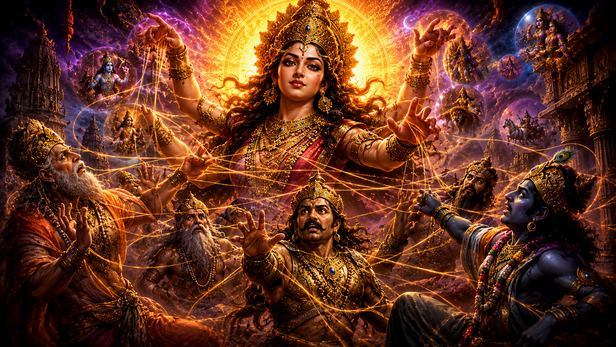
Have you ever wondered why you keep thinking about someone who betrayed you, even when you know they were wrong? You tell yourself to move on, yet your mind returns to the same memories again and again. According to the Durga Saptashati, this is not simply weakness or attachment. It is Mahamaya, the divine power that creates illusion, attachment, and ultimately liberation. The ancient story of King Suratha and the merchant Samadhi reveals a timeless truth about the human mind that feels surprisingly relevant even today.
When Loss Refuses to Leave the Mind
King Suratha lost his kingdom through betrayal, while the wealthy merchant Samadhi was abandoned by his own family. Despite knowing they had been treated unfairly, neither could stop worrying about those who had hurt them. Their pain was not caused by what they had lost but by their inability to detach emotionally. This timeless struggle reflects the experience of countless people who continue thinking about broken relationships, betrayal, or failure long after the event has passed.
The Sage Who Explained the Mystery of Attachment
Seeking answers, both men approached Sage Medhas. Instead of blaming circumstances, the sage revealed a profound truth. He explained that their suffering came from Mahamaya, the divine cosmic power that binds every living being through attachment, emotion, and illusion. Even intelligent people cannot easily escape its influence. This wisdom shifted their focus away from blaming others and toward understanding the true nature of the human mind.
Mahamaya Is More Than Just Illusion
Mahamaya is often translated as "The Great Illusion," but its meaning is much deeper. It is the divine energy through which the universe functions. The same power that creates attachment also provides the wisdom to overcome it. According to the Durga Saptashati, Mahamaya is not an enemy but a teacher. She allows people to experience worldly attachments so they can eventually discover higher truth through self-awareness and spiritual growth.
Every Demon Represents an Inner Battle
The Durga Saptashati presents its battles as powerful inner metaphors. Mahishasura represents stubborn ego that refuses to change. Raktabija symbolises overthinking, where one negative thought creates countless more, just as every drop of his blood produced another demon. These stories teach that life's greatest battles are rarely external. The real struggle lies within the mind, where fear, pride, attachment, and uncontrolled thoughts quietly shape every decision.
Why Durga Saptashati Is Called a Mental Reset
For centuries, devotees have recited the Durga Saptashati during Navratri not merely as a ritual but as a journey of inner transformation. The scripture encourages readers to identify their own emotional struggles and replace fear with clarity. Much like King Suratha and Samadhi, the text invites people to pause, reflect, and recognise that lasting peace comes from changing the mind rather than trying to control every external situation.
The Goddess Granted Two Different Blessings
After performing sincere penance, both King Suratha and Samadhi received the blessings of the Divine Mother. Yet their requests revealed two different paths. Suratha asked to regain his kingdom, while Samadhi sought liberation from worldly attachment. The Goddess granted both wishes without judgment. This beautiful ending teaches that the Divine responds according to each person's deepest aspiration, whether it is worldly success or spiritual freedom.
Disclaimer This article is based on astrological or traditional beliefs and is intended for informational and entertainment purposes only. It does not constitute financial, medical, or professional advice.
Unlock insightful tips and inspiration on personal growth, productivity, and well-being. Stay motivated and updated with the latest at My Life XP.
Frequently Asked Questions (FAQs)
1. Who were King Suratha and Samadhi in the Durga Saptashati?
King Suratha was a ruler who lost his kingdom through betrayal, while Samadhi was a wealthy merchant abandoned by his own family. Their story, found in the Markandeya Purana, illustrates how emotional attachment can continue even after loss and how the wisdom of Goddess Durga helps overcome it.
2. What does Mahamaya mean in Hinduism?
Mahamaya means "The Great Divine Illusion." In Hindu philosophy, it is the cosmic power of the Divine Mother that creates attachment, emotions, and worldly experiences. At the same time, Mahamaya also grants the wisdom needed to rise above illusion and attain spiritual understanding.
3. Why is the Durga Saptashati recited during Navratri?
The Durga Saptashati, also known as the Devi Mahatmya, is recited during Navratri to seek the blessings of Goddess Durga, develop inner strength, overcome fear and negativity, and inspire spiritual growth. Many devotees also believe it brings peace, courage, and protection.
4. What do the demons in the Durga Saptashati symbolise?
Many spiritual teachers interpret the demons as symbols of inner weaknesses. For example, Mahishasura represents ego and ignorance, while Raktabija symbolises repetitive negative thoughts and overthinking. These stories encourage self-reflection and personal transformation.