
Why Global Tech Giants Are Suddenly Choosing India
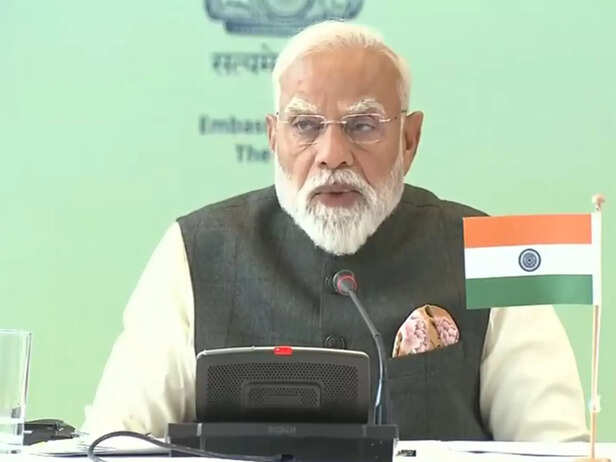
For years, countries competed to attract global companies. Now, India is speaking differently. During his visit to The Hague, Narendra Modi made a bold statement in front of top Dutch CEOs: “No country in the world can match India’s speed.” It was not just a political line.
It was a message aimed directly at the world’s biggest investors, technology companies, and manufacturing giants. From semiconductors to clean energy, from infrastructure to innovation, PM Modi presented India as the next major global growth engine. And what happened during this Netherlands visit may quietly shape the future of global business far beyond Europe.
The Bold Statement That Grabbed Attention
At the CEO Roundtable in The Hague, Narendra Modi delivered a message filled with confidence. He described India as a symbol of “scale and stability” and claimed no country could match India’s speed in infrastructure, clean energy, and connectivity. This statement immediately stood out because it reflected a major shift in how India presents itself globally. Instead of asking for opportunities, India is now positioning itself as an opportunity itself. Modi also highlighted that India contributes around 17 percent to global growth, showing how strongly the country wants to project its economic rise on the world stage.
Why India Is Opening New Doors For Business
One of the strongest parts of PM Modi’s speech focused on reforms designed to attract global investors. He explained that sectors like space, mining, and nuclear energy have now been opened for private participation. India is also reducing compliance burdens while improving ease of doing business through reforms in taxation, labor laws, and governance. These changes are not only about economics they are about changing global perception. For years, investors viewed India as difficult and slow-moving. Now the government wants the world to see India as flexible, ambitious, and ready for large-scale international partnerships.
The Semiconductor Deal That Changed Everything
One of the most important moments during the visit was the partnership agreement between Tata Electronics and ASML. The deal supports the semiconductor fabrication plant being developed in Dholera, Gujarat. This matters because semiconductors control modern technology smartphones, AI systems, defense tools, cars, and data centers. For decades, only a few countries dominated this industry. India now wants a serious place in that race. By partnering with ASML, one of the world’s top chip-equipment companies, India signaled that its semiconductor mission is no longer just a future dream.
Why Global Tech Companies Are Watching India
PM Modi emphasized that nearly all major global technology companies have opened Global Capability Centres in India. This reflects the country’s growing importance in software, innovation, artificial intelligence, and digital services. India’s massive talent pool, startup ecosystem, and cost-effective operations have turned it into a major technology hub. But the deeper story is strategic. As supply chains shift worldwide and companies search for stable long-term partners, India is becoming increasingly attractive. Modi’s invitation to “design, innovate, and manufacture” in India showed that the country wants to move beyond outsourcing and become a true center of global innovation.
The Bigger Vision Behind Modi’s Europe Visit
Behind the speeches and agreements was a much bigger vision. Narendra Modi wants India to become one of the central drivers of future global growth. He also spoke about the proposed India-European Union free trade agreement, describing it as a partnership between two major democratic powers. This visit was not only about business deals. It was about positioning India as a stable, trusted, and long-term economic partner during a time when global uncertainty continues rising. The message to the world was clear India believes its biggest economic chapter is only beginning.
Unlock insightful tips and inspiration on personal growth, productivity, and well-being. Stay motivated and updated with the latest at My Life XP.
Frequently Asked Questions (FAQs)
1. What did PM Modi say during the Netherlands visit?
Narendra Modi said that no country can match India’s speed in infrastructure, clean energy, and connectivity while addressing Dutch CEOs in The Hague.
2. Why was PM Modi’s speech important?
The speech highlighted India’s ambition to become a global hub for manufacturing, semiconductors, clean energy, and innovation, while attracting international investors and companies.
3. What sectors did India open for private participation?
PM Modi said India has opened sectors like space, mining, and nuclear energy for private companies to encourage investment and innovation.
4. What is the Tata Electronics and ASML agreement?
Tata Electronics and ASML signed a partnership agreement to support the semiconductor fabrication plant being developed in Dholera, Gujarat.
5. Why are semiconductors important for India?
Semiconductors are essential for smartphones, AI systems, defense technology, automobiles, and electronics. India wants to reduce dependence on imports and become a global chip manufacturing hub.