
Why Great Men Are Remembered but Women Are Forgotten
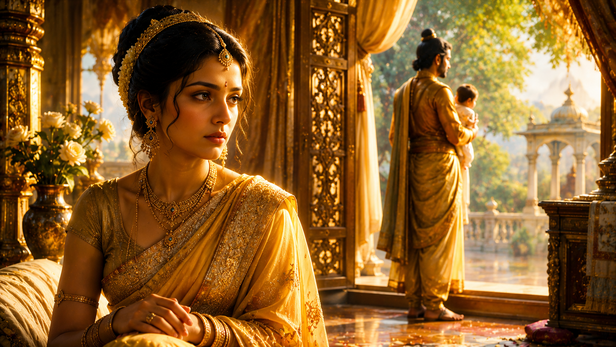
History has a habit of remembering the footsteps that leave and forgetting the hearts that stay behind. When Prince Siddhartha walked out of the palace in search of enlightenment, the world witnessed the beginning of Buddha's journey. Centuries later, people still admire that moment of renunciation. Yet very few stop to wonder about the woman who woke up to an empty room, unanswered questions, and a future she never chose. Was Buddha's sacrifice greater because it was visible? Or was Yashodhara's sacrifice greater because it was silent? The answer may change the way we look at history forever.
The Night That Changed Two Lives
The night Siddhartha left the palace is often described as the beginning of a spiritual revolution. Yet for Yashodhara, it was the beginning of a deeply personal struggle. She was not consulted, prepared, or given a farewell. In a single night, she lost a husband, a companion, and the father of her child. While Siddhartha stepped toward enlightenment, Yashodhara stepped into uncertainty. History celebrates one journey, but rarely speaks of the other. Both lives changed forever that night, yet only one story became legendary.
Why History Remembers One and Forgets Another
History is usually written around victories, discoveries, and public achievements. It focuses on those who leave a visible mark on the world. But what about those who quietly support, endure, and sacrifice without recognition? Yashodhara's story reminds us that every celebrated figure often stands upon invisible acts of courage. Her contribution was not dramatic or public. It was patient endurance. Because history values action more than suffering, many silent sacrifices disappear from collective memory. Yet they are often just as important as the achievements they make possible.
The Strength Hidden Behind Silence
Most people associate strength with action, conquest, and achievement. Yashodhara teaches a different lesson. Her strength was expressed through patience, dignity, and resilience. She raised Rahul, faced public scrutiny, and carried emotional pain without bitterness. In a world that often rewards visible success, her example reveals a deeper kind of courage. It is easy to walk away from responsibility in pursuit of a dream. It is far harder to remain behind and carry the consequences with grace. That silent strength deserves a place in history's highest honors.
Maithili Sharan Gupt Saw What Others Missed
When poet Maithili Sharan Gupt wrote Yashodhara, he shifted attention toward a perspective that history had largely ignored. Through powerful verses, he imagined the emotions, questions, and sacrifices of a woman left behind. His famous lines, "Sakhi ve mujhse kehkar jaate," continue to resonate because they express a universal pain the pain of being excluded from a life-changing decision. Gupt's work challenged readers to reconsider whose stories deserve remembrance. In doing so, he restored dignity to a sacrifice that had remained hidden for centuries.
Why Women’s Sacrifices Often Go Unnoticed
Yashodhara's story reflects a broader historical pattern. Across cultures and generations, women have often carried emotional, familial, and social responsibilities that rarely receive recognition. Their contributions are frequently viewed as duties rather than sacrifices. Because these acts happen quietly within homes and relationships, they are easily overlooked. Yet entire families, movements, and even historical figures have depended on them. The issue is not that women sacrifice more by nature. It is that society has often failed to acknowledge and record those sacrifices with the same seriousness given to public achievements.
What Yashodhara Teaches the Modern World
In today's world, success is often measured through fame, influence, and accomplishments. Yashodhara's story asks us to expand that definition. True greatness may also include loyalty, endurance, compassion, and sacrifice. Her life reminds us that every celebrated achievement affects other people, sometimes in ways we never see. Before admiring a success story, we should also ask who stood behind it, supported it, or suffered because of it. That perspective creates a more complete and humane understanding of history and human achievement.
The Forgotten Sacrifice That Still Speaks Today
Yashodhara may not have founded a religion or delivered sermons to the world, but her sacrifice became part of a journey that transformed millions of lives. Her story challenges us to notice the people history leaves in the shadows. Every era has its celebrated heroes and its forgotten pillars. Often, the latter carry burdens just as heavy. Remembering Yashodhara is not about diminishing Buddha's greatness. It is about recognizing that greatness rarely exists alone. Behind many extraordinary stories stands someone whose sacrifice made that story possible.
Unlock insightful tips and inspiration on personal growth, productivity, and well-being. Stay motivated and updated with the latest at My Life XP.
Frequently Asked Questions (FAQs)
1. Who was Yashodhara?
Yashodhara was the wife of Siddhartha Gautama and the mother of Rahul. She is remembered for her patience, strength, and sacrifice after Siddhartha left the palace in search of spiritual enlightenment.
2. Why is Yashodhara's sacrifice considered significant?
Yashodhara's sacrifice is considered significant because she silently endured the departure of her husband while raising their son and managing the emotional burden left behind. Her story highlights a form of courage that often goes unnoticed in historical narratives.
3. What is the famous poem "Yashodhara" about?
The poem Yashodhara by Maithili Sharan Gupt gives voice to Yashodhara's emotions, pain, and dignity. It explores the perspective of a woman whose sacrifice was overshadowed by the greatness of a historical figure.
4. What does the line "Sakhi ve mujhse kehkar jaate" mean?
The line expresses Yashodhara's sorrow that Siddhartha left without informing her. It reflects the emotional pain of being excluded from a life-changing decision despite being a trusted life partner.
5. Why does history often focus more on Buddha than Yashodhara?
History generally highlights public achievements, spiritual transformations, and major events. Since Buddha's journey had a visible impact on the world, his story became widely remembered, while Yashodhara's quieter sacrifice received less attention.