
Why Hanuman Allowed Himself to Be Captured? Truth Inside
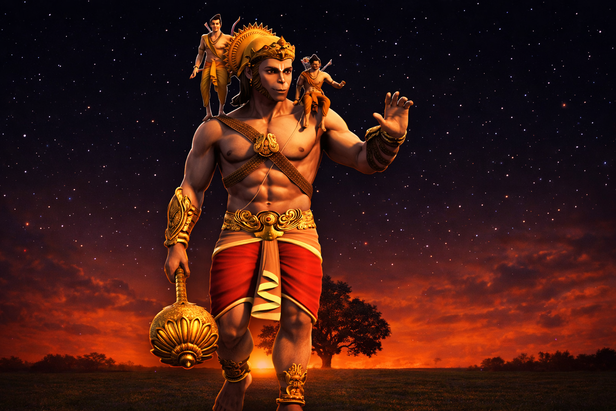
What if the strongest warrior on the battlefield didn’t lose but simply chose not to win? What if being captured was not a sign of defeat, but a powerful, conscious decision? This moment from the Ramayana challenges everything we believe about strength and victory. It forces us to rethink what power truly means. Because sometimes, the greatest display of strength is not in fighting harder, but in knowing when to stop. In that pause, in that surrender, lies a deeper wisdom one that proves true power is not just force, but control, purpose, and understanding.
The Power Everyone Talks About
Hanuman is not an ordinary warrior. Believed to be an incarnation of Shiva, his strength is limitless. His mind is devoted entirely to Rama. With such divine energy, defeat seems impossible. He could defeat entire armies alone. So when people hear that he was captured by Indrajit, confusion begins. How can someone so powerful fall? The answer lies not in strength, but in intention a deeper layer most people overlook completely.
The Moment That Changed Everything
During the battle in Lanka, Indrajit realized that no ordinary weapon could stop Hanuman. In desperation, he chose the ultimate weapon the Brahmastra, created by Brahma. This was no ordinary attack. It carried divine authority. As it was about to be released, the battlefield paused in tension. Everyone expected resistance. Everyone expected a clash of power. But what happened next was completely unexpected something that turned the meaning of strength upside down.
A Choice, Not a Defeat
At that exact moment, Hanuman made a decision. He thought if he disrespects the Brahmastra, its divine significance would be lost. So instead of resisting, he allowed it to bind him. This was not weakness. This was awareness. He chose respect over ego. He chose purpose over pride. Because sometimes, real power is not about proving strength, but about honoring what is greater. And that single decision changed the course of events in a way no battle ever could.
The Hidden Strategy Behind Surrender
By allowing himself to be captured, Hanuman gained access to Ravana’s court. What looked like defeat was actually strategy. He delivered a powerful message, assessed the enemy, and created fear without lifting a weapon. This was intelligence in action. He didn’t just fight battles he controlled outcomes. His capture became a turning point, not a setback. It proved that sometimes stepping back is the smartest move forward. A warrior doesn’t just use strength he uses timing, wisdom, and purpose.
The Lesson Most People Miss
Most people see this moment and think Hanuman was overpowered. But the truth is the opposite. He showed that control is greater than force. Respect is greater than dominance. And purpose is greater than ego. In life too, not every situation needs reaction. Sometimes, choosing silence, patience, or surrender is the real strength. This story is not about losing it’s about knowing when not to fight. And that is a level of power very few truly understand.
Calm Strength in Chaos
This is more than a story it’s a way of thinking that changes how you see strength. The strongest people don’t rush to prove themselves in every moment. They observe, they understand, and they act only when it truly matters. Sometimes, holding back requires more courage than reacting. Real power doesn’t need noise, validation, or constant display. It stays calm under pressure, clear in confusion, and steady in chaos. It chooses purpose over ego and patience over impulse. Because true strength is not about winning every battle it’s about knowing which battles are worth fighting, and which ones are not.
Unlock insightful tips and inspiration on personal growth, productivity, and well-being. Stay motivated and updated with the latest at My Life XP.
Frequently Asked Questions (FAQs)
1. Why did Hanuman allow himself to be captured?
He chose not to resist the Brahmastra out of respect for its divine origin. It was a conscious decision, not a defeat.
2. Was Hanuman really defeated by Indrajit?
No. Hanuman was not overpowered. He allowed the situation to happen to serve a higher purpose.
3. What is the significance of the Brahmastra in this story?
The Brahmastra, associated with Brahma, represents divine authority. Respecting it reflects wisdom, not weakness.
4. What lesson does this moment teach us?
It shows that true strength lies in control, patience, and understanding when not to react.
5. How is this event described in the Ramayana?
In the Sundara Kanda, this moment highlights Hanuman’s intelligence, humility, and strategic thinking.