
Why Hanuman Guards Lord Rama's Door: The Truth Explained
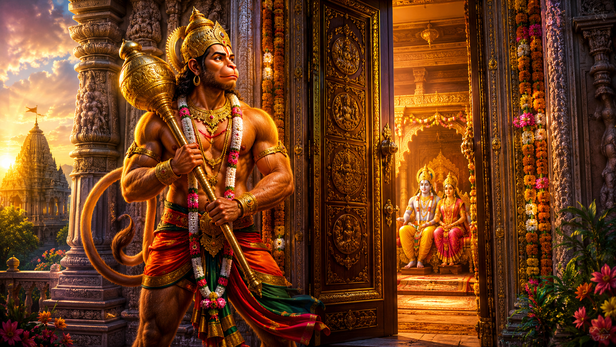
Millions of people recite the Hanuman Chalisa every day, believing it brings protection, peace, and strength. But have you ever wondered why one particular verse says that Hanuman Ji stands at the doorway of Lord Rama? Is He guarding the entrance, or is there a much deeper spiritual message hidden within these words? The answer is far more powerful than most people realize. This famous chaupai is not about physical protection alone it reveals the inner journey every devotee must take before reaching Lord Rama. Once you truly understand its meaning, your entire perspective on fear, devotion, and surrender begins to change.
The Doorway Is Not a Place It Is a State of Consciousness
The verse "Ram Dware Tum Rakhware" does not describe Hanuman Ji as someone who prevents people from meeting Lord Rama. Instead, it symbolizes that He is the divine guide who prepares every soul before entering the path of God. The doorway represents a higher state of consciousness where ego, pride, and selfish desires cannot survive. Hanuman Ji teaches humility, devotion, and discipline because these qualities become the true key to reaching Lord Rama. Without developing these virtues, the spiritual journey remains incomplete.
Why Hanuman Ji Gives Permission
The line "Hot Na Aagya Binu Paisare" is often misunderstood. It is not about seeking physical permission but about becoming spiritually worthy. Hanuman Ji represents complete surrender to Lord Rama, unwavering faith, and selfless service. Until these qualities awaken within us, we cannot fully understand the divine nature of Rama. Hanuman Ji's "permission" is actually the transformation of our own heart. When devotion becomes genuine, the path naturally opens without struggle or confusion.
The Secret Connection Between Hanuman Bhav and Rama Bhav
One cannot truly experience Lord Rama without first understanding Hanuman Ji's devotion. Hanuman Bhav is the attitude of complete surrender, fearless service, and unconditional love. Rama Bhav is the realization of divine truth, righteousness, and eternal peace. These two are inseparable. Hanuman Ji does not stand between the devotee and Lord Rama; He becomes the bridge connecting them. As devotion deepens, the seeker slowly experiences the same divine qualities that Hanuman Ji embodies.
What Does Taking Hanuman Ji's Shelter Really Mean?
The Hanuman Chalisa says that all happiness is found in Hanuman Ji's shelter. This does not simply mean offering prayers during difficult times. Real surrender happens when a person places complete trust in divine guidance through body, mind, and soul. It means letting go of anxiety, attachment, and unnecessary fear while accepting life's challenges with faith. Such surrender creates inner stability that external situations can no longer disturb.
Why Fear Cannot Exist Where True Devotion Lives
The final words, "Tum Rakshak Kahu Ko Darna," reveal one of the greatest spiritual truths. Fear survives only when the mind feels separate, uncertain, and insecure. A devotee who realizes God's presence through sincere devotion discovers a strength beyond ordinary courage. This fearlessness does not come from physical power but from complete faith that the Divine is always present. Such confidence transforms every challenge into an opportunity for spiritual growth.
The Greatest Lesson Hidden Inside This Chaupai
This chaupai teaches that spiritual progress is not achieved through rituals alone. True devotion requires humility, discipline, patience, and selfless service. Hanuman Ji becomes both the teacher and the protector because He helps devotees remove inner obstacles before they seek divine truth. The verse reminds us that God is never distant; it is our own distractions that keep us away. Hanuman Ji simply helps us overcome them.
When You Understand This Verse, Hanuman Chalisa Feels Completely Different
Many people recite the Hanuman Chalisa daily for protection, but its greatest gift is transformation. Once you understand the meaning behind this single verse, every recitation becomes more mindful and heartfelt. Instead of asking only for worldly help, you begin seeking wisdom, courage, and surrender. That change in intention strengthens your faith and brings lasting peace. The real miracle is not that fear disappears overnight it is that your relationship with God becomes deeper than fear itself.
Unlock insightful tips and inspiration on personal growth, productivity, and well-being. Stay motivated and updated with the latest at My Life XP.
Frequently Asked Questions (FAQs)
1. What does "Ram Dware Tum Rakhware" mean in the Hanuman Chalisa?
The verse means that Hanuman Ji is the guardian of Lord Rama's divine path. Spiritually, it signifies that qualities like devotion, humility, and selfless service embodied by Hanuman Ji are essential before one can truly experience Lord Rama's grace.
2. Why is Hanuman Ji called the protector at Lord Rama's doorway?
Hanuman Ji is not portrayed as someone who blocks devotees. Instead, He guides them toward spiritual growth by helping them overcome ego, fear, and attachment, making them ready to understand Lord Rama's teachings.
3. What is the deeper meaning of "Tum Rakshak Kahu Ko Darna"?
This line teaches that when Hanuman Ji becomes your protector through sincere devotion, fear gradually disappears. It symbolizes inner courage, faith, and the confidence that comes from trusting the Divine.
4. Does chanting this Hanuman Chalisa verse remove fear?
Devotees believe that regular chanting with faith can bring mental peace, strengthen confidence, and reduce fear. The verse encourages complete surrender to Hanuman Ji, which helps cultivate inner stability during life's challenges.
5. Why is Hanuman Ji considered the bridge to Lord Rama?
Hanuman Ji represents perfect devotion, selfless service, and unwavering faith in Lord Rama. By following these virtues, devotees are believed to move closer to understanding Lord Rama's divine nature and experiencing spiritual fulfillment.