
Why Hindu Months Follow Nature, Not Numbers
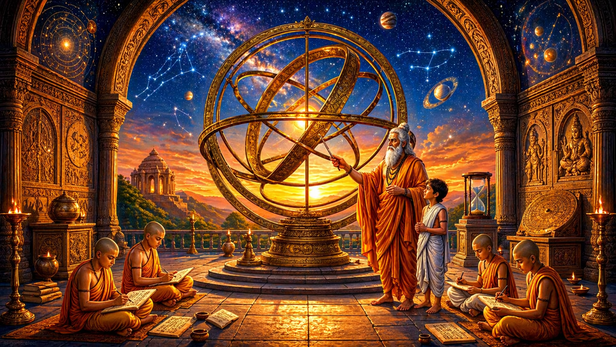
What if your calendar is not just tracking time, but quietly guiding how you live your life? Most of us follow dates without questioning them January, February, March fixed and mechanical. But the Hindu calendar moves differently. It doesn’t just count days; it responds to nature, seasons, and subtle energy shifts. That’s why sometimes it has 12 months, and sometimes even 13. It adjusts instead of forcing time into a rigid system. Here, time is not controlled by numbers it flows with life itself, teaching balance, rhythm, and alignment with the world around us.
Time That Moves With Nature
Unlike fixed calendars, the Hindu calendar is based on lunar and solar cycles. It adjusts itself to stay aligned with nature. That’s why sometimes an extra month Adhik Maas is added. This is not confusion, but correction. It ensures that festivals and seasons stay connected. Time here is not rigid. It adapts, just like nature does. This system reflects a deeper understanding that life is not linear. It moves in cycles. And when time follows nature, it becomes more meaningful, not just measurable.
Chaitra: The Real Beginning
The Hindu New Year begins with Chaitra, not January. Why? Because this is when nature renews itself. Trees bloom, weather softens, and life feels fresh again. It’s not just a date it’s a natural reset. Different regions celebrate it in unique ways, but the essence remains the same: a new beginning aligned with nature. This shows a powerful idea start when energy supports you. Not when a calendar tells you. That’s why this beginning feels more organic, more connected, and more real.
Vaishakh: Season of Growth & Prosperity
Vaishakh is the month of prosperity and harvest. Festivals like Baisakhi and Akshaya Tritiya fall in this time. Farmers celebrate their first harvest, marking the reward of hard work. It’s a moment of gratitude and abundance. Nature transitions here spring ends, and summer begins. This month teaches balance between effort and reward. It reminds us that growth takes time, but results always come. The calendar doesn’t just mark this phase it celebrates it, turning a natural event into a meaningful life lesson.
Shravan: Time for Inner Reflection
Shravan is deeply spiritual. Dedicated to Lord Shiva, this month focuses on devotion and self-reflection. Monsoon arrives, slowing everything down. Nature becomes calm, introspective. This is not a coincidence. The calendar uses this phase to guide inward thinking. People fast, pray, and reflect on life. It’s a reminder that growth is not always external. Sometimes, the most important progress happens within. The timing is perfect when the world slows down, you look inside. That’s the hidden design of this month.
A Calendar That Teaches Life
Every month in the Hindu calendar carries a purpose. It’s not random it’s structured around life itself. From new beginnings to harvest, from celebration to reflection, each phase mirrors human experience. This system teaches you when to act, when to pause, and when to grow. It’s not just about tracking time it’s about understanding it. When you follow this rhythm, life feels more balanced. Because you are not forcing things you are flowing with them.
Unlock insightful tips and inspiration on personal growth, productivity, and well-being. Stay motivated and updated with the latest at My Life XP.
Frequently Asked Questions (FAQs)
1. Why does the Hindu calendar sometimes have 13 months?
Because it follows lunar cycles, an extra month called Adhik Maas is added to keep the calendar aligned with the solar year and seasons.
2. Why does the year start with Chaitra?
Chaitra marks the beginning of spring, a natural time of renewal, making it an ideal start for a new year in harmony with nature.
3. How is this calendar different from the modern one?
The modern calendar is fixed and purely solar, while the Hindu calendar adjusts based on both moon and sun, staying connected to natural cycles.
4. What is the purpose of aligning with seasons?
It ensures festivals and rituals occur at the right natural time, enhancing their cultural and spiritual significance.
5. What is Adhik Maas and why is it important?
Adhik Maas is the extra month added periodically to balance the lunar and solar years, maintaining seasonal accuracy.