
Why Hindus Worship Many Forms but Believe in One
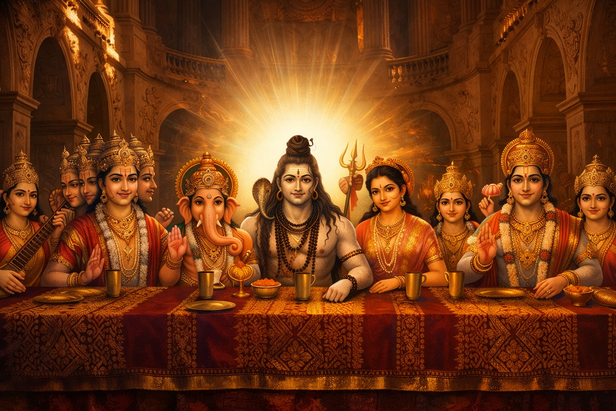
Many people assume Hinduism is confusing. They see temples dedicated to Lord Rama, Lord Krishna, and Lord Shiva, and conclude that Hindus worship many different gods. This often leads to a simple but important question: Who is the real God? Ancient Hindu philosophy offers a surprising answer. The sages who composed the Vedas and Upanishads spoke of one ultimate reality behind the universe. They explained that the divine is one, but it appears in many forms so that different people can connect with it in their own way. Understanding this idea reveals one of the deepest insights of human spirituality.
The Ancient Verse That Explains Everything
One of the most powerful ideas in Hindu philosophy comes from the Rigveda. The verse Ekam Sat Vipra Bahudha Vadanti teaches that truth is one, but it is described in many ways by wise people. This thought shaped the spiritual vision of Hindu civilization for thousands of years. Instead of insisting on only one path or one form of worship, it accepts that people may understand the divine differently. Some approach it through devotion, others through knowledge or meditation. This openness allows many spiritual paths to exist while still pointing toward the same ultimate reality behind the universe.
Why Different Forms of God Exist
Every person has a unique personality and emotional nature. Some people feel deeply connected to devotion and love, while others are drawn toward discipline, knowledge, or quiet meditation. Hindu philosophy understands this diversity and therefore presents different divine forms that reflect different spiritual qualities. Lord Rama represents duty, honor, and moral strength. Lord Krishna symbolizes joy, wisdom, and divine friendship. Lord Shiva represents detachment, meditation, and transformation. These forms are not separate gods competing with each other. Instead, they are different paths through which people can experience the same divine reality in a personal and meaningful way.
The Scientific Analogy of a Tree
Nature offers a beautiful way to understand this idea. Imagine a tree with thousands of leaves growing from the same branches. From a distance, they may appear identical, but on closer observation, every leaf has a unique shape, pattern, and structure. No two leaves are exactly the same. Human beings are similar in this way. Our inner consciousness comes from the same universal source, yet every individual personality is different. In the same way, the divine source is one, but it expresses itself through countless forms and manifestations. These forms help people connect with the same divine presence in ways that feel natural to them.
One Energy, Many Manifestations
Think about electricity. The same electrical current can run a fan, a heater, or a light bulb. Each device performs a different function, yet the energy powering them is exactly the same. Hindu philosophy often uses a similar idea to explain the nature of the divine. The ultimate reality is seen as one universal energy that exists behind everything in the universe. However, this energy appears through different forms and expressions. These forms help people understand and connect with the divine in ways that feel natural to their personality, beliefs, and spiritual path, while the source itself always remains one.
The Purpose of Many Divine Forms
The presence of many divine forms in Hindu tradition is not meant to create confusion. Instead, it allows spirituality to become deeply personal. Every individual has a unique nature, and different forms of the divine help people connect in ways that feel meaningful to them. For some, God feels like a loving friend through the playful wisdom of Krishna. For others, the life of Ram represents righteousness, duty, and moral strength. Many seekers also feel drawn to Shiva, who symbolizes meditation, detachment, and inner freedom. Though the forms appear different, they all guide devotees toward the same ultimate truth and spiritual understanding.
Devotee Connecting With the Divine
One of the biggest misunderstandings about Hinduism is that it worships many separate gods. In reality, ancient Hindu wisdom teaches that there is one ultimate divine reality, expressed through countless forms. Just as sunlight can shine through different colors of glass, the same truth appears in many names and manifestations. Ram, Krishna, Shiva, and others are not separate deities but different ways for humans to connect with the same source. The true lesson is to stop focusing solely on external forms and instead understand the essence of divinity. When this essence is realized, every form points to the same ultimate truth.
Unlock insightful tips and inspiration on personal growth, productivity, and well-being. Stay motivated and updated with the latest at My Life XP.
Frequently Asked Questions (FAQs)
1. Does Hinduism worship many gods?
No. Hindu philosophy teaches that there is one ultimate divine reality, which manifests in multiple forms to help people connect with it in different ways.
2. What does “Ekam Sat Vipra Bahudha Vadanti” mean?
It means “Truth is one, but the wise call it by many names.” The divine is singular, but expressed differently for each seeker.
3. Why do Hindus worship Ram, Krishna, and Shiva?
These are different manifestations of the same divine source, representing qualities like righteousness, love, wisdom, and transformation.
4. How can one connect with the divine personally?
By understanding your temperament and choosing the form or practice that resonates with your nature, you develop a personal spiritual relationship.
5. What is the essence of Hindu spirituality?
The essence is recognizing the one divine reality that exists in everything, beyond all forms and names.