
Why Is Krishna So Closely Associated With Butter?
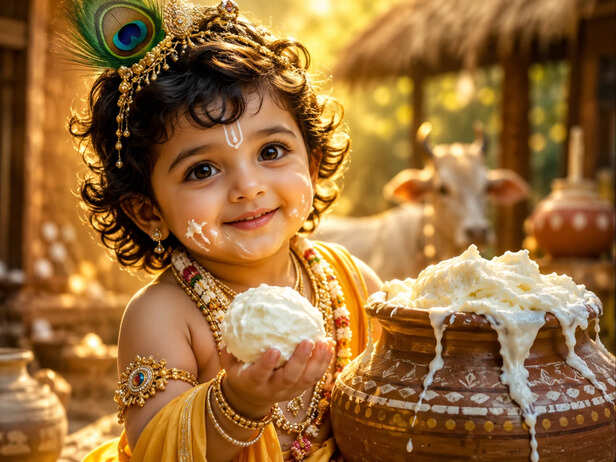
Among the many images of Lord Krishna, one of the most beloved is that of little Bal Gopal holding a pot of freshly churned butter with a mischievous smile. Stories of Krishna stealing butter have been narrated in homes, temples, and scriptures for centuries. At first glance, these tales seem like innocent childhood pranks. Yet, they hold deep symbolism that goes far beyond butter itself. Krishna's playful acts remind devotees that divinity is not always distant or serious. Instead, God can be loving, joyful, and deeply connected to everyday life. Butter became an enduring symbol because it reflects purity, effort, love, and the essence of devotion. Here is why this simple dairy product became one of Krishna's most iconic symbols.
Butter Was the Purest Food in Village Life
During Krishna's childhood in Gokul and Vrindavan, butter was one of the most valuable foods in every household. Families raised cows with great care, and women spent hours churning fresh curd into butter. It was nutritious, pure, and often reserved for special occasions or respected guests. When Krishna stole butter, he was not simply taking food. The stories reflected his playful involvement in the daily lives of the villagers. Instead of remaining distant, Krishna became part of their routines, bringing laughter into ordinary moments. These stories also highlight the importance of cows and dairy in ancient Indian society, where cows were seen as sacred and symbols of prosperity. Butter naturally became a fitting representation of abundance and divine blessings.
Butter Symbolises the Pure Heart
One of the most meaningful interpretations comes from spiritual symbolism. Butter is created only after milk is patiently churned for a long time. In the same way, a person's heart becomes pure through devotion, selflessness, and spiritual discipline. Many spiritual teachers explain that Krishna was not truly interested in butter itself. He desired the love hidden within the hearts of his devotees. Butter represents the purest essence extracted after patience and effort, just as devotion becomes stronger through faith and perseverance. When Krishna steals butter, it symbolises God joyfully accepting the sincere love offered by his devotees. The act becomes an expression of divine affection rather than mischief.
The Butter Theft Stories Teach Love Over Rules
Krishna earned the affectionate title "Makhan Chor," meaning the butter thief. The women of Gokul often complained to Mother Yashoda that Krishna had entered their homes, broken butter pots, and shared the butter with his friends. Interestingly, these complaints were never filled with anger. They were expressions of affection because every family secretly wished Krishna would visit their home. These stories show that love often matters more than strict rules. Krishna's playful behaviour reminds devotees that a loving relationship with God is built on joy, closeness, and trust rather than fear. His childhood adventures make spirituality feel personal and approachable.
Butter Reflects Simplicity and Humility
Despite being the Supreme Lord in Hindu belief, Krishna chose to grow up among cowherds instead of kings. His favourite food was not royal delicacies but simple homemade butter prepared by ordinary village women. This teaches an important lesson about humility. Krishna valued sincerity more than wealth or status. He accepted offerings made with genuine love, regardless of their material value. Even today, devotees offer butter and milk products during Janmashtami and temple rituals. These offerings remind people that devotion is measured by intention rather than extravagance. The message continues to inspire millions who believe that heartfelt offerings always reach the divine.
Butter Connects Devotees Across Generations
The image of Krishna with butter remains one of the most recognisable symbols of Hindu culture. Parents tell these stories to children because they combine fun with valuable life lessons. Artists paint Krishna holding butter pots, musicians sing devotional songs about Makhan Chor, and temples recreate these playful scenes during festivals. Children are naturally drawn to Krishna's cheerful personality, while adults discover deeper meanings behind the same stories. This ability to speak to every generation keeps Krishna's butter stories alive even today. The association has also become an important part of Janmashtami celebrations, where decorated butter pots and playful competitions recreate Krishna's childhood adventures. These traditions strengthen family bonds while preserving cultural heritage. More importantly, Krishna's love for butter reminds devotees that spirituality does not always require grand rituals. Sometimes, the deepest connection with God is found in the simplest expressions of love, kindness, and innocence.
The Sweet Symbol Behind Krishna's Butter
Krishna's association with butter has endured because it blends joy, faith, and profound spiritual wisdom into one unforgettable image. Butter represents purity, devotion, simplicity, and the love that flows between God and devotees. His playful thefts were never about taking something valuable. They were gentle reminders that God seeks the purest part of every heart. Centuries later, the smiling image of Bal Krishna with a butter pot continues to inspire devotion across the world. It teaches that divine love can be found in ordinary homes, simple food, heartfelt offerings, and moments of innocent happiness. That is why butter remains far more than a favourite food of Krishna. It has become a timeless symbol of unconditional love, faith, and the sweetness of spiritual life.
Unlock insightful tips and inspiration on personal growth, productivity, and well-being. Stay motivated and updated with the latest at My Life XP.