
Why Jagannath's Prasad Is Broken During Rath Yatra
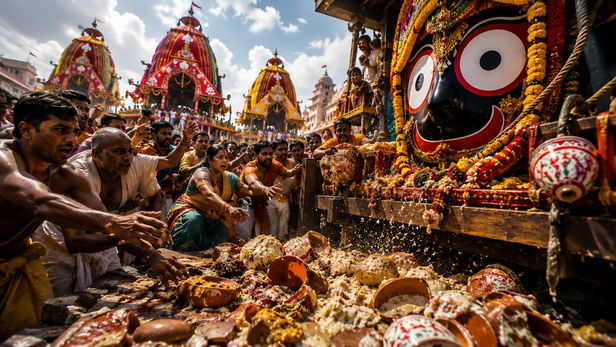
Every year, millions of devotees witness the grand Jagannath Rath Yatra, but very few notice one unusual ritual that takes place near the end of the festival. A sacred drink is lovingly offered to Lord Jagannath, Lord Balabhadra, and Devi Subhadra, only for the earthen pots to be deliberately broken moments later. At first glance, it may seem surprising or even disrespectful. But behind this centuries-old tradition lies a profound spiritual belief that continues to inspire devotees across generations.
A Ritual That Leaves Everyone Curious
Many first-time visitors are surprised to see sacred pots broken immediately after being offered to Lord Jagannath. It appears unusual because offerings in Hindu traditions are normally distributed as prasada. However, Adharapana follows a completely different spiritual purpose. The ceremony is not meant for human devotees but is believed to honor invisible divine beings who accompany the Lord throughout the sacred Rath Yatra.
What Is Adharapana?
Adharapana is a traditional offering made by combining milk, sugar, jaggery, bananas, honey, camphor, and other aromatic ingredients into a sweet drink known as Pana. The preparation is poured into large earthen pots and respectfully offered before Lord Jagannath, Lord Balabhadra, and Devi Subhadra while they remain seated on their chariots. The ritual symbolizes devotion, gratitude, and reverence for the unseen spiritual world.
Why Are the Pots Broken?
According to the Jagannath Temple tradition, many invisible celestial beings, guardian spirits, and divine attendants accompany Lord Jagannath during the Rath Yatra. Since these spiritual entities are not worshipped separately, Adharapana is offered to them as a mark of gratitude. Breaking the earthen pots allows the sacred drink to be symbolically received by these unseen companions before they return to their heavenly abodes.
The Belief Behind the Ceremony
The Adharapana ritual reflects a beautiful belief that the divine world extends beyond what human eyes can see. Temple traditions describe celestial beings accompanying the deities during the festival, protecting the sacred procession from unseen obstacles. After accepting the offering, these beings are believed to depart peacefully. This belief has been preserved for centuries and remains an important part of the Rath Yatra's spiritual significance.
More Than Just a Tradition
Adharapana reminds devotees that every ritual has a deeper meaning beyond its visible form. What appears unusual often carries profound symbolism rooted in centuries of faith and temple tradition. The ceremony teaches humility by acknowledging that not every act of devotion is meant for human benefit alone. It reflects the inclusive nature of Jagannath worship, where every divine presence is honored with gratitude.
Lessons for Every Devotee
The Adharapana ceremony encourages devotees to look beyond appearances. It reminds us that devotion is not always measured by what we receive but by what we offer with sincerity. Respecting ancient traditions, practicing gratitude, and trusting divine wisdom are values reflected in this unique ritual. Whether or not one witnesses the ceremony in person, its message continues to inspire faith and spiritual reflection.
A Tradition That Keeps Faith Alive
The Jagannath Rath Yatra is filled with extraordinary traditions, but Adharapana stands apart because of its powerful symbolism and spiritual depth. The breaking of the sacred pots is not an act of disrespect but an expression of reverence toward the unseen divine forces believed to accompany Lord Jagannath. It beautifully reminds us that true devotion extends beyond what we can see, strengthening the timeless bond between faith, tradition, and the divine.
Disclaimer This article is based on traditional beliefs and is intended for informational purposes only.
Unlock insightful tips and inspiration on personal growth, productivity, and well-being. Stay motivated and updated with the latest at My Life XP.