
Why Krishna Said Real Bhakti Is Tested at Death
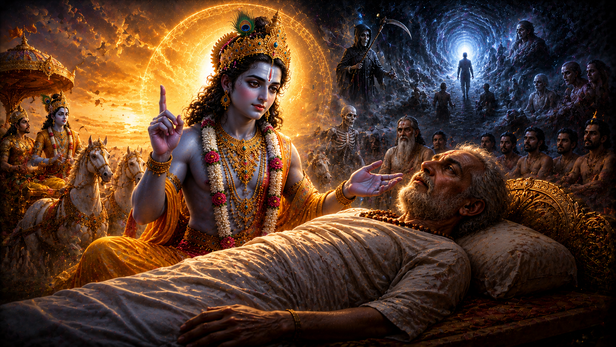
Most people think devotion means visiting temples, chanting mantras, or doing daily prayers. But what if none of these are the real test of devotion? Ancient teachings connected to Krishna reveal something deeply unsettling. The true test of a devotee does not happen inside a temple. It happens in the final moment of life. Because according to Krishna’s wisdom, the mind remembers only what it truly loved throughout life. And if the final thought is not God, then what was all the devotion preparing us for? That single question changes the entire meaning of bhakti forever.
Devotion Is Not Measured by Rituals Alone
Many people spend years visiting temples, chanting mantras, performing pujas, and completing religious rituals. These practices are spiritually powerful, but according to Krishna, they are not the final destination. They are preparation. Rituals slowly train the mind to return toward God repeatedly. But the real question is this when fear, pain, and death stand directly in front of a person, where does the mind naturally go? Toward attachment? Toward regret? Or toward God? That final remembrance reveals whether devotion truly entered the soul or remained only an external practice throughout life.
The Mind Remembers What It Loved Most
Ancient spiritual teachings repeatedly explain that the human mind remembers its strongest attachment during the last moments of life. This is why daily remembrance of God becomes so important. Krishna teaches that bhakti is not about impressing society through religious appearance. It is about shaping the inner consciousness slowly over time. If a person spends life obsessed only with anger, fear, ego, money, or worldly attachment, those thoughts may dominate the final moment too. But if the heart repeatedly turns toward God throughout life, remembrance becomes natural even during death itself.
Why Daily Worship Still Matters
Some people misunderstand this teaching and think rituals no longer matter. But Krishna’s message actually gives rituals even deeper meaning. Temple visits, mala jap, bhajans, and prayers are not useless routines. They slowly train the mind through repetition. Just like constant practice prepares a warrior for battle, spiritual practices prepare the soul for difficult moments. When life becomes painful, unstable, or frightening, the mind automatically returns to whatever it practiced most deeply. This is why chanting God’s name daily matters so much. It creates an inner habit strong enough to remain even during life’s final breath.
Fear Reveals the Truth of Faith
Faith feels easy during peaceful times. But real spiritual strength appears during suffering, uncertainty, illness, or death. That is why Krishna described the final moment as the true test of devotion. When the body weakens and worldly control disappears, fear naturally rises inside most people. In those moments, external identity loses importance. Only inner consciousness remains. A devotee who practiced remembrance throughout life may still hold onto God even during fear. This does not mean perfection is required. It means the heart has learned where to return when everything else begins disappearing.
The Real Purpose of Bhakti
The deepest purpose of bhakti is not social identity, ritual performance, or religious appearance. Its real goal is transformation of consciousness. Krishna teaches that devotion slowly changes what the mind naturally remembers. Over time, prayer becomes peace. Chanting becomes emotional shelter. God’s name becomes the soul’s final comfort. That is why saints repeatedly emphasize remembrance throughout daily life, not only during crisis. The final moment of life is unpredictable. But devotion prepares the heart long before that moment arrives. And perhaps that is why sincere bhakti is considered one of the most powerful paths in spiritual tradition.
Unlock insightful tips and inspiration on personal growth, productivity, and well-being. Stay motivated and updated with the latest at My Life XP.
Frequently Asked Questions (FAQs)
1. What did Krishna tell Narad about true devotion
Krishna explained to Narada that the real test of devotion is not rituals alone, but whether a devotee remembers God during the final moment of life.
2. Why are temple visits and chanting important?
Temple visits, mantra chanting, bhajans, and prayers help train the mind to repeatedly remember God, making spiritual remembrance natural over time.
3. Why is the final moment considered spiritually important?
According to many spiritual teachings, the final thought of a person reflects their deepest attachment and inner consciousness developed throughout life.
4. What does bhakti really mean?
Bhakti means deep devotion, love, surrender, and constant remembrance of God from the heart, not just external rituals.
5. Why did Krishna say rituals alone are not enough?
Krishna taught that rituals are valuable only when they transform the inner mind and strengthen genuine remembrance of God.