
Why Lord Jagannath Falls Sick Before Rath Yatra: The Hidden Meaning
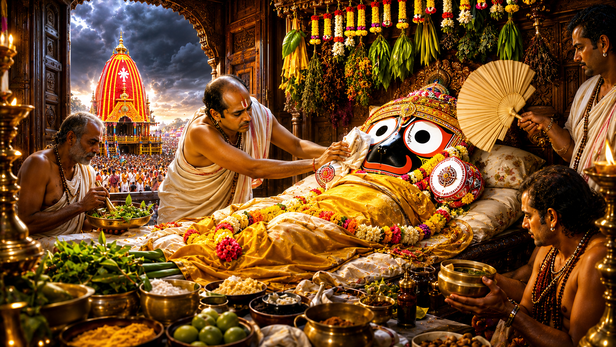
Every year, millions of devotees gather to witness one of India's most extraordinary spiritual celebrations the Jagannath Rath Yatra. But before the grand chariots roll through the streets, something unexpected happens. Lord Jagannath, worshipped as the Supreme Lord, is believed to fall ill and remain away from public दर्शन for fifteen days. Why would a divine being become sick? And what deeper message is hidden behind this sacred tradition? The answer reveals one of the most beautiful expressions of devotion in Hinduism, where God chooses to experience human emotions to strengthen the bond with His devotees.
The Sacred Bath That Begins the Journey
The spiritual journey begins with Snana Purnima, when Lord Jagannath, Lord Balabhadra, and Goddess Subhadra are ceremonially bathed with 108 sacred pots of water. This grand ritual symbolizes purification and divine grace. Thousands of devotees gather to witness this rare event, believing that even a glimpse of the ceremony brings blessings. It also marks the beginning of a unique sequence of rituals that make the Jagannath Rath Yatra unlike any other festival in India.
Why the Lord Is Believed to Fall Ill
After the sacred bath, Lord Jagannath is traditionally believed to develop a fever and enters a period known as Anasara. During these fifteen days, the temple doors remain closed as the deities are said to rest and recover. This ritual reflects a deeply human aspect of divinity, reminding devotees that the Lord willingly shares the experiences of His devotees, strengthening the emotional bond between God and humanity.
Preparing the Chariots With Devotion
As the deities rest, artisans and devotees work tirelessly to prepare the three majestic wooden chariots. Every detail from carving and painting to decorating with colorful fabrics is completed with devotion and precision. These chariots are not merely vehicles; they represent a sacred invitation for the Lord to leave the temple and bless everyone, regardless of caste, community, or social status.
The Day Millions Pull the Chariots
The main day of Rath Yatra is filled with unmatched devotion and celebration. Millions of devotees gather to pull the massive chariots carrying Lord Jagannath, Lord Balabhadra, and Goddess Subhadra toward the Gundicha Temple. Pulling the ropes is considered a great spiritual blessing, symbolizing humility and the desire to draw closer to the divine through sincere devotion.
The Story Behind Lakshmi's Loving Anger
A few days after the procession, the beautiful ritual of Hera Panchami takes place. According to tradition, Goddess Lakshmi visits the Gundicha Temple, upset that Lord Jagannath left without taking her along. In a symbolic expression of playful affection, she damages a part of His chariot before returning. This cherished tradition reflects the warmth, emotions, and human-like relationships found in Hindu devotional stories.
The Golden Form That Leaves Devotees Spellbound
After the return journey, the deities are adorned in the spectacular Suna Besha, wearing dazzling gold ornaments and royal attire. This is one of the most awaited moments of the festival, attracting countless devotees. The golden appearance symbolizes divine majesty, prosperity, and the Lord's boundless compassion, creating an unforgettable spiritual experience for everyone present.
When God Comes Closer to His Devotees
The Jagannath Rath Yatra concludes with the deities returning to their temple after spending time at the Gundicha Temple. The festival carries a powerful message: while devotees usually travel to seek God, Lord Jagannath Himself comes out to meet His people. This extraordinary tradition reminds everyone that divine love knows no barriers and that the Lord willingly steps out to bless every heart filled with sincere devotion.
Unlock insightful tips and inspiration on personal growth, productivity, and well-being. Stay motivated and updated with the latest at My Life XP.
Frequently Asked Questions (FAQs)
1. Why is Lord Jagannath believed to fall ill before the Rath Yatra?
According to tradition, after the ceremonial bath on Snana Purnima, Lord Jagannath, along with Lord Balabhadra and Goddess Subhadra, is believed to develop a fever. The deities then observe a 15-day period of rest known as Anasara, symbolizing a deeply human connection between the Lord and His devotees.
2. What is the significance of the Jagannath Rath Yatra?
The Jagannath Rath Yatra celebrates Lord Jagannath's annual journey from the Jagannath Temple to the Gundicha Temple. The festival symbolizes divine compassion, reminding devotees that the Lord Himself comes out to bless everyone, regardless of caste, creed, or social status.
3. Why do millions of devotees pull Lord Jagannath's chariot?
Pulling the sacred chariot is considered an act of devotion and humility. Many devotees believe it brings spiritual merit and represents their desire to draw closer to Lord Jagannath through faith and selfless service.
4. What is the story behind Hera Panchami?
Hera Panchami is a traditional ritual in which Goddess Lakshmi visits the Gundicha Temple after Lord Jagannath leaves without her. According to devotional tradition, she expresses her playful displeasure by symbolically damaging a part of the Lord's chariot before returning to the temple
5. What is Suna Besha in the Jagannath Rath Yatra?
Suna Besha, also known as the Golden Attire, is a special ritual during which Lord Jagannath, Lord Balabhadra, and Goddess Subhadra are adorned with magnificent gold ornaments and royal garments. It is one of the most anticipated events of the Rath Yatra and attracts thousands of devotees every year.