
Why Lord Jagannath's Idol Won't Change in 2026
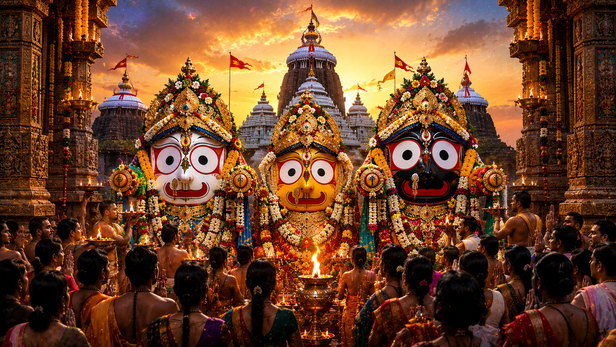
Every year, millions of devotees visit the Jagannath Temple in Puri to witness the grand Rath Yatra. But many believe that Lord Jagannath's wooden idol is replaced every year. The truth is far more fascinating. The sacred process of creating a new idol, known as Navakalevara, follows ancient traditions and takes place only under a rare astrological alignment. It is one of Hinduism's most mysterious and spiritually significant ceremonies, and much of it remains hidden from the public eye.
The Idol Is Not Replaced Every Year
Many people assume that a new idol of Lord Jagannath is carved every year before Rath Yatra. However, this is not true. According to temple traditions, the wooden idols of Lord Jagannath, Lord Balabhadra, Goddess Subhadra, and Sudarshan are replaced only during the sacred Navakalevara ceremony. This rare event does not happen annually but only when a special combination appears in the Hindu lunar calendar.
The Sacred Wood Is Carefully Chosen
The idols are carved from sacred neem trees, known as Daru Brahma. These trees are not selected randomly. Temple priests and the traditional Banajaga team search for trees that meet several scriptural signs described in ancient texts. The selection process itself is treated as a sacred pilgrimage, guided by rituals, prayers, and divine symbolism before any carving begins.
Only Chosen Artisans Create the Idols
The responsibility of carving the new idols belongs to the Maharana family, whose members have served the Jagannath Temple for generations. The work is carried out inside a highly protected area within the temple complex. No visitors or outsiders are allowed to witness the carving. Every step follows centuries-old traditions preserved with complete devotion and secrecy.
The Mystery of Brahma Parivartan
The most sacred part of Navakalevara is Brahma Parivartan, a ritual performed in complete secrecy. During this ceremony, the mysterious Brahma Padartha, believed by devotees to represent the divine spiritual essence, is ceremonially transferred from the old idols to the newly carved ones. Only a select group of temple priests participates in this ritual, and its details remain confidential according to temple tradition.
The Old Idols Receive Final Respect
After the Brahma Parivartan ritual, the old wooden idols are not discarded. Instead, they are ceremonially buried with great reverence at Koili Baikuntha, a sacred area within the Jagannath Temple complex. Devotees believe this represents the divine cycle of renewal, where the Lord accepts a new physical form while preserving the eternal spiritual essence.
Why There Is No Navakalevara in 2026
Navakalevara is celebrated only when the Hindu calendar includes an Adhika Ashadha month, an extra lunar month that appears at irregular intervals, often around 12 to 19 years apart. Since 2026 does not include an Adhika Ashadha, the sacred conditions required for Navakalevara are not fulfilled. As a result, no new idols will be carved this year.
The Spiritual Meaning of Navakalevara
Beyond the rituals, Navakalevara carries a profound spiritual message. Just as the divine accepts a new physical form while the eternal essence remains unchanged, the ceremony reflects the Hindu belief that the soul is immortal while the body is temporary. This sacred tradition reminds devotees that change is a natural part of life, but the divine spirit remains eternal.
Disclaimer This article is based on traditional beliefs and is intended for informational purposes only.
Unlock insightful tips and inspiration on personal growth, productivity, and well-being. Stay motivated and updated with the latest at My Life XP.