
Why Lord Krishna Never Saved His Own Yadava Dynasty
Among the many emotionally powerful mysteries hidden within the Mahabharata and the Bhagavata Purana, few questions disturb devotees as deeply as the destruction of the Yadava dynasty. Lord Krishna, the supreme protector of dharma, the divine strategist of Kurukshetra, and the savior of countless devotees, could stop mighty warriors, defeat terrifying demons, and guide the destiny of the entire world. Yet when his own Yadava clan moved toward destruction, Krishna did not prevent it. For generations, devotees have wondered why. Why did Lord Krishna allow his own dynasty to perish? Why did the divine protector remain silent while the powerful Yadavas destroyed one another? And perhaps most emotionally painful of all, why did Krishna leave Earth shortly afterward, bringing the glorious Dwapara Yuga to an end?
The answers lie not in weakness or helplessness, but in the profound spiritual truths of karma, destiny, divine timing, and the cosmic purpose behind Krishna’s earthly incarnation.
The Yadavas Had Become the Most Powerful Clan on Earth
The Yadava dynasty was no ordinary royal lineage. Under Lord Krishna’s presence and protection, the Yadavas became nearly invincible. Dwarka flourished with prosperity, military power, wealth, and influence beyond imagination. Krishna himself lived among them. Heroes like Balarama, Satyaki, Pradyumna, Samba, and Aniruddha belonged to the clan. Their strength terrified enemies and earned admiration across Bharatavarsha.
But according to the Bhagavata Purana and Mahabharata traditions, over time many Yadavas slowly became consumed by arrogance, pride, intoxication, and the belief that no force in existence could defeat them while Krishna remained among them. This growing arrogance became spiritually dangerous. Throughout Hindu tradition, excessive pride repeatedly leads even the strongest beings toward destruction. Whether it was Ravana, Hiranyakashipu, Duryodhana, or countless others, adharma begins when ego blinds beings to humility and righteousness. The Yadavas, despite being connected to Krishna himself, were not beyond this universal law.
The Curse That Changed the Destiny of Dwarka
One of the most significant events leading to the Yadavas’ destruction involved a curse from great sages. According to the Bhagavata Purana, several Yadava princes once mocked revered rishis by disguising Samba as a pregnant woman and sarcastically asking the sages to predict the gender of the unborn child. The sages immediately understood the insult and became furious. They cursed that Samba would give birth to an iron mace that would ultimately destroy the entire Yadava race.
Soon afterward, the curse began manifesting exactly as foretold. The iron mace was ground into powder and thrown into the sea in an attempt to avoid destiny. Yet destiny unfolded anyway. The iron fragments eventually transformed into deadly reeds that later became weapons during the Yadavas’ final conflict. For devotees, this episode reveals one of the deepest spiritual lessons in Hindu tradition: no one, not even powerful dynasties blessed by divine proximity, can escape the consequences of arrogance and karma forever.
Krishna Knew the End Had Already Been Decided
One of the most emotionally complex truths in this story is that Krishna fully understood what was coming. As Vishnu’s avatar, Krishna was never unaware of destiny. His incarnation itself had a divine purpose. He descended to Earth to destroy adharma, restore balance, and conclude the events of Dwapara Yuga. By the end of the Mahabharata war, most of Earth’s burden had already been removed. Countless powerful warriors whose presence contributed to growing adharma had perished in Kurukshetra. The destruction of the Yadava dynasty became the final stage before Krishna’s departure from Earth. This is why Krishna did not interfere. The divine mission of the avatar was nearing completion.
The Terrifying Final Night of the Yadavas
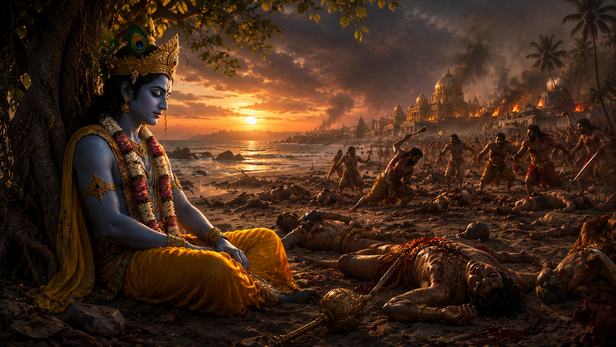
The end of the Yadavas is among the most haunting episodes in Hindu tradition. According to sacred texts, the Yadavas gathered at Prabhasa for pilgrimage and rituals. But intoxication, pride, unresolved anger, and destiny combined into catastrophe. Arguments erupted. Weapons were drawn. The cursed iron reeds transformed into deadly instruments of destruction. One after another, mighty Yadava warriors began killing each other in uncontrollable rage. The scene was devastating.
The same clan once protected by Krishna’s divine presence now collapsed from within. For devotees, the emotional power of this episode lies in its spiritual symbolism. External enemies could never destroy the Yadavas. Only inner arrogance, ego, and destiny could.
Why Krishna Did Not Stop the Destruction
This remains the heart of the mystery. Krishna possessed the power to stop the conflict instantly. The Sudarshan Chakra alone could have ended the violence within moments. Yet Krishna remained detached. The reason lies in one of the central truths of Sanatana Dharma: even divine incarnations do not arbitrarily violate cosmic law once karma matures fully. Throughout the Mahabharata, Krishna repeatedly guided, warned, protected, and advised people. But he rarely erased the consequences of free will entirely. The Yadavas were not innocent victims of random destruction. Their downfall emerged gradually through pride, mockery of sages, intoxication, and spiritual decline. Krishna allowed destiny to unfold because the cycle of karma had reached completion.
Balarama’s Departure Signaled the End
Before Krishna’s own departure, Balarama also left the earthly realm. Sacred texts describe Balarama entering deep meditation before departing in a divine form associated with Shesha, the cosmic serpent of Vishnu. This moment carried enormous symbolic significance. The departure of Balarama indicated that the divine energies sustaining the Yadava era were withdrawing from Earth itself. Soon afterward, Krishna too prepared to leave the mortal world.
Krishna’s Final Moments Were Filled With Divine Peace
One of the most spiritually moving parts of this story is Krishna’s final earthly moment. After the destruction of the Yadavas, Krishna sat peacefully beneath a tree in deep meditation. A hunter named Jara mistakenly struck Krishna’s foot with an arrow, believing it to be a deer. Yet Krishna did not react with anger. Instead, he comforted the hunter and peacefully prepared for his divine departure. For devotees, this moment reveals Krishna’s transcendence over death itself. Unlike ordinary beings, Krishna’s departure was not defeat. It was the conscious completion of an avatar’s mission.
The Spiritual Meaning Hidden Within the Destruction
The destruction of the Yadavas carries profound spiritual lessons that continue to resonate deeply with devotees. The story reminds humanity that worldly power, wealth, influence, and even divine association cannot protect those who abandon humility and dharma. It also reveals that divine love does not always mean preventing consequences. Sometimes divine compassion allows karma to unfold so that cosmic balance remains intact. Most importantly, the story teaches that Krishna’s role was never limited to protecting one family or kingdom. He incarnated for the welfare of the entire universe and the restoration of dharma itself.
Why This Story Still Moves Devotees Today
For many devotees, the destruction of the Yadava dynasty feels emotionally painful because it reveals Krishna in an unusually detached and cosmic role. The loving protector of Vrindavan, the friend of Arjuna, and the savior of Draupadi suddenly appears as the silent witness to his own clan’s destruction. Yet this very contradiction makes the story spiritually unforgettable. It reveals that the divine operates beyond human attachment, beyond favoritism, and beyond temporary worldly relationships. Krishna’s silence was not cruelty. It was cosmic completion.
Conclusion: The Painful End That Fulfilled Divine Destiny
Lord Krishna never saved his own Yadava dynasty because their destruction had become part of the divine conclusion of Dwapara Yuga itself. The downfall emerged not from weakness in Krishna’s protection, but from the unstoppable law of karma, destiny, and cosmic balance. The story remains one of the most emotionally powerful episodes in Hindu tradition because it reveals both the compassion and detachment of the divine. Even those closest to God were not beyond the consequences of arrogance and adharma. And through this heartbreaking ending, devotees are reminded of an eternal truth spoken throughout the Mahabharata and Bhagavata Purana: all worldly power eventually fades, but dharma alone remains eternal under the watchful grace of Lord Krishna.
Unlock insightful tips and inspiration on personal growth, productivity, and well-being. Stay motivated and updated with the latest at My Life XP.