
Why Millions Change Their Offerings When Lord Jagannath Becomes Unwell?
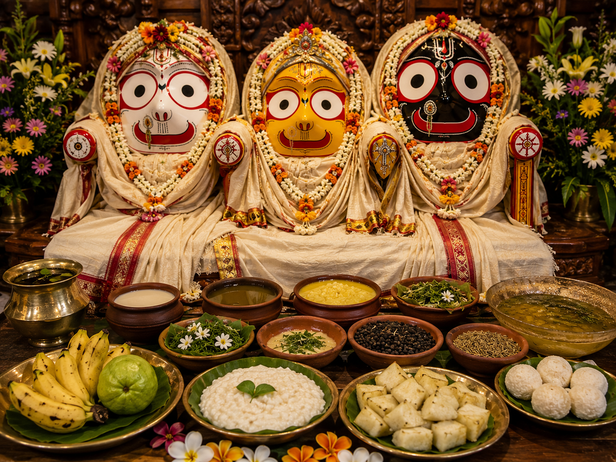
Imagine preparing a feast for someone you love, only to set it aside because they're unwell. Instead, you bring them something light, comforting, and made with care. That is exactly what millions of devotees symbolically do every year for Lord Jagannath. During a unique period known as Anasara, the beloved deity is believed to fall ill after a grand ceremonial bath, and the way people worship Him changes completely. It's one of the most heartwarming traditions in Hinduism, reminding us that true devotion is often expressed through compassion.
When a Grand Celebration Leads to Quiet Rest
The story begins with Snana Purnima, one of the biggest festivals at the Jagannath Temple in Puri. On this day, Lord Jagannath, Lord Balabhadra, and Devi Subhadra are ceremonially bathed with 108 pots of sacred water amid chants, prayers, and celebration. According to tradition, this elaborate bath leaves the deities with a fever. Rather than continuing festivities, they are believed to retire to a private chamber to recover.
This period, called Anasara, lasts around fifteen days. Temple doors remain closed, regular darshan is paused, and an atmosphere of quiet devotion replaces the usual celebrations. It's a tradition that transforms excitement into patience and reminds devotees that even moments of rest can be deeply sacred.
Why the Offerings Become Simple
When someone in our family is ill, we don't serve rich sweets or heavy meals. We choose nourishing food that helps them heal. Devotees follow the same sentiment during Lord Jagannath's Anasara. Instead of the elaborate offerings usually prepared for the Lord, simple foods and traditional herbal preparations become the focus.
Fruits, light dishes, herbal drinks, and sacred medicinal offerings are presented with the belief that they aid His recovery. It's not about offering lessit is about offering what is needed most. This thoughtful change reflects a love that is practical, gentle, and deeply personal. For devotees, caring for the Lord during His illness becomes an act of worship in itself.
The Lesson Hidden Behind Every Offering
This beautiful ritual carries a message that goes far beyond temple traditions. It reminds us that love isn't always about grand gestures or expensive gifts. Sometimes, the greatest expression of affection is simply understanding what someone needs at a difficult moment. During Anasara, devotees aren't trying to impress the Lord with lavish offerings.
Instead, they show empathy, patience, and care. That simple shift in perspective is what makes this tradition so meaningful. In many ways, it reflects our own relationships. The people who truly love us are often the ones who quietly stand by us during our hardest days rather than only celebrating our happiest ones.
Waiting Makes the Reunion Even More Special
One of the hardest parts of Anasara is that devotees cannot have darshan of Lord Jagannath during this time. For many, it feels like missing someone dear. Yet this temporary separation only strengthens their faith. Instead of feeling discouraged, devotees continue praying, singing bhajans, and eagerly waiting for the Lord's return.
Many even visit the Alarnath Temple, believing Lord Jagannath's presence can be experienced there while He recovers. By the time Rath Yatra arrives, the joy of seeing the Lord again becomes even more emotional. The waiting makes the reunion feel truly unforgettable.
A God Who Feels Like Family
Perhaps this is why Lord Jagannath holds such a special place in devotees' hearts. He is not seen as distant or unreachable. He celebrates festivals, travels among His devotees, accepts meals lovingly prepared for Him and, according to tradition, even falls ill.
These deeply human qualities allow people to build an emotional connection with the Divine. Devotees don't just worship Him; they care for Him as they would a beloved member of their own family. That feeling of closeness has kept these traditions alive for centuries, passing naturally from one generation to the next.
More Than a Ritual, It's a Reminder
Every year, millions follow these customs, but the true offering isn't just the food placed before the Lord. It is the compassion behind it. Anasara gently teaches that healing requires patience, that rest should never be ignored, and that genuine care often speaks louder than elaborate celebrations.
In a world that constantly urges us to keep moving, this tradition quietly reminds us of the importance of slowing down for ourselves and for those we love. Perhaps that's why this centuries-old ritual continues to touch hearts even today.
The changing offerings made during Lord Jagannath's illness are not simply part of an ancient tradition they are a beautiful expression of love. They show that devotion isn't measured by how grand an offering is, but by the thought and compassion behind it. As devotees wait for the Lord's return during Rath Yatra, they also carry home a timeless lesson: the purest form of worship is caring with a sincere heart, especially when someone needs it the most.
Unlock insightful tips and inspiration on personal growth, productivity, and well-being. Stay motivated and updated with the latest at My Life XP.