Why Not a Temple? Why Krishna Chose War for Gita
Noopur Kumari | Fri, 17 Apr 2026
The Bhagavad Gita was delivered not in peace, but in the chaos of war, when Arjuna was overwhelmed by fear and doubt. Through Krishna’s guidance, it reveals that true spirituality is not about escaping life’s challenges, but facing them with clarity and responsibility. The Gita teaches that real strength lies in action, not avoidance, making it a guide for everyday struggles.

Krishna Chose Battlefield
Image credit : ChatGPT(AI)
What if the greatest spiritual wisdom was never meant for peaceful moments, but for times of chaos? The teachings of the Bhagavad Gita were not delivered in silence or comfort, but in the intense atmosphere of a battlefield. Fear, confusion, and pressure surrounded everything. In that moment, Arjuna was not strong or composed he was overwhelmed and broken. And that is what makes this teaching so powerful even today. It was not meant for perfect situations, but for real struggles, reminding us that true clarity often comes when life feels the most uncertain and difficult.
The wisdom of the Gita was not shared in a peaceful setting. It was spoken in Kurukshetra, surrounded by warriors ready for war. This setting itself carries a message life’s biggest lessons don’t come when everything is calm. They come when everything feels uncertain. The battlefield represents real life, where decisions are difficult and emotions are intense. It shows that spirituality is not separate from life’s chaos, but deeply connected to it.
![A Warrior in Doubt]()
Arjuna, a skilled warrior, suddenly found himself unable to act. As he saw his own family standing on the opposite side, his courage turned into doubt. His hands began to tremble, and his mind filled with confusion. In that moment, strength gave way to emotion. This reveals a deep truth no matter how strong a person is, emotional pressure can shake even the strongest. It was not weakness, but a natural human conflict between duty and attachment. Arjuna’s breakdown shows that when faced with moral dilemmas and emotional pain, even the most powerful individuals can feel lost and uncertain.
![The Desire to Escape]()
Krishna did not remove the problem; he transformed how Arjuna understood it. Instead of offering escape, he explained duty, purpose, and the importance of action without attachment to results. This shift changed everything. Fear slowly gave way to clarity, and confusion turned into understanding. Arjuna began to see his situation from a higher perspective. Krishna’s teaching was not about comfort or quick relief it was about truth and awareness. He guided Arjuna to rise above emotions and act with wisdom. This lesson shows that real solutions often come not by changing situations, but by changing how we see and respond to them.
Krishna did not remove the problem he changed how Arjuna saw it. He explained duty, purpose, and the importance of action without attachment to results. This shift was powerful. Instead of focusing on fear, Arjuna began to see clarity. Krishna’s teaching was not about comfort, but about truth helping Arjuna rise above confusion and act with understanding.
The message of the Bhagavad Gita is not limited to ancient times it is deeply relevant even today. Modern life brings its own battles, whether it is stress, tough decisions, relationships, or responsibilities. The core lesson remains unchanged: do not run away from challenges. Instead, face them with clarity, patience, and courage. True growth does not come from comfort, but from standing firm when situations feel overwhelming. While the battlefield today may not be physical, the inner conflict is just as real. And just like before, strength comes from understanding, not escape.
Sometimes, the hardest battles are not outside they happen within our own mind. The Bhagavad Gita teaches that life is not about avoiding struggle, but about understanding it with clarity and courage. Running away may feel like an easy option, but it only delays growth and creates more confusion. True strength comes when we face our fears and responsibilities, even when it feels uncomfortable. Standing firm in difficult moments builds character and wisdom. In the end, real power is not found in escape, but in doing what is right, even when it feels like the hardest choice to make.
Unlock insightful tips and inspiration on personal growth, productivity, and well-being. Stay motivated and updated with the latest at My Life XP.
1. Why was the Bhagavad Gita taught on a battlefield?
The Gita was spoken on the battlefield to show that spiritual wisdom is meant for real-life challenges, not just peaceful environments. It teaches how to stay calm and make the right decisions even in difficult situations.
2. Who was Arjuna and why was he confused?
Arjuna was a great warrior in the Mahabharata. He became confused and emotional when he saw his own family members on the opposing side, leading to doubt about his duty.
3. What role did Krishna play in the Gita?
Krishna acted as Arjuna’s guide and mentor. He helped Arjuna understand his duty (dharma), the importance of action, and how to rise above fear and confusion.
4. What is the main message of the Bhagavad Gita?
The Gita teaches that one should perform their duty with focus and without attachment to results. It emphasizes clarity, courage, and responsibility in life.
5. Is the Gita only for spiritual people?
No, the Gita is for everyone. Its teachings apply to daily life, helping people handle stress, make decisions, and face challenges with a balanced mind.
A Battlefield, Not a Temple
Arjuna’s Breaking Point
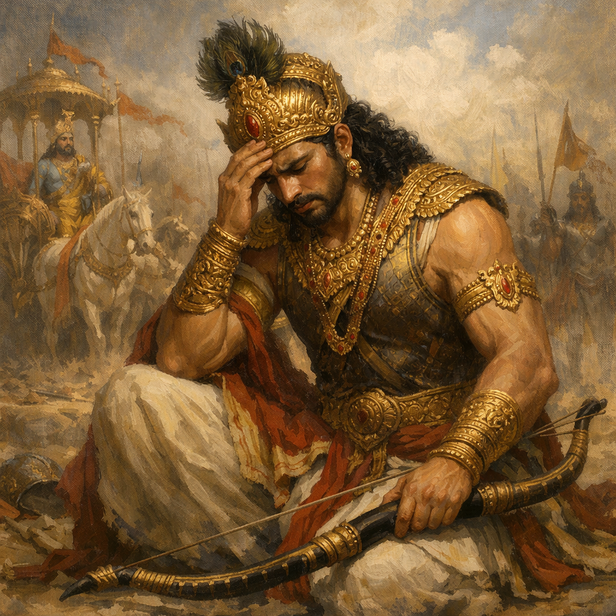
A Warrior in Doubt
Image credit : CHATGPT(AI)
Arjuna, a skilled warrior, suddenly found himself unable to act. As he saw his own family standing on the opposite side, his courage turned into doubt. His hands began to tremble, and his mind filled with confusion. In that moment, strength gave way to emotion. This reveals a deep truth no matter how strong a person is, emotional pressure can shake even the strongest. It was not weakness, but a natural human conflict between duty and attachment. Arjuna’s breakdown shows that when faced with moral dilemmas and emotional pain, even the most powerful individuals can feel lost and uncertain.
The Misunderstood Idea of Renunciation
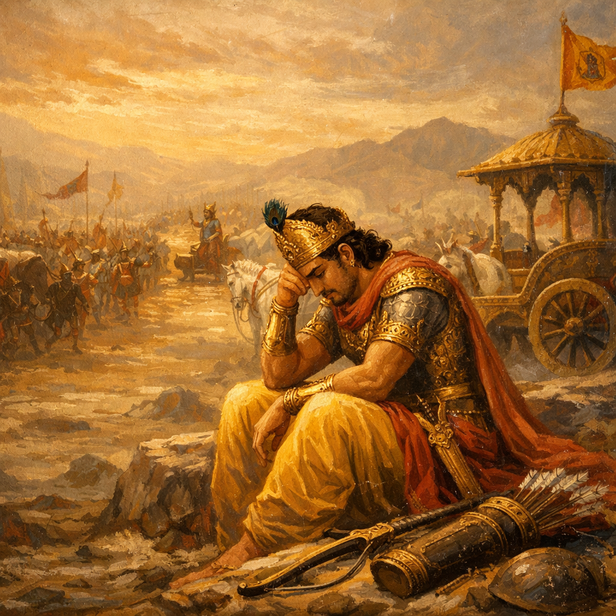
The Desire to Escape
Image credit : CHATGPT(AI)
Krishna did not remove the problem; he transformed how Arjuna understood it. Instead of offering escape, he explained duty, purpose, and the importance of action without attachment to results. This shift changed everything. Fear slowly gave way to clarity, and confusion turned into understanding. Arjuna began to see his situation from a higher perspective. Krishna’s teaching was not about comfort or quick relief it was about truth and awareness. He guided Arjuna to rise above emotions and act with wisdom. This lesson shows that real solutions often come not by changing situations, but by changing how we see and respond to them.
Krishna’s Powerful Shift in Perspective
The Lesson for Modern Life
Facing Life’s Battles
Unlock insightful tips and inspiration on personal growth, productivity, and well-being. Stay motivated and updated with the latest at My Life XP.
Frequently Asked Questions (FAQs)
The Gita was spoken on the battlefield to show that spiritual wisdom is meant for real-life challenges, not just peaceful environments. It teaches how to stay calm and make the right decisions even in difficult situations.
2. Who was Arjuna and why was he confused?
Arjuna was a great warrior in the Mahabharata. He became confused and emotional when he saw his own family members on the opposing side, leading to doubt about his duty.
3. What role did Krishna play in the Gita?
Krishna acted as Arjuna’s guide and mentor. He helped Arjuna understand his duty (dharma), the importance of action, and how to rise above fear and confusion.
4. What is the main message of the Bhagavad Gita?
The Gita teaches that one should perform their duty with focus and without attachment to results. It emphasizes clarity, courage, and responsibility in life.
5. Is the Gita only for spiritual people?
No, the Gita is for everyone. Its teachings apply to daily life, helping people handle stress, make decisions, and face challenges with a balanced mind.