
Why Rama Built Ramanathaswamy Temple After Ravana’s Fall
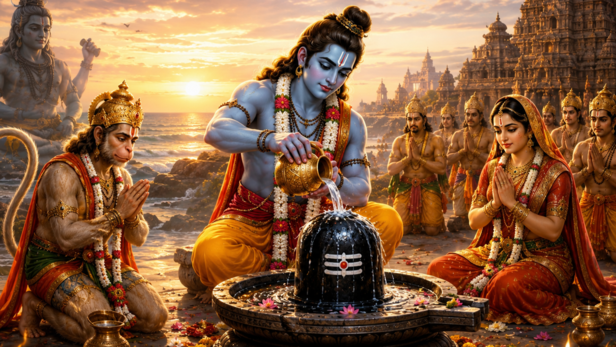
The defeat of Ravana is one of the most celebrated moments in the Ramayana. For devotees across India, it represents the victory of dharma over adharma, truth over arrogance, and righteousness over evil. Yet according to Hindu tradition, the end of the war in Lanka was not a moment of simple celebration for Rama. Even after achieving victory, Rama carried a deep sense of spiritual responsibility and emotional weight. Ravana was not an ordinary enemy. He was a mighty king, a brilliant scholar, and one of the greatest devotees of Shiva. Many scriptures and traditions describe him as a Brahmin by birth who possessed extraordinary knowledge of the Vedas and sacred rituals. Because of this, Rama believed that killing Ravana during the war carried spiritual consequences, even though the battle itself was fought to restore justice and rescue Sita.
According to long standing Hindu belief, Rama wanted to seek purification and offer respect to Shiva after the destruction caused by the war. This spiritual journey eventually led to the creation of the famous Ramanathaswamy Temple, one of the holiest pilgrimage sites in India today.
Why Rama Worshipped Shiva After the War
One of the most important aspects of this story is the relationship between Rama and Shiva. In Hindu tradition, Rama is worshipped as an avatar of Vishnu, while Shiva is revered as one of the supreme deities of the universe. Yet the Ramayana repeatedly shows deep respect and devotion between these divine forms. After the war ended, Rama wished to worship Shiva to seek blessings and spiritual purification. According to temple traditions and regional retellings, sages advised him to install a Shiva Lingam and perform prayers before returning to Ayodhya. This act was not seen as weakness or guilt in the ordinary sense. Instead, it reflected Rama’s commitment to humility, dharma, and cosmic balance. The story carries a powerful spiritual message that even the greatest heroes must remain humble before divine law. Many devotees believe this moment also symbolizes the unity between Shiva and Vishnu traditions within Hinduism.
The Story of Hanuman and the Shiva Lingam
One of the most beloved parts of the Ramanathaswamy tradition involves Hanuman. According to popular legends connected to the temple, Rama asked Hanuman to travel to the Himalayas and bring a sacred Shiva Lingam for the worship ceremony. Hanuman immediately left on his journey, but he did not return before the auspicious time chosen for the ritual began to pass. To avoid delaying the ceremony, Sita is believed to have created a Lingam from sand, which Rama then worshipped. This Lingam became known as the Ramalingam.
When Hanuman finally returned carrying the Lingam from the Himalayas, he was disappointed to see that the ritual had already been completed. According to temple legends, Rama lovingly calmed Hanuman and installed the Lingam brought by him as well. Even today, traditions connected to the temple continue to honor both forms. This emotional episode remains deeply meaningful for devotees because it highlights Hanuman’s devotion and Rama’s compassion toward one of his greatest followers.
How Ramanathaswamy Temple Became One of India’s Holiest Shrines
Over the centuries, Ramanathaswamy Temple became one of the most important pilgrimage centers in Hinduism. Located on Rameswaram island in Tamil Nadu, the temple is considered one of the twelve Jyotirlingas associated with Shiva. The temple is also closely linked to the Ramayana’s sacred geography. Many devotees believe the nearby region is connected to the site where Rama’s army built the bridge to Lanka, often referred to as Ram Setu in Hindu tradition.
Architecturally, the temple is famous for its massive corridors, intricate pillars, and sacred water tanks used for ritual purification. Pilgrims from across India visit the temple not only because of its connection to Shiva but also because it represents one of the deepest spiritual moments in Rama’s journey. The temple’s significance goes beyond mythology alone. It stands as a symbol of devotion, repentance, humility, and the belief that true righteousness includes compassion and spiritual responsibility even after victory.
Why This Story Still Moves Devotees Today
The story of why Rama built Ramanathaswamy Temple after Ravana’s fall continues to touch millions because it reveals a deeply human side of the epic hero. Rama did not celebrate victory with pride alone. Instead, he reflected on the consequences of war, honored divine principles, and sought spiritual balance after immense destruction. For devotees, this story carries timeless lessons about humility, responsibility, and respect for dharma. It also reflects one of the most beautiful ideas in Hindu tradition, that different paths of devotion ultimately lead toward the same divine truth. Perhaps that is why the Ramanathaswamy Temple remains more than a historical or religious site. For countless pilgrims, it represents the moment when victory was transformed into wisdom, devotion, and spiritual understanding.
Unlock insightful tips and inspiration on personal growth, productivity, and well-being. Stay motivated and updated with the latest at My Life XP.