Why Shami Leaves Are Treated Like Gold on Dussehra
Noopur Kumari | Jun 30, 2026, 15:01 IST
The tradition of exchanging Shami leaves on Dussehra traces back to the legendary King Raghu, whose unwavering commitment to his promise became an example for generations. When a disciple sought an enormous Guru Dakshina and a sage tested his devotion, destiny brought them to a king who had already donated everything he owned. What happened next involved Lord Kubera, a shower of gold, and a blessing that continues to inspire one of India's oldest Dussehra customs.

Every Dussehra, millions of people exchange Shami leaves, calling them symbols of gold and prosperity. But have you ever wondered why a simple leaf carries such deep spiritual meaning? The answer is hidden in an extraordinary story of three determined men, an impossible promise, and a miracle that changed tradition forever. This isn't just another mythological tale it is a timeless lesson about integrity, devotion, and keeping one's word, even when the odds seem impossible.
![Disciple Kautsa Seeking Guru Dakshina from Sage Vartantu]()
After completing his education, Kautsa approached his guru, Sage Vartantu, requesting permission to offer Guru Dakshina. The sage initially refused, saying sincere learning was enough. But when Kautsa insisted repeatedly, Sage Vartantu decided to test his disciple's determination. He asked for 14 crore gold coins an amount almost impossible to arrange. Instead of giving up, Kautsa accepted the challenge without hesitation. His journey to fulfil his guru's wish would soon become one of the greatest stories of devotion in Indian tradition.
![King Raghu Living Simply After the Vishwajit Yajna]()
Searching for help, Kautsa reached the kingdom of the legendary King Raghu. To his surprise, the mighty ruler was eating from simple clay utensils because he had recently performed the Vishwajit Yajna, donating all his wealth to charity. Seeing the king's condition, Kautsa quietly prepared to leave without asking for anything. But Raghu noticed him and insisted on knowing why he had come. The king believed that no guest should ever leave his palace disappointed.
After hearing Kautsa's request, King Raghu made a remarkable promise. He assured the disciple that within three days he would arrange the required 14 crore gold coins. The promise shocked everyone because the royal treasury was empty. Yet Raghu believed that a king's word was more valuable than any treasure. Prepared to seek wealth by any means necessary, he even readied himself to approach Lord Kubera, the god of wealth, if that became the only solution.
The gods already knew King Raghu's unmatched courage and unwavering character. Lord Kubera understood that Raghu would stop at nothing to honour his promise. Before the king could even begin his mission, Kubera ordered an extraordinary shower of gold into the royal treasury during the night. When dawn arrived, Raghu found the treasury overflowing with gold coins. It was a divine reward for honesty, commitment, and the determination to never break a promise.
King Raghu happily offered all the newly received wealth to Kautsa. However, the disciple accepted only the exact 14 crore gold coins required for his Guru Dakshina. He politely refused to take even a single extra coin. Deeply impressed by such honesty, King Raghu distributed the remaining gold among his people. His generosity once again proved that real greatness lies not in collecting wealth but in sharing it with those who need it.
How the
The remaining gold was placed beneath a Shami tree before being distributed among the people. Over time, this event became deeply connected with Dussehra celebrations. Even today, people in many parts of India exchange Shami leaves as symbols of gold, prosperity, and blessings. The tradition reminds families that true wealth comes from generosity, honesty, and gratitude rather than material possessions alone.
Moved by King Raghu's unwavering commitment, Kautsa blessed him with a son who would carry forward his glorious legacy. In time, King Raghu was blessed with Prince Aja, who became a renowned ruler of the Ikshvaku dynasty. The story reminds us that keeping promises, helping others, and acting with integrity always leave a legacy far greater than wealth. That is why King Raghu's name continues to inspire generations even today.
Unlock insightful tips and inspiration on personal growth, productivity, and well-being. Stay motivated and updated with the latest at My Life XP.
1. Why are Shami leaves exchanged on Dussehra?
Shami leaves are exchanged on Dussehra as a symbol of gold, prosperity, and blessings. The tradition is linked to the legendary story of King Raghu, who distributed gold placed beneath a Shami tree after fulfilling his promise to disciple Kautsa.
2. Who was King Raghu?
King Raghu was a legendary ruler of the Ikshvaku dynasty, celebrated for his generosity, honesty, and unwavering commitment to keeping his word. His life inspired many traditions associated with Dussehra.
3. Why did Sage Vartantu ask for 14 crore gold coins?
According to the legend, Sage Vartantu asked for 14 crore gold coins to test his disciple Kautsa's determination and devotion after the disciple insisted on offering Guru Dakshina.
4. How did King Raghu arrange the gold coins?
After King Raghu resolved to fulfil his promise, Lord Kubera, impressed by the king's integrity, is believed to have filled the royal treasury with gold before sunrise, allowing Raghu to honour his word.
When One Guru Dakshina Changed Everything

Disciple Kautsa Seeking Guru Dakshina from Sage Vartantu
After completing his education, Kautsa approached his guru, Sage Vartantu, requesting permission to offer Guru Dakshina. The sage initially refused, saying sincere learning was enough. But when Kautsa insisted repeatedly, Sage Vartantu decided to test his disciple's determination. He asked for 14 crore gold coins an amount almost impossible to arrange. Instead of giving up, Kautsa accepted the challenge without hesitation. His journey to fulfil his guru's wish would soon become one of the greatest stories of devotion in Indian tradition.
The King Who Had Already Given Away Everything
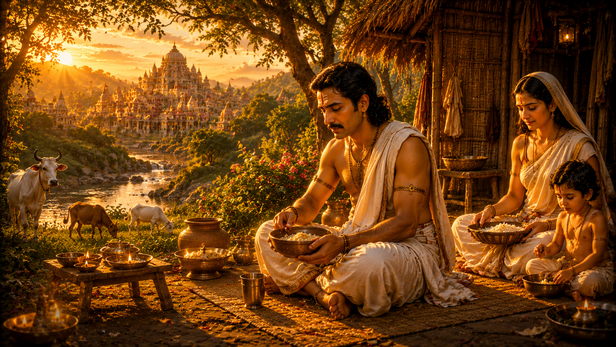
King Raghu Living Simply After the Vishwajit Yajna
Searching for help, Kautsa reached the kingdom of the legendary King Raghu. To his surprise, the mighty ruler was eating from simple clay utensils because he had recently performed the Vishwajit Yajna, donating all his wealth to charity. Seeing the king's condition, Kautsa quietly prepared to leave without asking for anything. But Raghu noticed him and insisted on knowing why he had come. The king believed that no guest should ever leave his palace disappointed.
A Promise That Seemed Impossible to Keep
The Night Gold Fell From the Sky
The Disciple Who Refused Extra Wealth
How the Shami Tree Became a Symbol of Gold
The Blessing That Built a Legendary Dynasty
Unlock insightful tips and inspiration on personal growth, productivity, and well-being. Stay motivated and updated with the latest at My Life XP.
Frequently Asked Questions (FAQs)
Shami leaves are exchanged on Dussehra as a symbol of gold, prosperity, and blessings. The tradition is linked to the legendary story of King Raghu, who distributed gold placed beneath a Shami tree after fulfilling his promise to disciple Kautsa.
2. Who was King Raghu?
King Raghu was a legendary ruler of the Ikshvaku dynasty, celebrated for his generosity, honesty, and unwavering commitment to keeping his word. His life inspired many traditions associated with Dussehra.
3. Why did Sage Vartantu ask for 14 crore gold coins?
According to the legend, Sage Vartantu asked for 14 crore gold coins to test his disciple Kautsa's determination and devotion after the disciple insisted on offering Guru Dakshina.
4. How did King Raghu arrange the gold coins?
After King Raghu resolved to fulfil his promise, Lord Kubera, impressed by the king's integrity, is believed to have filled the royal treasury with gold before sunrise, allowing Raghu to honour his word.