
Why Shiva Wandered With a Skull in His Hand
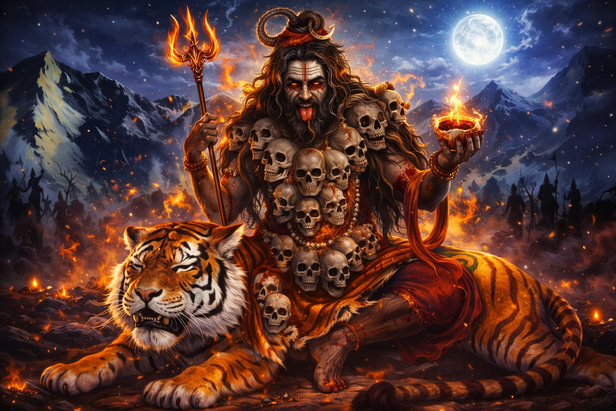
We worship Shiva as the destroyer of evil, the one who ends darkness. But what if there was a time when he carried the weight of the greatest sin himself?
Not as punishment but as a lesson for the universe. A form so intense, so misunderstood, that even today many avoid its truth. This is Kapali the रूप where ego is not just broken, but exposed. Because sometimes, destruction is not about the world It is about destroying what lies within. And facing that truth is the hardest battle of all.
The Sin That Changed Everything
There was a moment when Shiva took a fierce step he severed the head of Brahma. This act, known as Brahmahatya, is considered one of the greatest sins. But why would Shiva do this? It wasn’t anger alone it was the destruction of ego and false pride. Yet, even for Shiva, the consequence remained. The skull stuck to his hand, refusing to leave. This marked the beginning of his Kapali form a reminder that actions, even divine ones, carry weight.
The Skull That Wouldn’t Let Go
No matter where Shiva went, the skull of Brahma stayed attached to his hand. He wandered across worlds, carrying this burden. This wasn’t just physical it was symbolic. It showed that karma cannot be escaped, not even by the divine. The Kapali form represents acceptance of consequences. Instead of avoiding it, Shiva embraced it. And in that acceptance lies the first step toward transformation.
Why Kapali Lives in the Cremation Ground
In his Kapali form, Shiva resides in the cremation grounds. A place most people fear. But why? Because the shmashan is where ego ends. Titles, wealth, pride everything disappears here. Kapali teaches that nothing is permanent. The end is not the end it is a transition. This is where karma completes one cycle and prepares for another. It’s not darkness it’s truth in its rawest form.
The Moment Everything Changed in Kashi
After wandering endlessly, Shiva reached Kashi. And something extraordinary happened. The skull finally fell from his hand. No force. No struggle. It simply dropped. Why here? Because Kashi is not just a city it is a space of liberation. This moment signifies that true release comes when understanding is complete. When ego dissolves karma loses its hold.
The Hidden Meaning of Kapali
Kapali is not a terrifying form it is a truthful one. Shiva teaches that ego must be destroyed, even if it feels uncomfortable. He shows that transformation comes through acceptance, not escape. This form is deeply connected to moksha freedom from cycles. It reminds us that growth often comes from facing our darkest truths, not avoiding them.
What You Can Learn From This
In life, we all carry burdens mistakes, regrets, ego. Like Shiva, we try to escape them. But the real solution is acceptance. Face your actions. Learn from them. Let go of ego. Because only then can you move forward. Your “Kashi moment” will come when things finally release. But only if you are ready to transform.
Unlock insightful tips and inspiration on personal growth, productivity, and well-being. Stay motivated and updated with the latest at My Life XP.
Frequently Asked Questions (FAQs)
1. Who is Kapali?
Kapali is a fierce form of Shiva, where he carries the skull (kapal) of Brahma. It symbolizes karma, consequence, and the destruction of ego.
2. Why did Shiva cut Brahma’s head?
According to traditional stories, it was to destroy arrogance and false pride. However, this act is considered Brahmahatya (a great sin), which led to Shiva carrying the skull.
3. Why did the skull stick to Shiva’s hand?
The skull represents unavoidable karma. It stayed with him as a reminder that even divine actions carry consequences.
4. Why is Kapali associated with cremation grounds?
Cremation grounds symbolize the end of ego, attachment, and material identity. Kapali represents truth beyond illusion and the cycle of life and death.
5. What happened in Kashi?
When Shiva reached Kashi, the skull finally detached from his hand, symbolizing liberation (moksha) and release from karma.