
Why the Strongest Warriors in Mahabharata Died the Most Painful Deaths
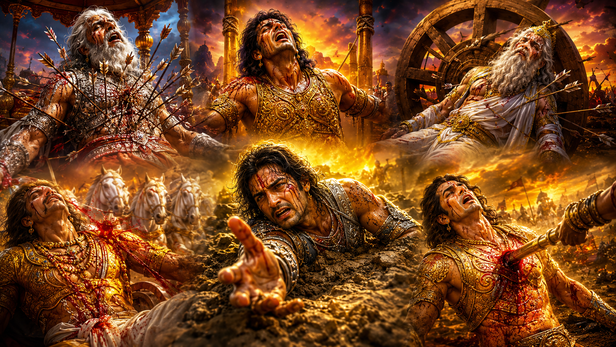
The strongest warriors in the Mahabharata could defeat entire armies. Some had divine weapons Some had blessings from gods.
Some were considered almost impossible to kill. Yet something shocking happened. Most of them did not die glorious or peaceful deaths. Instead, their endings were tragic, emotional, lonely, or unbearably painful. And that raises a question many people still wonder about today: Why did the greatest warriors suffer the hardest endings? The answer hidden inside the Mahabharata is far deeper than war.
Because the epic was never only about strength. It was about karma, ego, duty, choices, and the painful cost of human flaws.
Bhishma’s Silence Became His Greatest Pain
Bhishma was one of the wisest and most powerful warriors in the Mahabharata. He had the blessing of choosing the moment of his death. Yet he spent days lying helplessly on a bed of arrows. Why? Because despite his wisdom, Bhishma remained silent during Draupadi’s humiliation. He chose loyalty to the throne over speaking against adharma. The Mahabharata repeatedly teaches that silence during injustice also carries consequences. Bhishma’s painful end symbolized a painful truth even good people suffer when they knowingly support or tolerate wrong actions for the sake of duty or attachment.
Karna Lost Everything Because Of Loyalty
Karna remains one of the most emotionally loved characters in the Mahabharata. He was brave, generous, and extraordinarily skilled. Yet his life became filled with rejection, curses, and emotional pain. Karna knowingly stood beside Duryodhana despite understanding his flaws. His loyalty blinded him to dharma. During his final battle, his chariot wheel sank, his divine weapons failed, and fate turned completely against him. Karna’s story teaches a heartbreaking lesson loyalty becomes dangerous when it forces someone to stand beside injustice, even if their intentions are noble.
Abhimanyu Paid The Price For Half Knowledge
Abhimanyu was fearless, talented, and unbelievably courageous. But he knew only how to enter the Chakravyuh formation not how to escape it. Even then, he entered the battlefield to protect his family and dharma. Surrounded unfairly by multiple warriors, Abhimanyu fought heroically until his tragic death. His story carries a lesson that still feels modern today. Half knowledge combined with overconfidence can become dangerous. Courage is powerful, but preparation and complete understanding are equally important before entering life’s difficult battles.
Duryodhana’s Ego Destroyed Everything
Duryodhana had wealth, power, army, and influence. But his jealousy and ego consumed him completely. He could never accept the success or respect given to the Pandavas. Even after countless warnings from Krishna, elders, and wise advisors, Duryodhana refused to change. His painful death symbolized the destruction caused by unchecked pride. The Mahabharata repeatedly warns that ego blinds people slowly. Once someone becomes addicted to power, revenge, and comparison, even intelligence stops working properly. Duryodhana lost not because he lacked strength he lost because he lacked humility.
The Mahabharata Was Never Really About War
The biggest twist hidden inside the Mahabharata is that almost nobody truly “won” the war emotionally. Even the victorious Pandavas suffered immense grief afterward. Families were destroyed. Relationships were shattered. The epic ultimately teaches that inner flaws create outer destruction. Anger, silence, ego, attachment, jealousy, and blind loyalty slowly destroy even the strongest individuals. That is why the greatest warriors faced the most painful endings because strength alone cannot save someone from the consequences of human choices. The Mahabharata was never just a story about weapons. It was a story about human psychology and karma.
Unlock insightful tips and inspiration on personal growth, productivity, and well-being. Stay motivated and updated with the latest at My Life XP.
Frequently Asked Questions (FAQs)
1. Why did the strongest warriors in the Mahabharata suffer painful deaths?
The Mahabharata teaches that strength alone cannot protect someone from karma, wrong choices, ego, silence, or attachment. Many powerful warriors suffered because of moral conflicts and personal flaws.
2. Why is Bhishma’s death considered so tragic?
Bhishma died on a bed of arrows despite having the power to choose his death. His suffering is often connected to his silence during important moments of injustice, especially Draupadi’s humiliation.
3. What was Karna’s biggest mistake according to the Mahabharata?
Karna remained loyal to Duryodhana even when he understood the difference between dharma and adharma. His story shows how blind loyalty can lead to tragic consequences.
4. Why is Abhimanyu’s story so emotional?
Abhimanyu entered the Chakravyuh bravely despite knowing only half the strategy. His death symbolizes courage, sacrifice, and the danger of incomplete knowledge.
5. How did ego destroy Duryodhana?
Duryodhana allowed jealousy, pride, and hatred toward the Pandavas to control his decisions. Even repeated warnings could not change his mindset