
Why This One Ramayana Scene Still Has No Simple Answer
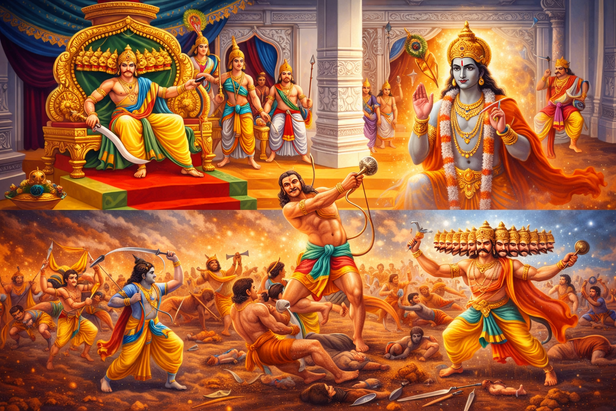
In the Ramayana, strength is often mistaken for muscles and weapons, but a quiet moment before the war of Lanka revealed a deeper truth. Angada, a young prince and devoted messenger of Lord Rama, placed his foot on the ground and challenged the warriors of Lanka. None could move it. This was not arrogance or magic. It was the power of faith, duty, and inner discipline. Lord Rama chose Angada for his wisdom, courage, and loyalty, proving trust is the highest strength. Written in simple language, this story shows how devotion and righteousness can silence even the mightiest power, a lesson still meaningful today.
The Last Call for Peace
Before arrows were released and conches echoed across the sea, Lord Rama chose peace over conflict. After crossing the ocean and reaching the gates of Lanka, he still offered Ravana one final chance to return Sita and avoid war. A messenger was sent not out of fear, but out of righteousness and compassion. This moment reveals Rama’s moral leadership and deep faith in dharma. Rooted in the Ramayana’s timeless wisdom, this episode teaches that true strength lies in restraint and ethical action. Even today, it reminds readers that giving space for change is a mark of true authority and inner power.
Angada Was Chosen
Many expected Hanuman to be chosen as the messenger, known for unmatched strength and wisdom. Yet Lord Rama selected Angada with clear purpose. Rama understood that sending only Hanuman could make Lanka believe there was a single hero in his army. By choosing Angada, he revealed the depth and unity of his forces. This decision also honored Angada as the future king of Kishkindha and tested his leadership. Drawn from the Ramayana and spiritual tradition, this moment highlights strategic wisdom, trust, and foresight, showing how true leadership empowers others and builds confidence beyond individual strength.
The Qualities of a True Messenger
A true messenger must be brave, respectful, loyal, and wise. Angada carried all these qualities with quiet confidence. He spoke clearly without fear and without insult, honoring Lord Rama’s message with dignity. His calm presence in Ravana’s court showed that real power does not rely on loud words or threats. It stands firm through self control and inner balance. Rooted in the Ramayana’s teachings, this moment reflects leadership built on ethics and restraint. Even today, Angada’s conduct reminds us that respect and composure can command more authority than aggression or force.
Ravana’s Temptation and Angada’s Choice
Ravana attempted to sway Angada by reminding him of his father Vali and tempting him with wealth and authority. Angada did not pause or waver. He chose righteousness over comfort and loyalty over power. This moment revealed the depth of his devotion and moral clarity. Lord Rama’s trust in Angada was fully justified through this unwavering stand. Drawn from the Ramayana, this episode highlights a timeless truth that true strength is the ability to reject temptation and remain aligned with dharma, even when great rewards are offered.
The Foot That Could Not Be Moved
Ravana attempted to sway Angada by recalling his father Vali and tempting him with wealth and power. Angada did not pause or doubt. He chose righteousness over comfort and loyalty over ambition. This moment revealed the depth of his devotion and moral clarity. By standing firm, Angada proved worthy of Lord Rama’s trust. Drawn from the Ramayana and spiritual tradition, this episode highlights how true strength lies in unwavering values. It reminds readers that integrity tested in moments of temptation becomes the foundation of lasting honor and inner peace.
The Spiritual Meaning Behind the Story
The Ramayana teaches that when actions arise from righteousness, strength grows naturally. Angada’s unmoving foot symbolized deep inner stability and moral grounding. A person rooted in truth cannot be shaken by fear, temptation, or pressure. This wisdom extends beyond mythology into everyday life. When values remain clear, challenges lose their hold over the mind. Based on timeless spiritual insight and lived experience, this lesson shows that real power begins within. Integrity creates confidence, and confidence builds resilience, allowing individuals to face life with calm strength and lasting clarity.
Unlock insightful tips and inspiration on personal growth, productivity, and well-being. Stay motivated and updated with the latest at My Life XP.
Frequently Asked Questions (FAQs)
Why was Angada chosen as the messenger instead of Hanuman?
Lord Rama chose Angada to show that his army had many capable leaders, not just one. It also honored Angada as the future king of Kishkindha and tested his loyalty and wisdom.
What was special about Angada’s foot in Ravana’s court?
Angada’s foot symbolized inner strength rooted in devotion and righteousness. No one could move it because his resolve and faith were unshakable.
Was Angada’s power physical or spiritual?
While Angada was physically strong, the Ramayana highlights his spiritual strength. His devotion to Lord Rama gave him calm confidence and moral authority.
What lesson does this story teach for daily life?
The story teaches that when values are firm, external challenges lose power. Inner stability creates lasting strength.
Why is this episode still relevant today?
It reminds us that true power comes from integrity, self control, and faith, qualities that remain meaningful in modern life.