
Why Tulsi Is Placed in the Mouth Before Death
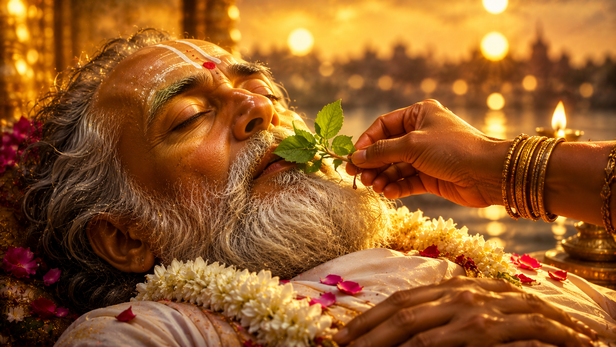
When a person approaches the final moments of life, Hindu traditions follow several sacred rituals that have been passed down for thousands of years. One of the most mysterious practices is placing a Tulsi leaf in the person's mouth and laying them upon Kusha grass while sesame seeds are kept nearby. Most people perform these rituals because they have seen their elders do the same. But have you ever wondered why? What is so special about Tulsi, Kusha grass, and sesame seeds that they become important during a person's final journey? The answer lies in ancient scriptures, profound symbolism, and a spiritual understanding of life and death that continues to fascinate seekers even today.
The Ritual That Begins the Final Journey
In Hindu tradition, death is not viewed as an ending but as the beginning of another journey. Because of this belief, special rituals are performed to create a sacred atmosphere around the departing soul. Family members place holy objects near the person to encourage peace, devotion, and spiritual focus. These practices are not merely customs; they symbolize a connection with divine energies during a critical transition. Ancient texts describe the final moments as deeply significant, making every ritual an act of love, prayer, and spiritual support for the soul.
Why Tulsi Holds a Special Place
Tulsi is deeply associated with Lord Vishnu and is regarded as one of the holiest plants in Hinduism. Traditional beliefs state that offering Tulsi at the time of death helps keep the mind connected to the Divine. For centuries, devotees have considered Tulsi a symbol of purity, protection, and spiritual grace. The leaf represents devotion and surrender. By placing Tulsi near or upon the person, loved ones express a prayer that the departing soul remains focused on God rather than fear, confusion, or attachment during its final moments.
The Mystery Behind Sesame Seeds
Sesame seeds, known as til, are frequently used in Hindu rites related to ancestors and spiritual purification. Ancient traditions describe them as symbols of sanctity and protection. Their presence during final rituals is believed to create an atmosphere of spiritual purity. While interpretations vary across regions and traditions, sesame seeds often represent the removal of negative influences and obstacles. They remind devotees that even the smallest offerings can carry deep spiritual significance. This is why til remains an important part of many rituals associated with remembrance and prayer.
Why Kusha Grass Is Considered Divine
Kusha grass occupies a special place in Hindu rituals. Sacred texts describe it as pure and suitable for religious ceremonies, meditation, and offerings. According to traditional beliefs, many divine energies are associated with this grass. Because of its sacred status, Kusha is often used during rites connected to worship, ancestral ceremonies, and spiritual practices. Placing a person on Kusha during their final moments symbolizes purity and spiritual elevation. It reflects the belief that the soul should depart in a sacred environment filled with prayer and divine remembrance.
A Symbol of Divine Protection
The deeper meaning of Tulsi, Kusha, and sesame seeds goes beyond physical objects. Together, they create a spiritual message. Tulsi represents devotion. Kusha symbolizes purity. Sesame seeds signify sacred offering and protection. When combined, they express a family's hope that the departing soul remains under divine care. Whether viewed symbolically or spiritually, these rituals offer comfort during one of life's most emotional moments. They transform grief into prayer and remind loved ones that faith continues even when words fail.
The Lesson Hidden Within the Tradition
Ancient traditions repeatedly emphasize one message: the state of mind at the end of life matters. The use of sacred objects serves as a reminder to cultivate devotion, kindness, and spiritual awareness while alive. Rather than waiting for the final moment, scriptures encourage people to build a relationship with the Divine throughout life. Tulsi, Kusha, and other sacred symbols point toward a larger truth that inner purity and faith are the real preparations for life's final journey. The ritual is meaningful because it reflects a lifelong spiritual path.
Why These Traditions Still Matter Today
In today's fast-moving world, many people search for meaning during moments of loss. Ancient rituals endure because they offer more than ceremony they provide connection, comfort, and hope. Families find strength in traditions that have guided generations before them. Whether one interprets these practices literally, symbolically, or spiritually, they continue to remind people of life's deeper dimensions. The presence of Tulsi, Kusha, and sesame seeds reflects humanity's timeless desire to honor loved ones and seek peace beyond the uncertainties of life and death.
Unlock insightful tips and inspiration on personal growth, productivity, and well-being. Stay motivated and updated with the latest at My Life XP.
Frequently Asked Questions (FAQs)
1. Why is a Tulsi leaf placed in a person's mouth before death?
According to Hindu traditions and interpretations found in the Garuda Purana, Tulsi is considered highly sacred to Lord Vishnu. Placing a Tulsi leaf near or in the mouth of a dying person symbolizes devotion, purity, and remembrance of God during the soul's final journey.
2. What is the spiritual significance of Tulsi at the time of death?
Tulsi is believed to create a spiritually pure environment and help direct the mind toward divine remembrance. It is regarded as a symbol of protection, faith, and surrender to God.
3. Why is Kusha grass placed beneath a dying person?
Kusha grass is considered sacred in Hindu rituals. Traditional beliefs describe it as spiritually purifying, making it suitable for important ceremonies, including those associated with a person's final moments.
4. What makes Kusha grass so special in Hinduism?
Ancient scriptures associate Kusha grass with purity and divine energy. It is widely used in yajnas, ancestral rituals, meditation practices, and religious ceremonies.
5. Why are sesame seeds (Til) kept near the dying person?
Sesame seeds are traditionally used in rituals related to purification and ancestor worship. They are believed to help create a sacred atmosphere and are considered auspicious in many Hindu ceremonies.