
Why Yudhishthir Could Not Cut His Stop Loss
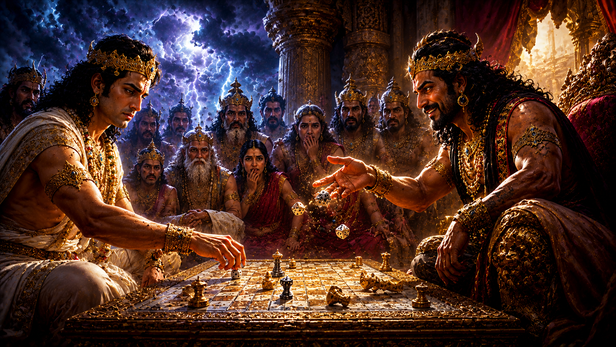
Every trader knows the importance of a stop loss. Yet almost every trader has ignored one. The chart moves against them. The loss grows bigger. Logic says exit. Ego says wait. And that is where the real battle begins. Surprisingly, this battle was explained thousands of years ago in the Mahabharata through Yudhishthir's disastrous game of dice. What happened in that royal court mirrors what happens in trading accounts every single day. The lesson is uncomfortable, powerful, and impossible to ignore once you see it.
The First Loss Was Not Money
Most people think Yudhishthir lost because of bad luck or manipulation. But his first loss was not wealth, power, or kingdom. It was emotional control. Every trader experiences this moment. A trade moves against expectations, yet instead of accepting the mistake, they become emotionally attached to the outcome. The need to be right becomes stronger than the need to protect capital. Yudhishthir faced the same trap. The game stopped being about wisdom and started becoming about proving himself right at any cost.
When Dharma Turns Into Ego
Yudhishthir was known as Dharmaraj, the embodiment of righteousness. Yet that very identity became his weakness. He believed he could navigate every situation through his principles. Over time, this confidence turned into rigidity. In trading, something similar happens when traders become overly attached to their analysis. They trust their setup so much that they stop questioning it. What begins as confidence slowly transforms into arrogance. The market does not punish ignorance alone it also punishes excessive certainty.
The Dangerous Need to Recover
After each defeat, Yudhishthir believed the next move could reverse everything. Traders experience the same temptation. One losing trade becomes two. Two become three. Soon, every decision is driven by the desire to recover losses rather than follow a plan. This emotional state creates irrational behavior. Instead of managing risk, people increase it. They bet more, hold longer, and ignore warning signs. The focus shifts from protecting capital to chasing redemption. That is often where the greatest damage occurs.
The Cost of Refusing to Exit
Yudhishthir had multiple opportunities to walk away. Yet he continued until he lost his wealth, kingdom, brothers, and even Draupadi. Every trader has similar moments. The market provides chances to accept a small loss and move on. Refusing those opportunities can turn manageable setbacks into devastating ones. The lesson is simple but difficult to practice. Small losses are expenses. Large losses are consequences. Knowing when to stop often determines long-term survival.
Why Smart People Make This Mistake
One of the biggest myths in trading is that intelligence prevents mistakes. In reality, intelligent people often create stronger justifications for bad decisions. They find more reasons to stay in losing positions. They search for information that confirms their beliefs while ignoring evidence that contradicts them. Yudhishthir was wise, educated, and respected. Yet wisdom alone did not save him from psychological bias. The market teaches the same lesson repeatedly. Success depends less on being right and more on managing mistakes effectively.
The Real Purpose of a Stop Loss
Many people think a stop loss is designed to protect money. In reality, its primary purpose is to protect the trader's mindset. It creates a boundary between logic and emotion. Once that boundary disappears, decisions become increasingly irrational. A stop loss is an admission that no analysis is perfect. It accepts uncertainty and limits damage before emotions take control. The most successful traders understand that preserving capital is more important than proving their predictions correct.
The Lesson Hidden in the Mahabharata
The story of Yudhishthir is not merely about gambling or destiny. It is about human psychology. The inability to accept mistakes, the attachment to being right, and the refusal to walk away when necessary are struggles that exist even today. Whether in trading, business, or life, people often lose everything while trying to avoid admitting a small mistake. The Mahabharata reminds us that wisdom is not just knowing what is right. Wisdom is having the courage to act on it.
Unlock insightful tips and inspiration on personal growth, productivity, and well-being. Stay motivated and updated with the latest at My Life XP.
Frequently Asked Questions (FAQs)
1. Why is Yudhishthir's dice game compared to trading?
Yudhishthir's actions reflect a common trading mistake continuing to risk more after losses instead of accepting a setback and moving on. His story mirrors the psychology behind refusing to cut losses.
2. What was Yudhishthir's biggest mistake during the game?
His biggest mistake was not stopping when he had the chance. Instead of recognizing the danger, he continued playing and kept increasing the stakes.
3. How does ego affect stop-loss decisions?
Ego makes people believe they cannot be wrong. As a result, they hold losing positions longer than they should, hoping to prove themselves right instead of protecting their capital.
4. What is the psychological reason traders avoid cutting losses?
Many traders become emotionally attached to their analysis and fear admitting a mistake. This attachment often causes them to ignore risk management rules.
5. What is "escalation of commitment"?
It is a psychological tendency where people continue investing time, money, or effort into a losing situation because they have already invested so much.