Are Chatbots Quietly Turning the Internet Into a Place Without Humans?
Kashish Pandey | Aug 16, 2026, 18:00 IST
More and more of the internet is now made up of machines talking to machines. This raises a real question people are searching for answers to, is AI quietly replacing the human internet as we know it. This article looks at the post human internet trend, the rise of chatbots and the internet, and how AI bots taking over internet traffic is changing the way people talk, work, and connect online, based on the dead internet theory and recent AI chatbots communication research.

AI Bots
Image credit : Chatgpt[AI]
Think about the last time you sent a message online. There is a growing chance that a chatbot helped write it, and a growing chance that a chatbot on the other end read it too. This is not a joke anymore. Reports from 2026 show that bots now make up more than half of all web traffic. Some experts call this the dead internet theory, and it is starting to feel less like a conspiracy and more like a simple fact about how the internet works today.
![AI Bots]()
Cloudflare, a company that manages traffic for millions of websites, found that bots generate more than half of all page requests today. Another security firm called Human Security found that AI agents which actually click links, fill forms, and complete tasks on their own grew massively in just one year. This is not old spam traffic. This is a new kind of activity where AI systems act like real users, browsing, clicking, and even chatting with other AI systems without a human in the middle.
A lot of this shift is happening quietly, in normal daily tasks. Job seekers now use AI chatbots to write and send out resumes and cover letters. On the other side, many companies use AI tools to read and screen those same applications. Students use AI to write essays, and teachers use AI to grade them. Even long work emails are often written by one chatbot and summarized by another. In some cases people are even creating digital versions of themselves, sometimes called digital twins, so an AI version can attend meetings or answer messages when they are not free.
![AI talks]()
Researchers have started calling this pattern a bot loop. This happens when both sides of a conversation, chat, email, or call are actually run by AI, with humans mostly just approving what happens. It sounds convenient, but there is a catch. When two AI systems talk to each other, they can copy each other's mistakes instead of catching them. A small error can bounce back and forth without anyone noticing, since no human is checking the details closely.
This becomes a serious issue in fields like healthcare, where one AI tool might read a scan, another might assign a hospital room, and a third might decide treatment order. If the very first AI reading is wrong and no human checks it, that mistake can quietly move through the whole system.
People have worried about new technology changing communication before. Old critics worried that the telephone would ruin polite conversation, and some even said early email was too fast and would flood people with pointless messages. But AI chatbots are a bit different. Older tools simply carried human messages from one person to another. Chatbots can actually create the message themselves and sound like a real person while doing it. That is why some researchers say we are heading toward a more post human internet, where a smaller share of everything we read, hear, or reply to online was actually typed by a human being.
![AI make things easier]()
Not everyone agrees this is only negative. Many people say AI chatbots and the internet are becoming more efficient together, since tasks that used to take hours, like writing job applications or answering repeated customer questions, now take minutes. But researchers also point out a real risk. If people get too used to smooth, easy AI conversations, they may slowly lose patience for the natural mess of talking to real humans, who forget things, disagree, or take time to reply.
Unlock insightful tips and inspiration on personal growth, productivity, and well-being. Stay motivated and updated with the latest atMy Life XP.
What Is Actually Happening Online
AI Bots
Image credit : Chatgpt[AI]
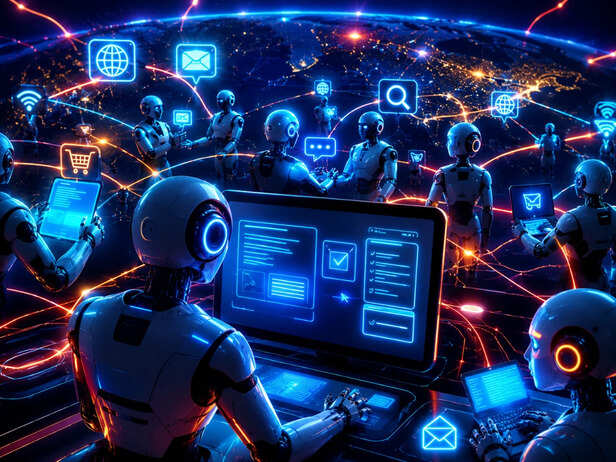
Cloudflare, a company that manages traffic for millions of websites, found that bots generate more than half of all page requests today. Another security firm called Human Security found that AI agents which actually click links, fill forms, and complete tasks on their own grew massively in just one year. This is not old spam traffic. This is a new kind of activity where AI systems act like real users, browsing, clicking, and even chatting with other AI systems without a human in the middle.
People Are Letting Bots Speak For Them
A lot of this shift is happening quietly, in normal daily tasks. Job seekers now use AI chatbots to write and send out resumes and cover letters. On the other side, many companies use AI tools to read and screen those same applications. Students use AI to write essays, and teachers use AI to grade them. Even long work emails are often written by one chatbot and summarized by another. In some cases people are even creating digital versions of themselves, sometimes called digital twins, so an AI version can attend meetings or answer messages when they are not free.
The Bot Loop Problem
AI talks
Image credit : Chatgpt[AI]
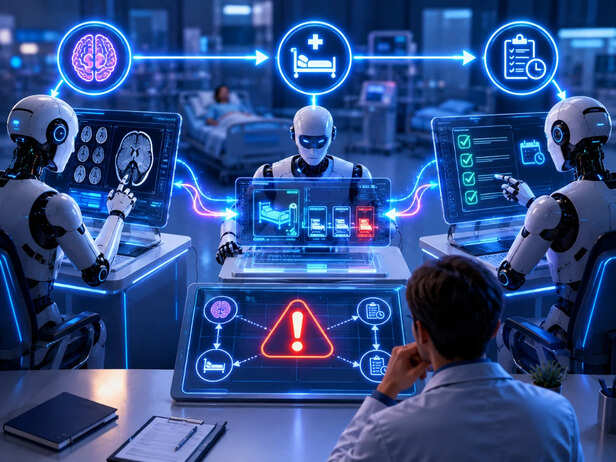
Researchers have started calling this pattern a bot loop. This happens when both sides of a conversation, chat, email, or call are actually run by AI, with humans mostly just approving what happens. It sounds convenient, but there is a catch. When two AI systems talk to each other, they can copy each other's mistakes instead of catching them. A small error can bounce back and forth without anyone noticing, since no human is checking the details closely.
This becomes a serious issue in fields like healthcare, where one AI tool might read a scan, another might assign a hospital room, and a third might decide treatment order. If the very first AI reading is wrong and no human checks it, that mistake can quietly move through the whole system.
Why This Feels Different From Past Tech Shifts
Is This Really a Bad Thing
AI make things easier
Image credit : Chatgpt[AI]
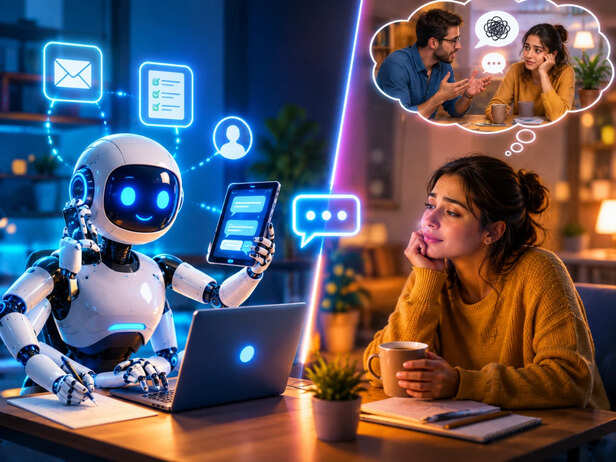
Not everyone agrees this is only negative. Many people say AI chatbots and the internet are becoming more efficient together, since tasks that used to take hours, like writing job applications or answering repeated customer questions, now take minutes. But researchers also point out a real risk. If people get too used to smooth, easy AI conversations, they may slowly lose patience for the natural mess of talking to real humans, who forget things, disagree, or take time to reply.
The idea of a post human internet is no longer just an online theory, it is backed by real traffic numbers and real daily habits. AI bots taking over internet spaces does not mean humans disappear completely, but it does mean a shrinking share of what we read and reply to online comes from an actual human on the other side. As chatbots keep growing more common in daily communication, it may be worth pausing sometimes to ask a simple question, am I really talking to a person right now, or just another very convincing bot.
Unlock insightful tips and inspiration on personal growth, productivity, and well-being. Stay motivated and updated with the latest atMy Life XP.