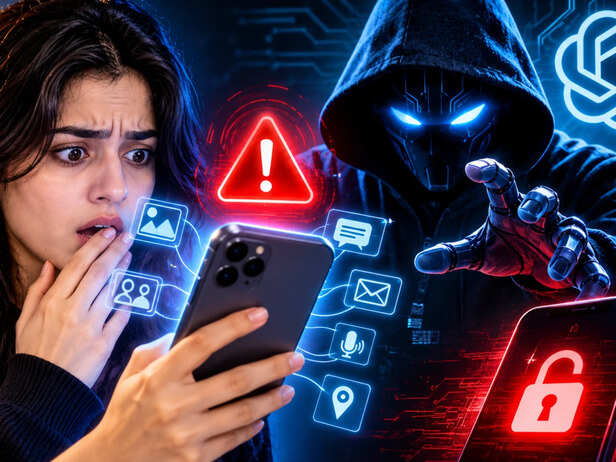
Your smartphone stores far more than photographs and contact numbers. It may contain private conversations, banking details, saved passwords, work documents and access to your social media accounts. That makes it an attractive target for cybercriminals.
Your Phone May Be More Vulnerable Than You Think
![AI Hack]()
AI Hack
Image credit : ChatGPT
Now, artificial intelligence is changing how security experts look for weaknesses in digital systems. OpenAI's introduction of GPT-6 Cyber has brought this development into focus. The model is designed to identify software vulnerabilities, test whether they can be exploited and help researchers develop fixes.
This raises an important question: if AI can find weaknesses in complex software, could it also make it easier for hackers to target ordinary smartphone users?The answer is more complicated than a simple yes or no.
What Is GPT-6 Cyber and Why Is Everyone Talking About It?
GPT-6 Cyber is a specialised AI model developed by OpenAI for cybersecurity research. It can help authorised security professionals investigate software, identify vulnerabilities and check whether potential attacks are possible.
According to OpenAI, the model helped researchers identify 81 previously unknown high-severity vulnerabilities in Firefox. It also helped develop working exploits for hundreds of Linux kernel vulnerabilities. These findings were shared with the relevant maintainers, who could work on security fixes.The model is initially available to a limited group of approved customers through OpenAI's Daybreak Red programme. It is not a public smartphone-hacking application that anyone can download and use.
Its purpose is to help defenders find weaknesses before malicious actors can take advantage of them.
Can AI Hack Your Phone Without You Knowing?
AI does not automatically give someone access to your phone. However, it can change the way cyberattacks are developed.
Here are a few ways AI-assisted cybercrime could increase digital risks:
1. Finding Software Weaknesses Faster
Every app and operating system contains software code. Sometimes, mistakes in that code create security gaps that attackers can exploit.AI tools can help researchers examine large amounts of code and identify suspicious weaknesses more quickly. If criminals gain access to similar capabilities, they may also use them to search for vulnerabilities.This is why timely security updates matter. A vulnerability that has been identified but not fixed can leave devices exposed.
2. Making Fake Messages More Convincing
Have you ever received a message claiming that your bank account will be blocked unless you click a link?Such messages are examples of phishing attempts. AI can help criminals create more convincing messages, improve grammar, imitate communication styles and personalise scams.A message that looks professional is not necessarily genuine. Always check the sender and avoid clicking unexpected links, even when the message appears urgent.
3. Making Fake Customer Support More Believable
Cybercriminals often pretend to be bank representatives, delivery agents or customer service employees.AI-generated text, voice and images could make these impersonation attempts harder to recognise. Someone may receive a convincing call or message asking them to verify an account or share a one-time password.Remember that legitimate bank representatives should not ask you to reveal your OTP, PIN or password.
4. Targeting Apps and Connected Devices
Your phone is connected to several digital services, including messaging platforms, email accounts, payment applications and cloud storage.A weakness in one service could sometimes put other information at risk, particularly if passwords are reused. AI-assisted security research may help companies discover such weaknesses, but attackers could also look for opportunities to exploit them.This makes strong account protection just as important as protecting the phone itself.
Is AI Making Cybersecurity Safer or More Dangerous?
Interestingly, AI can play both roles.
For cybersecurity teams, it can help examine software, identify suspicious activity, test vulnerabilities and suggest possible fixes. This could allow developers to address security problems before they affect millions of users.
However, the same broad capabilities can create risks if they fall into the wrong hands. Criminals could use AI to speed up research, develop more convincing scams or look for weaknesses in poorly protected systems.
The challenge is not simply making AI more powerful. It is ensuring that powerful tools are used responsibly and that safeguards prevent unauthorised activity.
OpenAI says GPT-6 Cyber has been trained to respect the boundaries of authorised security work. Still, safeguards, human oversight and responsible access remain essential.
6 Simple Ways to Protect Your Phone From Cyber Threats
You do not need advanced technical knowledge to improve your smartphone security. A few everyday habits can make a meaningful difference.
- Install software updates: Keep your phone's operating system and apps updated to receive important security fixes.
- Use strong passwords: Avoid using the same password across multiple accounts. A password manager can help.
- Enable two-factor authentication: Add another layer of protection to important accounts, especially email and banking services.
- Avoid suspicious links: Do not open unexpected links or attachments, even if they appear to come from a familiar contact.
- Download apps carefully: Use official app stores and review the permissions an app requests. Be cautious if a simple app asks for unnecessary access.
- Never share OTPs or PINs: Banks and legitimate service providers should not ask you to disclose these confidential details.
The Next Cybersecurity Battle May Be Fought by AI
The arrival of GPT-6 Cyber highlights how quickly artificial intelligence is changing cybersecurity. Software weaknesses that once required lengthy manual investigations may now be easier for advanced models to identify and test.
That could help security experts protect digital systems, but it also makes responsible access and strong safeguards increasingly important.For smartphone users, the biggest lesson is simple: do not assume that a familiar app, message or phone call is automatically safe. Keep your devices updated, protect your accounts and stay alert to suspicious activity.AI may be changing the cybersecurity race, but everyday digital safety still begins with informed users and responsible technology companies.
Unlock insightful tips and inspiration on personal growth, productivity, and well-being. Stay motivated and updated with the latest at
My Life XP.