Why Google Lost $270 Billion in Just One Day
Noopur Kumari | Jun 24, 2026, 11:00 IST
Alphabet's sharp market decline was not caused by weak business performance. Instead, a combination of top AI researchers leaving the company, growing competition from OpenAI and Anthropic, concerns about massive AI spending, and comments from Microsoft CEO Satya Nadella created a perfect storm. The event highlights how investor confidence in the AI race is becoming just as important as financial results.

How does one of the world's most powerful companies lose nearly $270 billion in market value in a single day even when its business is growing? That's the question investors around the world were asking after Alphabet, Google's parent company, suffered one of its biggest stock market drops in years. The surprising part is that Google wasn't reporting weak earnings. Revenue was rising. Cloud growth was booming. Its AI investments were expanding rapidly. Yet investors hit the sell button. What happened behind the scenes reveals a much bigger story about the future of artificial intelligence, talent wars, and a growing fear that even tech giants can lose their edge.
![A Strong Business Faces Unexpected Pressure]()
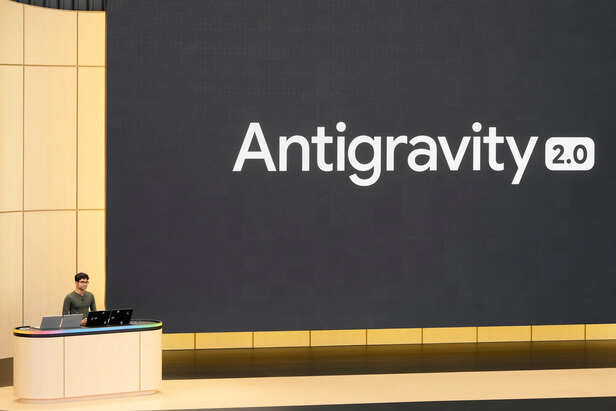
On paper, Google looked stronger than ever. Search advertising remained profitable, cloud revenue was accelerating, and its AI investments were attracting global attention. The company even held a cloud contract backlog worth hundreds of billions of dollars. Normally, such numbers would excite investors. Instead, the market reacted negatively. This reveals a new reality in the technology sector. Today, investors are no longer judging companies only by profits. They are evaluating whether those companies can dominate the next generation of artificial intelligence before competitors take the lead.
![The Departure That Changed Investor Sentiment]()
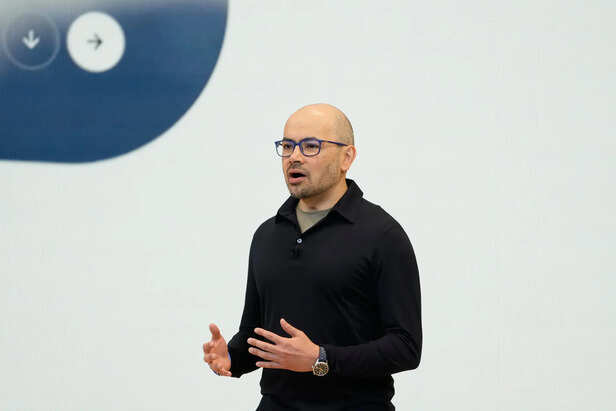
The first major shock came when AI pioneer Noam Shazeer announced his departure for OpenAI. Days later, Nobel Prize-winning researcher John Jumper revealed he was leaving DeepMind for Anthropic. These were not ordinary resignations. Both individuals played critical roles in groundbreaking AI innovations. Their exits raised uncomfortable questions. If some of the world's brightest AI minds were leaving Google, what did they see that investors didn't? The departures quickly became a symbol of growing competition in the race for artificial intelligence leadership.
The situation became more dramatic when Microsoft CEO Satya Nadella suggested that AI models could eventually become commodities. In simple terms, he implied that today's advanced AI systems may become easier to replicate and less valuable over time. Investors immediately understood the message. If AI becomes a commodity, companies spending hundreds of billions of dollars could struggle to justify those investments. Nadella's remarks amplified existing fears and reinforced concerns that Google might be spending heavily without guaranteed long-term rewards.
Revenue growth was not the problem. Cash flow was. Alphabet has dramatically increased spending on AI infrastructure, data centers, chips, and cloud expansion. While these investments could pay off in the future, investors are becoming impatient. Free cash flow has declined significantly while capital expenditures continue to rise. This creates uncertainty. Markets generally reward growth, but only when there is confidence that future profits will justify today's spending. Right now, some investors are questioning whether Google's AI spending spree will generate sufficient returns.
For years, Google was considered the undisputed leader in artificial intelligence research. Today, the landscape looks very different. OpenAI's ChatGPT dominates consumer AI adoption, while Anthropic continues gaining momentum among businesses and developers. AI-powered coding tools and digital assistants are becoming highly competitive markets. Google's Gemini remains a major player, but investors want proof that future versions can outperform rivals. The battle is no longer about who started first. It is about who can innovate fastest and capture the largest share of the future AI economy.
One of the most fascinating aspects of this story is Google's relationship with Anthropic. Google is both an investor and a cloud infrastructure provider for the AI startup. While this partnership generates revenue and strengthens Google's cloud business, it also creates dependency. If Anthropic succeeds, Google benefits. However, if Anthropic slows down or shifts direction, future growth projections could be affected. Investors are increasingly wary of situations where a large portion of future revenue depends on the success of a handful of AI companies.
Google's search business remains enormously powerful, and its cloud division continues to grow rapidly. Yet the market is asking a different question. Can Google maintain leadership in a world where AI assistants, chatbots, and autonomous agents may replace traditional search habits? The company still has world-class engineers, massive resources, and global reach. However, investors want evidence that Google can convert those advantages into products that define the next decade. The answer to that question will shape Google's future far more than any single earnings report.
Unlock insightful tips and inspiration on personal growth, productivity, and well-being. Stay motivated and updated with the latest at My Life XP.
1. Why did Google's stock fall so sharply?
Investors reacted to the departure of key AI researchers, concerns about rising AI spending, increasing competition from OpenAI and Anthropic, and uncertainty about future returns on AI investments.
2. How much market value did Alphabet lose?
Alphabet's market value fell by approximately $250 billion to $270 billion during the sell-off.
3. Did Google's business performance weaken?
No. Google's revenue, cloud business, and AI investments continue to grow. The concerns were mainly about future competitiveness and profitability.
4. Who are Noam Shazeer and John Jumper?
Noam Shazeer is a leading AI researcher and co-creator of Transformer technology, while John Jumper is a Nobel Prize-winning scientist known for developing AlphaFold.
5. Why were their departures important?
Both researchers are considered among the most influential figures in artificial intelligence. Their exits raised concerns about Google's ability to retain top AI talent
When Success Wasn't Enough
A Strong Business Faces Unexpected Pressure
On paper, Google looked stronger than ever. Search advertising remained profitable, cloud revenue was accelerating, and its AI investments were attracting global attention. The company even held a cloud contract backlog worth hundreds of billions of dollars. Normally, such numbers would excite investors. Instead, the market reacted negatively. This reveals a new reality in the technology sector. Today, investors are no longer judging companies only by profits. They are evaluating whether those companies can dominate the next generation of artificial intelligence before competitors take the lead.
The AI Talent Exodus That Shocked Wall Street
The Departure That Changed Investor Sentiment
The first major shock came when AI pioneer Noam Shazeer announced his departure for OpenAI. Days later, Nobel Prize-winning researcher John Jumper revealed he was leaving DeepMind for Anthropic. These were not ordinary resignations. Both individuals played critical roles in groundbreaking AI innovations. Their exits raised uncomfortable questions. If some of the world's brightest AI minds were leaving Google, what did they see that investors didn't? The departures quickly became a symbol of growing competition in the race for artificial intelligence leadership.
Nadella's Comments Added Fuel to the Fire
The Real Fear Was Never About Revenue
OpenAI and Anthropic Are No Longer Small Rivals
The Anthropic Connection Creates New Risks
The Bigger Question Facing Google
Unlock insightful tips and inspiration on personal growth, productivity, and well-being. Stay motivated and updated with the latest at My Life XP.
Frequently Asked Questions (FAQs)
Investors reacted to the departure of key AI researchers, concerns about rising AI spending, increasing competition from OpenAI and Anthropic, and uncertainty about future returns on AI investments.
2. How much market value did Alphabet lose?
Alphabet's market value fell by approximately $250 billion to $270 billion during the sell-off.
3. Did Google's business performance weaken?
No. Google's revenue, cloud business, and AI investments continue to grow. The concerns were mainly about future competitiveness and profitability.
4. Who are Noam Shazeer and John Jumper?
Noam Shazeer is a leading AI researcher and co-creator of Transformer technology, while John Jumper is a Nobel Prize-winning scientist known for developing AlphaFold.
5. Why were their departures important?
Both researchers are considered among the most influential figures in artificial intelligence. Their exits raised concerns about Google's ability to retain top AI talent