Why Hanuman Changed His Form Three Times
Noopur Kumari | Jun 23, 2026, 07:00 IST
Hanuman Ji was not great because he was powerful. He was great because he knew exactly when to be gentle, when to be fierce, and when to dedicate everything to a higher purpose. His three forms Subtle, Terrifying, and Mighty represent three qualities every successful person needs in modern life. Understanding these forms can completely change how we handle relationships, challenges, careers, and personal growth.

Most people recite the Hanuman Chalisa regularly. They know the words. They know the rhythm. But very few stop to ask a fascinating question: Why did Hanuman Ji take three completely different forms? In just four lines of the Hanuman Chalisa, Goswami Tulsidas reveals one of the most powerful life lessons hidden in the entire scripture. These verses are not simply describing Hanuman's strength. They are revealing a timeless secret about leadership, success, courage, and wisdom.
![Hanuman Ji take three completely different forms]()
"सूक्ष्म रूप धरि सियहिं दिखावा" reveals a remarkable truth. When Hanuman Ji entered Lanka, he did not display his immense strength. Instead, he became tiny and gentle before approaching Sita Ji. He understood that a frightened and grieving person needed comfort, not power. This teaches a lesson that many people miss today. Not every situation requires dominance. Sometimes the strongest person in the room is the one who listens quietly, speaks kindly, and makes others feel safe. Real strength often appears in the form of compassion rather than force.
![Hanuman Meeting Sita Ji In Ashok Vatika]()
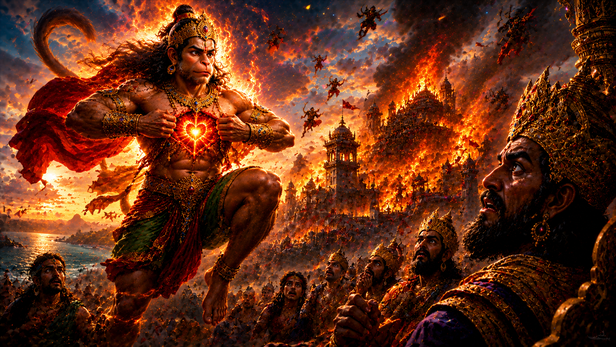
Once Hanuman Ji had delivered Lord Ram's message, the situation changed completely. Now evil had to be challenged. He expanded into a fierce form and set Lanka ablaze. This was not anger. It was justice. Hanuman teaches us that there are moments when silence becomes weakness. Corruption, injustice, and wrongdoing cannot always be solved through gentle words. Sometimes courage demands bold action. Just as modern whistleblowers expose corruption despite risks, Hanuman demonstrated that protecting truth occasionally requires a fearless stand against powerful forces.
"भीम रूप धरि असुर संहारे" highlights another side of Hanuman Ji. Whenever evil threatened righteousness, he transformed into a powerful warrior. His strength was never used for personal gain. It was always used to protect others. In today's world, this spirit lives in soldiers defending their nation, police officers protecting citizens, and individuals standing up against injustice. The lesson is clear. True courage is not about appearing strong. It is about using strength responsibly whenever goodness and truth are under attack.
The most important line comes last: "रामचंद्र के काज संवारे।" Every form Hanuman took served one purpose fulfilling Lord Ram's mission. He never changed forms for fame, recognition, or personal glory. His adaptability was guided by purpose. This is what separates extraordinary people from ordinary ones. They do not chase power for its own sake. They use their talents, skills, and strengths to serve something bigger than themselves. Purpose gave meaning to Hanuman's strength, and purpose gives meaning to our own efforts as well.
Many people believe leadership means always being tough. Others believe it means always being kind. Hanuman Ji shows that both views are incomplete. Great leadership requires adaptability. A leader must know when to encourage, when to confront, and when to protect. The same person who comforts a struggling friend may need to make a difficult decision at work. Success often depends not on having one fixed personality but on responding wisely to each situation. Hanuman's forms reveal the art of balanced leadership.
Imagine a manager helping a stressed employee through a difficult time. That is the subtle form. Imagine the same manager standing firmly against unethical practices. That is the fierce form. Imagine them protecting their team during a crisis. That is the mighty form. We encounter these situations every day. Relationships, careers, and personal growth all require flexibility. Hanuman's example reminds us that success comes from knowing which version of ourselves a situation truly needs rather than reacting impulsively.
The hidden secret behind these verses is surprisingly simple. Hanuman Ji's greatness did not come from his physical strength alone. It came from his wisdom to use the right strength at the right time. He could become humble without feeling weak and powerful without becoming arrogant. That balance is what made him extraordinary. In a world that often pushes people toward extremes, Hanuman teaches the value of flexibility, self-control, and purpose-driven action. His message remains just as relevant today as it was thousands of years ago.
Unlock insightful tips and inspiration on personal growth, productivity, and well-being. Stay motivated and updated with the latest at My Life XP.
1. What is the meaning of "सूक्ष्म रूप धरि सियहिं दिखावा"?
This verse means that Hanuman Ji assumed a tiny and gentle form to appear before Sita Ji in Ashok Vatika. He did this to avoid frightening her and to gain her trust while delivering Lord Ram's message.
2. Why did Hanuman Ji take a small form before Sita Ji?
Sita Ji was living in deep sorrow and surrounded by Ravana's guards. Hanuman Ji understood that appearing in his giant form could frighten her. His small form reflected humility, wisdom, and sensitivity.
3. What does "बिकट रूप धरि लंक जरावा" mean?
The verse means that Hanuman Ji assumed a fierce and gigantic form to burn Lanka after meeting Sita Ji. It symbolizes courage, strength, and taking bold action against injustice.
4. Why did Hanuman Ji burn Lanka?
Hanuman Ji burned Lanka after Ravana's forces insulted and punished him by setting his tail on fire. Using that very fire, he demonstrated the power of righteousness and sent a strong warning to Ravana's kingdom.
5. What is the meaning of "भीम रूप धरि असुर संहारे"?
This verse means that Hanuman Ji took a mighty and terrifying form to destroy demons and evil forces. It highlights his role as a protector of dharma and defender of righteousness.
The Form That Comforted A Broken Heart
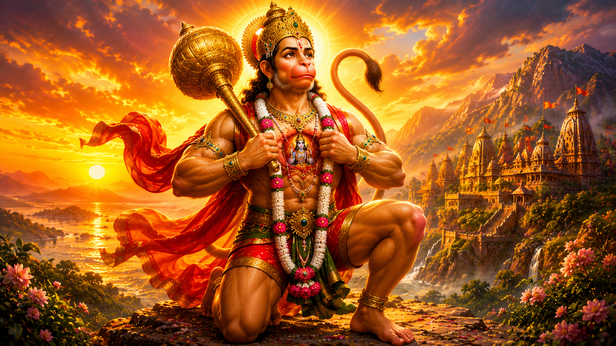
Hanuman Ji take three completely different forms
"सूक्ष्म रूप धरि सियहिं दिखावा" reveals a remarkable truth. When Hanuman Ji entered Lanka, he did not display his immense strength. Instead, he became tiny and gentle before approaching Sita Ji. He understood that a frightened and grieving person needed comfort, not power. This teaches a lesson that many people miss today. Not every situation requires dominance. Sometimes the strongest person in the room is the one who listens quietly, speaks kindly, and makes others feel safe. Real strength often appears in the form of compassion rather than force.
When Kindness Is Not Enough
Hanuman Meeting Sita Ji In Ashok Vatika
Once Hanuman Ji had delivered Lord Ram's message, the situation changed completely. Now evil had to be challenged. He expanded into a fierce form and set Lanka ablaze. This was not anger. It was justice. Hanuman teaches us that there are moments when silence becomes weakness. Corruption, injustice, and wrongdoing cannot always be solved through gentle words. Sometimes courage demands bold action. Just as modern whistleblowers expose corruption despite risks, Hanuman demonstrated that protecting truth occasionally requires a fearless stand against powerful forces.
The Warrior Who Destroyed Evil
The Purpose Behind Every Transformation
The Leadership Lesson Hidden In These Verses
How These Teachings Apply To Modern Life
The Timeless Secret Of Hanuman's Greatness
Unlock insightful tips and inspiration on personal growth, productivity, and well-being. Stay motivated and updated with the latest at My Life XP.
Frequently Asked Questions (FAQs)
This verse means that Hanuman Ji assumed a tiny and gentle form to appear before Sita Ji in Ashok Vatika. He did this to avoid frightening her and to gain her trust while delivering Lord Ram's message.
2. Why did Hanuman Ji take a small form before Sita Ji?
Sita Ji was living in deep sorrow and surrounded by Ravana's guards. Hanuman Ji understood that appearing in his giant form could frighten her. His small form reflected humility, wisdom, and sensitivity.
3. What does "बिकट रूप धरि लंक जरावा" mean?
The verse means that Hanuman Ji assumed a fierce and gigantic form to burn Lanka after meeting Sita Ji. It symbolizes courage, strength, and taking bold action against injustice.
4. Why did Hanuman Ji burn Lanka?
Hanuman Ji burned Lanka after Ravana's forces insulted and punished him by setting his tail on fire. Using that very fire, he demonstrated the power of righteousness and sent a strong warning to Ravana's kingdom.
5. What is the meaning of "भीम रूप धरि असुर संहारे"?
This verse means that Hanuman Ji took a mighty and terrifying form to destroy demons and evil forces. It highlights his role as a protector of dharma and defender of righteousness.