Temples have always been an integral part of India's cultural identity, and the country's spiritual tradition dates back thousands of years. While many temples are renowned for their religious significance and stunning architecture, some are particularly notable for the strange tales associated with them. These temples have captivated both believers and scholars with tales of buried treasures, mysterious sounds, and disappearing lamps. These mysteries have grown to be an integral part of their identity throughout time, attracting tourists from all around the world who are eager to see these phenomena for themselves. These temples are some of the most fascinating examples when mystery, mythology, and history come together.
The Hanging Pillar of Lepakshi Temple
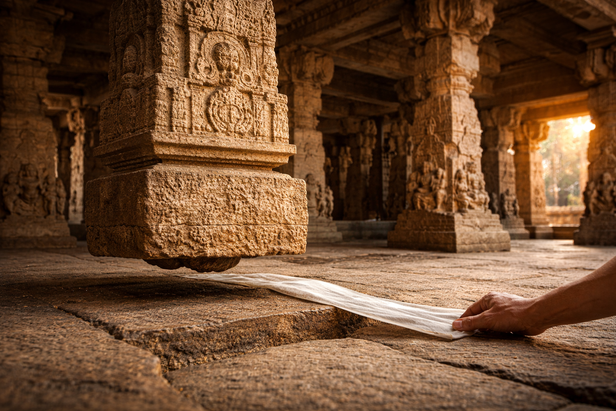
![Hanging Pillar Mystery]()
Hanging Pillar Mystery
Image credit : CHATGPT(AI)
Lepakshi Temple in Andhra Pradesh is well known for a pillar that seems to remain in space without any visible support. The temple was constructed in the sixteenth century under the Vijayanagara Empire and is devoted to Lord Shiva. One of its many well carved pillars is particularly noticeable since it does not completely touch the ground.
For years, engineers and historians have been puzzled by the hanging pillar. Some people think that ancient architects purposefully created it to show off their sophisticated knowledge of structural engineering and balancing. Others contend that structural alterations may have caused it to change over time. The pillar continues to be one of India's most talked about architectural mysteries, regardless of the explanation.
The Disappearing Lamp of Jwala Ji Temple
![Eternal Flame of Jwala Ji]()
Eternal Flame of Jwala Ji
Image credit : CHATGPT(AI)
People have been fascinated by a phenomenon at the Jwala Ji Temple in Himachal Pradesh for generations. The temple worships natural flames that arise from the earth rather than a conventional idol. Devotees say that these flames, which burn constantly, symbolize the deity Jwala Devi.
The fact that these flames have been burning for hundreds of years without any obvious fuel source is what makes the temple mysterious. Although the precise geological mechanism is yet unknown, scientists speculate that natural gas escaping from below holes may be the cause of the fires. The idea that the temple is a sacred location where spiritual power is reflected in nature has been reinforced by the flames' resolve.
The Sound of the Sea at Jagannath Temple
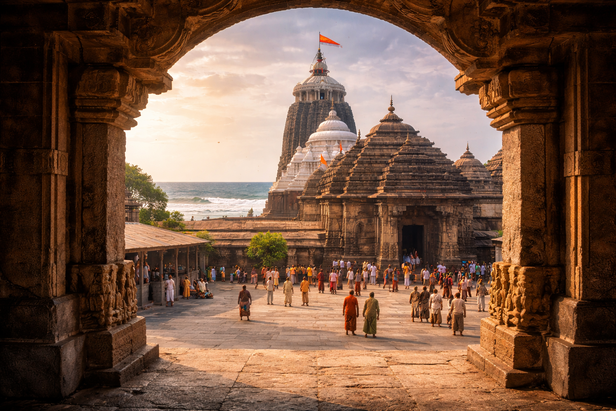
![Jagannath Temple Mystery]()
Jagannath Temple Mystery
Image credit : CHATGPT(AI)
One of India's most significant pilgrimage sites is the Jagannath Temple in Puri, Odisha. Beyond its theological significance, though, the temple is connected to an odd senses phenomena. It is reported that the sound of the next sea stops abruptly as soon as guests enter the main entrance of the temple. Because Puri is near the Bay of Bengal, it is easy to hear the sound of the waves outside the temple complex. However, the sound seems to vanish within the temple grounds. According to some experts, this might be because of the way the temple's walls and gates are built, which could obstruct or reroute sound waves. Many believers view it as a mysterious feature of the shrine, despite potential scientific answers.
The Floating Stone of Rameswaram Temple
The epic Ramayana is closely associated with Tamil Nadu's Rameswaram Temple. The story goes that Lord Rama used floating stones to construct a bridge to Lanka. It is still said that stones on display in and around the temple float in water. Visitors are frequently shown these stones as proof of the old tale. According to some scientists, the porous structure of some clay stone varieties allows them to float. Nonetheless, researchers and devotees are nonetheless fascinated by the connection between these stones and the legendary Ram Setu
The Immortal Flame of Kamakhya Temple
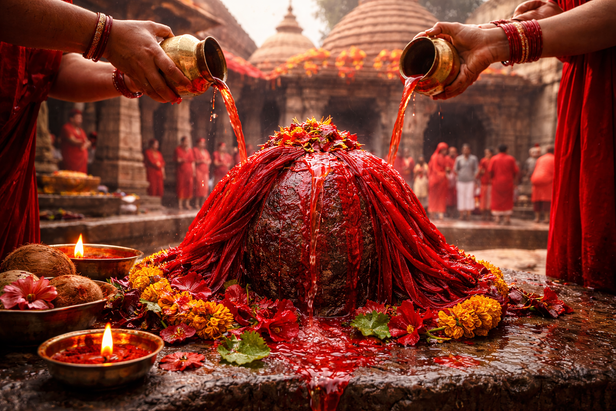
![Kamakhya Temple Ritual]()
Kamakhya Temple Ritual
Image credit : CHATGPT(AI)
One of India's most important Shakti temples is Kamakhya Temple in Assam. It is connected to a number of distinctive customs and myths. The Ambubachi festival, which closes the temple for a few days every year, is one of the most fascinating features. The temple is closed during this period, and it is believed that the goddess goes through a natural cycle. Devotees are given a unique crimson cloth that is revered when it reopens. Historians and anthropologists are nevertheless fascinated by the origins and interpretations of this centuries old ritual, despite its rich symbolic meaning in religious tradition.
The Hidden Treasure of Padmanabhaswamy Temple
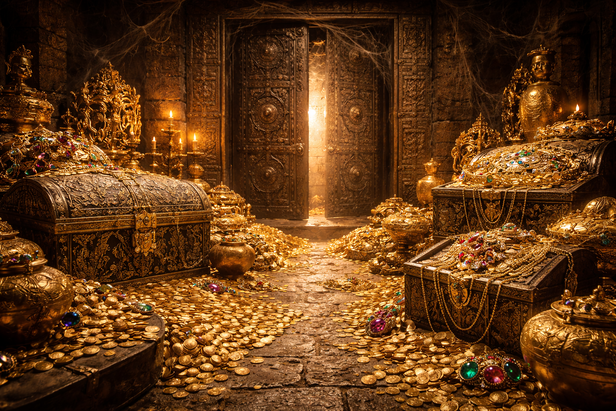
![Padmanabhaswamy Temple Treasure]()
Padmanabhaswamy Temple Treasure
Image credit : CHATGPT(AI)
Following the opening of multiple underground chambers in recent years, Padmanabhaswamy Temple in Kerala attracted international attention. Massive amounts of gold, diamonds, and ancient relics that have been kept for ages can be found in the Lord Vishnu temple. Due to customs and cautions about potential threats, one specific vault, known as Vault B, has not been opened. According to legend, unlocking the vault without following the correct procedures could result in bad luck. The sealed room has become one of the most talked about mysteries connected to Indian temples, regardless of whether these tales are symbolic or based on old traditions.
The Magnetic Mystery of Konark Sun Temple
Known for its enormous chariot shaped building devoted to the Sun God, the Konark Sun Temple in Odisha was constructed in the thirteenth century. According to historical reports, there used to be a strong magnetic element at the top of the temple. Legend has it that this magnet was powerful enough to interfere with passing ships' navigation systems in the Bay of Bengal. According to some accounts, the magnet held specific iron parts in place, which helped balance the temple's structure. Even though historians disagree on the veracity of these claims the tale nevertheless contributes to the temple's aura.
India's ancient temples are more than just houses of worship. They are living documents of human curiosity, mythology, architecture, and history. The mysteries surrounding these temples frequently represent a synthesis of centuries old cultural beliefs and scientific possibilities. These tales continue to draw interest from scholars and believers alike, regardless of how they are explained by geology, engineering, or tradition. In addition to providing a spiritual experience, visiting these temples offers a chance to learn more about the fascinating confluence of mystery and faith that characterizes much of India's ancient past.
Unlock insightful tips and inspiration on personal growth, productivity, and well-being. Stay motivated and updated with the latest at
My Life XP.