Kokum does not travel well in its raw form. The fruit, a deep purple, slightly waxy sphere about the size of a golf ball, is astringent and barely edible off the tree. What makes it useful is what happens to it after harvest, in the months when the Konkan coast is still damp and the air carries salt from the Arabian Sea.
The Fruit and the Coast That Made It
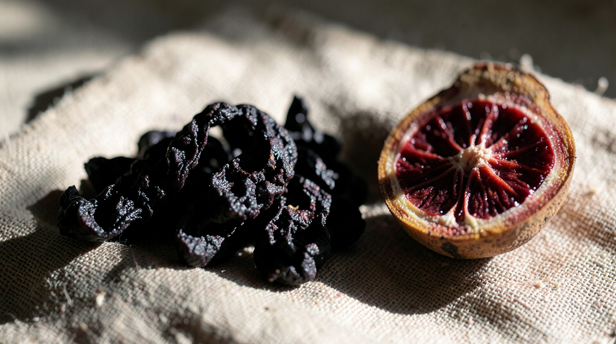
![Dried Kokum Rinds and Fruit]()
Dried Kokum Rinds and Fruit
Image credit : MyLifeXP Bureau
The Konkan strip runs between the Western Ghats and the sea, roughly from Dahanu in the north to Karwar in the south, covering parts of Maharashtra, Goa, and coastal Karnataka. It is not a dry coast. Monsoon here is not a season so much as a condition, high humidity persists long after the rains, the soil stays laterite-red and wet, and the canopy of the Ghats traps heat against the shore. The kokum tree, Garcinia indica, grows in this exact climate. It is not cultivated in the way a paddy field is cultivated. It grows in homestead groves, in the shade of larger trees, in the kind of semi-wild arrangement that does not require irrigation because the coast provides it.
The fruit ripens between March and May, just before the monsoon arrives. This timing is not coincidental. The brief dry window before the rains is the only period when the rind can be dried without moulding. Families who keep kokum trees have worked this calendar for as long as the practice exists.
What Drying Actually Does
The fruit is halved and the pulp scraped out. The pulp goes into one process, pressed for its fat, which becomes kokum butter, used in confectionery and on cracked skin, and the rind goes into another. The hollow rind halves are laid out on woven mats or strung on threads and left to dry in the shade. Shade, not sun. Direct sun bleaches the anthocyanins that give kokum its characteristic dark colour and its tartness. Shade drying preserves both.
Over several days, the rind shrinks and darkens further, its surface turning from purple to a near-black, slightly sticky curl. It concentrates as it dries: the hydroxycitric acid that gives kokum its sourness becomes more intense, and the colour compounds that will later bleed into water become more concentrated. A dried kokum rind is, in effect, a portable unit of acidity and colour, shelf-stable for months, light to store, and ready to dissolve the moment it meets liquid.
Some families salt the rind during drying, which extends shelf life and adds a layer of flavour. Others steep the fresh rind in its own juice between drying sessions, coating it repeatedly to deepen the colour and the sourness. The specific method varies by village and by household, and older women in kokum-growing families tend to be the keepers of which method their tree responds to best.
Why a Cooling Drink Came From a Hot and Humid Coast
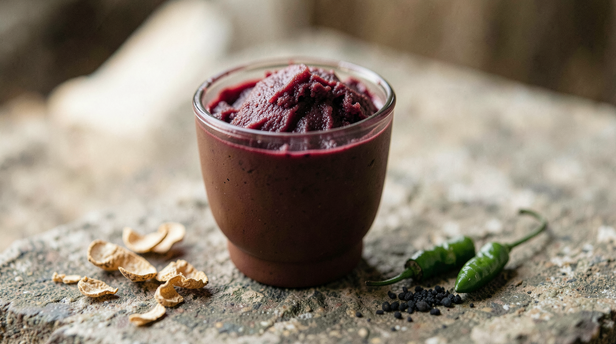
![Kokum Sherbet Refreshment]()
Kokum Sherbet Refreshment
Image credit : MyLifeXP Bureau
The drink, kokum sherbet, or sol kadhi when made with coconut milk, is not an obvious idea. The coast is not dry-heat country. A cooling drink makes intuitive sense in Rajasthan; it is less immediately obvious why a fishing community on a humid shore would develop one. The answer is physiological rather than climatic.
The Konkan diet is built on fish, rice, and coconut. It is oily, rich, and digestion-heavy. Kokum's hydroxycitric acid acts on the gut in a way that the region's cooks understood empirically long before the mechanism had a name: it stimulates digestive enzyme activity and reduces the heaviness that follows a large fish curry. Sol kadhi, kokum steeped in water, strained, mixed with coconut milk and seasoned with salt, cumin, and green chilli, is drunk at the end of a meal, not before it. It is a digestive, not an aperitif. The cooling effect is partly the coconut milk, partly the contrast with the hot food that preceded it, and partly the slight astringency of the kokum itself, which closes the palate in the way a good finish does.
The sherbet version, kokum dissolved in cold water with sugar and sometimes a pinch of black salt, serves a different function. It is drunk through the day in summer, before the monsoon arrives, when the coast is at its most airless. The sourness triggers saliva and, with it, a drop in perceived body temperature. It is the same principle behind tamarind drinks and raw mango panna in other parts of India: acidity as a tool against heat, rather than sweetness.
The Drying Season as a Household Event
In Konkan homes that still keep kokum trees, the drying season in April and May is a shared activity. The harvest comes in over a few weeks, and the processing, halving, scraping, laying out, turning, storing, happens in the courtyard or on the veranda. Children learn to recognise the smell of kokum fat, which is faintly chocolatey and slightly waxy, distinct from the sour smell of the rind. The dried rinds are packed into glass jars or cloth bags and stored in a cool part of the house. A family with a productive tree may dry enough to last through the monsoon and into the following year.
The commercial version of this process exists, dried kokum is sold in markets across the coast and, increasingly, in cities, but the commercial product is often sun-dried and salted uniformly, which produces a different result: less colour, more salt, a flatter sourness. Cooks who have grown up with shade-dried kokum from a known tree tend to use less of it, because the concentration is higher and the flavour more layered.
Where the Ingredient Sits Now
Kokum has moved beyond the Konkan kitchen in recent decades, appearing in restaurant menus in Mumbai and Pune as a regional identity marker, and in packaged form in health-food sections of urban supermarkets. This movement has changed how it is described, often as a superfood, often with claims attached, in ways that have little to do with how the coast has used it. On the coast itself, it is not a health ingredient. It is a flavour, a digestive, and a seasonal product that requires a specific climate, a specific tree, and a specific two-month window to exist at all. The drink is cooling because the coast is hot. The rind is dried because the monsoon is coming. The process is what it is because the geography left no other option.
Unlock insightful tips and inspiration on personal growth, productivity, and well-being. Stay motivated and updated with the latest at
My Life XP.