The Sahara is not a place that preserves things gently. It swings between extremes, heat that cracks stone by day, cold that contracts it by night, wind that carries fine silica like a slow blade. And yet in Chinguetti, a town that sits on the edge of the Mauritanian desert and was once one of the most important gathering points on the trans-Saharan pilgrimage route, manuscripts written in the twelfth and thirteenth centuries are still legible. The ink has not faded into the page. The vellum has not crumbled. The binding, in some cases, still holds. The question of how is not mysterious once you look at the actual conditions, it turns out the Sahara is a more complicated environment than its reputation suggests, and the people of Chinguetti understood it in ways that mattered.
The Sahara Is Dry, and Dryness Is a Preservative
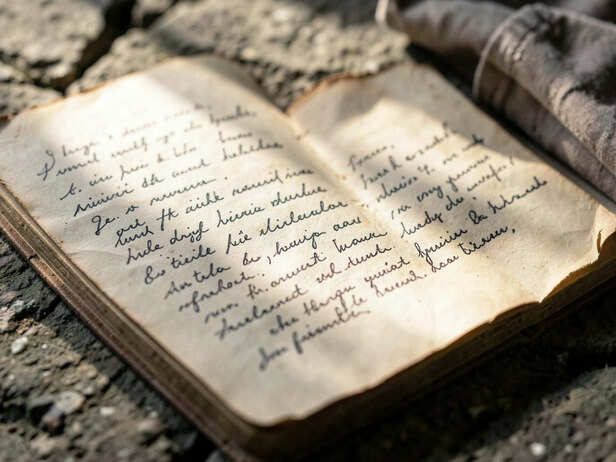
![Aged Manuscript in Morning Light]()
Aged Manuscript in Morning Light
Image credit : MyLifeXP Bureau
Moisture is the primary enemy of organic material. It allows mould to grow, bacteria to multiply, and the fibres of parchment or paper to swell and break down. A manuscript left in a humid climate without intervention begins to deteriorate within decades. The Sahara's humidity sits, in most seasons, below twenty percent. In the driest months it drops further. At that level, the biological processes that destroy organic material slow to a near halt. There is not enough water in the air to sustain them. This is the same principle that preserves bodies in Egyptian sand, grain in ancient silos, and leather in desert caves, not a special property of those objects, but a property of the air around them. Chinguetti's manuscripts benefited from a climate that was, in the most literal sense, inhospitable to decay.
The Buildings Did Something the Open Desert Could Not
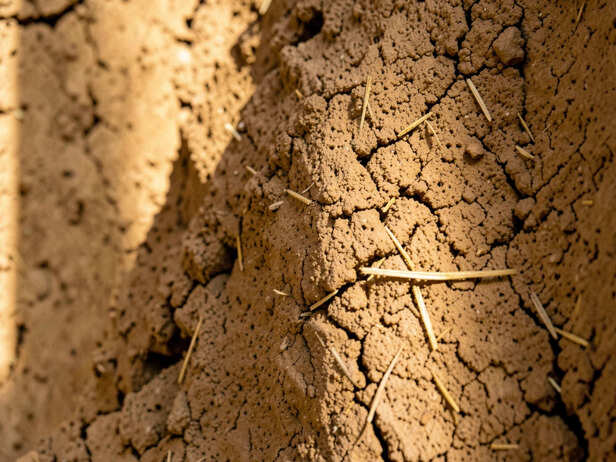
The libraries of Chinguetti are not grand institutions. They are rooms inside family homes, thick-walled, low-ceilinged, built from the local stone and mud-brick that the town has always used. That construction is not incidental. Mud-brick walls of the depth common in Saharan vernacular architecture act as thermal mass: they absorb heat during the day and release it slowly at night, which means the interior temperature fluctuates far less than the air outside. A room that stays relatively stable, cooler in the day, warmer at night than the desert around it, creates less mechanical stress on the materials stored inside it. Parchment and vellum expand and contract with temperature and humidity. Every cycle of expansion and contraction is a small act of damage. Fewer cycles means slower deterioration. The families who kept these manuscripts were not thinking in terms of conservation science, but the architecture they lived in was doing conservation work.
The Families Understood What the Manuscripts Needed
![Desert Wall Texture]()
Desert Wall Texture
Image credit : MyLifeXP Bureau
Chinguetti's manuscript collections are not the holdings of a single institution. They belong to perhaps thirty families, some of whom have been custodians of the same volumes for fifteen or twenty generations. The knowledge of how to care for them passed down the same way the manuscripts themselves did, as an inheritance, not a profession. That knowledge included practical things: wrapping volumes in cloth to protect them from dust and direct light, storing them flat rather than upright to reduce stress on the binding, keeping them away from the ground where moisture could wick up through the floor. Some families used leather pouches. Some used wooden chests. None of these choices was arbitrary. They reflected an accumulated understanding of what the desert did to paper and how to slow it. The manuscripts survived in part because they were never treated as objects in a collection. They were treated as something a family was responsible for.
The Ink and the Parchment Were Made for Endurance
The manuscripts at Chinguetti were not written on the same materials as a European medieval book. Most use parchment made from goat or camel skin, which is denser and less porous than the sheepskin vellum common in European scriptoria. The inks are predominantly carbon-based, made from soot, gum arabic, and water, rather than iron gall inks, which are acidic and eat into the surface they are written on over time. Carbon ink sits on top of the parchment rather than bonding chemically with it, which means it does not trigger the slow internal destruction that iron gall inks are known for. The scribes who made these books were working within a tradition that had developed in a desert climate over centuries, and the materials they chose reflected that. The manuscript that lasts six hundred years in Saharan air was built, from the first page, to do exactly that.
What the Saharan Wind Took and What It Left
Not everything survived. Chinguetti's scholars estimate that the town once held many more manuscripts than it does today, some lost to families that scattered, some to floods in the rare years when rain came hard, some to the slow migration of people away from a town that the encroaching dunes made harder to live in. The wind took buildings. It buried streets. The manuscripts that remain are the ones that happened to be in the right room, in the right chest, in the care of a family that stayed. Survival at this scale is never purely a story of design. It is also a story of contingency, of which rooms the dunes did not reach, which families did not move, which floods stopped at the threshold rather than crossing it. The chemistry and the architecture and the inherited knowledge all mattered. So did chance.
What Chinguetti demonstrates is that preservation is rarely a single decision. It is the accumulation of many small ones, the thickness of a wall, the choice of a binding material, the habit of wrapping a volume before putting it away, made over generations by people who understood that what they were holding was not theirs to keep permanently, only to pass on. The manuscripts lasted because the desert was dry, the buildings were sensible, the materials were well chosen, and the families did not stop paying attention. Remove any one of those and the ink fades, the page crumbles, and six hundred years of thought disappears into the sand.
Unlock insightful tips and inspiration on personal growth, productivity, and well-being. Stay motivated and updated with the latest at
My Life XP.