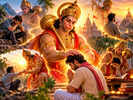
Known as Dev Deepawali, this spectacular occasion transforms Varanasi into a sea of light on Kartik Purnima, the full-moon night of the Hindu month of Kartik. But why does the holy city celebrate another festival of lights when Diwali has already passed? The answer lies in an ancient story of Lord Shiva, three powerful demons, and a victory believed to have brought relief to the heavens.
What Is Dev Deepawali, and Why Is It Celebrated?
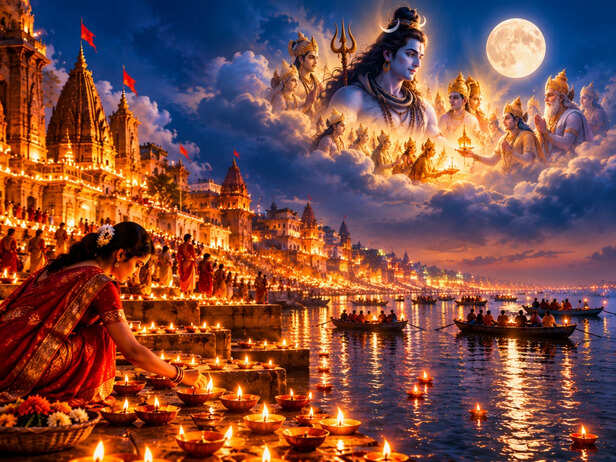
![Dev Deepawali: The Gods’ Festival of Lights]()
Dev Deepawali: The Gods’ Festival of Lights
Image credit : ChatGPT
Dev Deepawali literally means “Diwali of the Gods.” While the main Diwali festival is observed on Amavasya, or the new-moon night, Dev Deepawali falls on Kartik Purnima, approximately 15 days later.
In Varanasi, also known as Kashi or Banaras, the festival is celebrated with extraordinary devotion. The ghats along the Ganga are decorated with rows of diyas, temples are illuminated, and the riverfront becomes a breathtaking sight for residents and visitors.The celebration is closely associated with the belief that the gods descend to Earth to bathe in the sacred River Ganga on Kartik Purnima. Lighting lamps along the river is seen as an act of devotion and an offering of light to the divine.However, there is another important reason behind the festival—one that takes us into the world of Hindu mythology.
The Forgotten Mythological Story Behind Dev Deepawali
According to a widely told Hindu tradition, Dev Deepawali commemorates Lord Shiva’s victory over Tripurasura, a powerful demon associated with three formidable cities.The story begins with three asura brothers: Tarakaksha, Kamalaksha and Vidyunmali. Through intense penance, they obtained a boon from Lord Brahma that allowed them to build three magnificent cities. These cities were made of gold, silver and iron and became known collectively as Tripura.
The three cities were exceptionally powerful. As the brothers grew increasingly arrogant, their strength became a threat to the gods and the cosmic order. The devas, unable to overcome them, eventually turned to Lord Shiva for help.Shiva agreed to confront the powerful asuras. According to the traditional account, the three cities could be destroyed only when they aligned at a particular moment. When that rare opportunity arrived, Shiva released a single divine arrow and destroyed Tripura.The victory earned Shiva the name Tripurantaka, meaning the destroyer of Tripura.In the tradition associated with Dev Deepawali, the gods celebrated this victory by lighting lamps. The festival is therefore linked not only to the triumph of good over evil but also to the restoration of balance when arrogance and power threaten the world.Although the details of this legend vary across Hindu texts and regional traditions, the association between Kartik Purnima, Shiva and Tripurasura remains an important part of Dev Deepawali's religious significance.
Why Does Varanasi Celebrate It 15 Days After Diwali?
The difference between Diwali and Dev Deepawali is not simply a matter of celebrating the same festival twice. The two occasions have distinct religious associations and fall on different dates in the Hindu lunar calendar.Diwali is observed on Amavasya, the new-moon night of Kartik. It is associated with several traditions, including the return of Lord Rama to Ayodhya in many parts of India and the worship of Goddess Lakshmi.
Dev Deepawali, on the other hand, takes place on Kartik Purnima, the full-moon day. In Varanasi, its religious significance is linked to Lord Shiva's victory over Tripurasura and the belief that the gods celebrate by lighting lamps.The full moon gives the occasion a distinctive atmosphere. Its light reflects on the Ganga, while thousands of diyas illuminate the steps leading down to the water. The result is a celebration that feels different from the darkness and candlelit sparkle associated with the main Diwali night.For visitors, this is one of the most fascinating aspects of Varanasi: the city offers another opportunity to experience the festival of lights, but with its own mythology, rituals and atmosphere.
What Makes Dev Deepawali in Varanasi So Special?
Dev Deepawali is celebrated in different ways across India, but Varanasi has become particularly famous for its riverfront celebrations.
1. Thousands of Diyas Light Up the Ghats
As evening approaches, earthen lamps are placed along the steps of the ghats, in temples and near the river. Their reflections create long trails of light across the Ganga.The scale of the illumination is what makes the celebration so memorable. The ancient stone steps, sacred shrines and flowing river combine to create a scene that is both visually striking and deeply spiritual.
2. The Ganga Aarti Becomes a Powerful Experience
The Ganga Aarti is one of Varanasi's most recognisable religious ceremonies. Priests perform coordinated rituals with large lamps, incense and devotional chants as visitors gather along the river.During Dev Deepawali, the festive atmosphere makes the riverfront especially captivating. The sound of bells, the glow of flames and the sight of devotees offering prayers create an experience that goes beyond sightseeing.
3. The River Becomes the Centre of the Celebration
A boat ride on the Ganga can offer a different perspective on the illuminated ghats. From the water, visitors can see the long stretch of lamps, temples and buildings glowing along the riverbank.Boat rides can be in high demand on the festival evening, so it is wise to arrange one through a reputable local operator and confirm the price and duration in advance.
4. Ancient Beliefs Meet Living Traditions
Dev Deepawali is not merely a grand display of lights. For many devotees, it is an occasion for prayer, bathing in the sacred river, remembering religious stories and expressing gratitude.This connection between mythology and everyday faith is what gives the festival its lasting meaning. The lights may attract visitors, but the traditions behind them are what make the celebration special.
When Is the Best Time to Visit Varanasi for Dev Deepawali?
Dev Deepawali is celebrated on Kartik Purnima, so its date changes each year according to the Hindu lunar calendar. Travellers should check the date announced for their intended year before planning a trip.It is best to arrive in Varanasi at least a day or two before the festival. This allows time to explore the city's temples, narrow lanes, markets and historic riverfront without trying to fit everything into one crowded evening.
The main celebrations generally take place around sunset and after dark, when the diyas are illuminated. However, the ghats can become extremely crowded, and traffic restrictions may be introduced. Visitors should check local advisories, allow extra travel time and follow instructions from authorities.Comfortable walking shoes, drinking water and a plan for returning to your accommodation can make the evening easier. If you are travelling with children or older family members, choose a viewing point that is accessible and avoid pushing into densely packed areas.
Places to Explore During Your Dev Deepawali Trip
If you are travelling to Varanasi for the festival, consider extending your visit to explore the city beyond the illuminated ghats.
- Dashashwamedh Ghat: A well-known location for experiencing the Ganga Aarti and the energy of the riverfront.
- Assi Ghat: A popular place to experience Varanasi's riverside atmosphere and morning rituals.
- Kashi Vishwanath Temple: One of the most important Shiva temples in India. Check current entry rules and arrangements before visiting.
- The old city lanes: Explore traditional shops, local food and the historic neighbourhoods surrounding the ghats, while being mindful of crowds.
- A boat ride on the Ganga: An opportunity to view the riverfront from the water, subject to safety conditions and local arrangements.
Plan your route carefully, as some areas may have restricted access during the festival. If you want to attend the main celebrations, avoid scheduling too many other activities for the same evening.
Is Dev Deepawali the Same as Diwali?
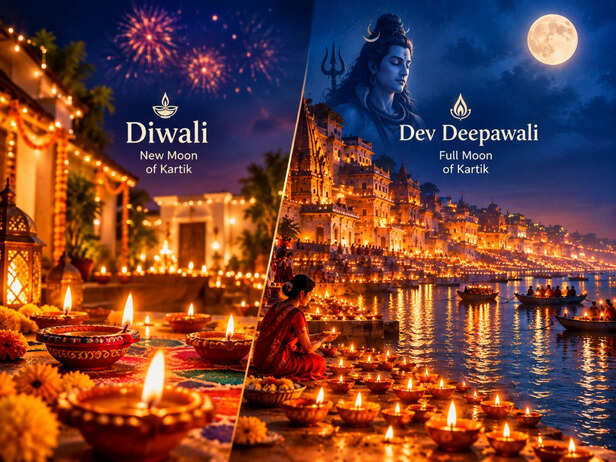
![Diwali and Dev Deepawali Glow]()
Diwali and Dev Deepawali Glow
No. Although both festivals celebrate light and carry deep religious meaning, they are observed on different dates and are associated with different traditions.
Diwali falls on the new-moon night of Kartik, while Dev Deepawali is celebrated on the full-moon night roughly 15 days later. The stories and rituals connected with each festival can also vary by region.In Varanasi, Dev Deepawali is especially associated with Lord Shiva's victory over Tripurasura and the belief that the gods celebrate the occasion by lighting lamps. This is why the festival is often described as the Diwali of the gods.The distinction makes the celebration particularly interesting for travellers who want to understand the cultural and spiritual traditions behind India's festivals rather than simply witness their spectacle.
A Night When Varanasi Seems to Belong to the Gods
Varanasi's Dev Deepawali is a reminder that India's festivals often hold more than one story. What appears to be another night of lamps is also a celebration shaped by ancient mythology, devotion to the Ganga and the enduring symbolism of light overcoming darkness.
As thousands of diyas illuminate the ghats, the city seems to connect the present with a much older world of gods, legends and sacred traditions. For visitors, it offers a rare chance to see Varanasi at its most luminous. For devotees, the lights carry a deeper meaning: a celebration of faith, divine victory and the hope that light will continue to guide the way.
Unlock insightful tips and inspiration on personal growth, productivity, and well-being. Stay motivated and updated with the latest at My Life XP.