7 Kada Mistakes That May Block Positive Energy
Noopur Kumari | Jun 12, 2026, 16:00 IST
Most people think a brass or steel kada is just a sacred accessory. However, ancient traditions suggest that the benefits associated with these metals depend on proper purification, mantra chanting, and mindful wearing. A small mistake before wearing a kada could mean missing out on the positive energy and symbolism it represents. Here's what traditional beliefs say every wearer should know.

For generations, people across India have worn brass, copper, and steel kadas as symbols of faith, protection, and strength. But according to traditional beliefs, simply wearing a kada may not be enough. Many people spend years wearing one without realizing that a few overlooked mistakes could reduce its spiritual significance. What if the real power of a kada doesn't come from the metal itself but from the way it is prepared, energized, and worn? The answer may surprise you.
Why A Kada Is More Than Just A Metal
![Sacred Brass and Steel Kada on Prayer Cloth]()
A kada has long been viewed as more than a piece of jewelry. In Indian traditions, it symbolizes protection, discipline, confidence, and spiritual awareness. Different metals are believed to carry different energies. Brass is traditionally linked with wisdom and prosperity, while steel is associated with strength and resilience. Because of these beliefs, many people wear kadas as spiritual reminders rather than fashion accessories. However, traditions suggest that the intention behind wearing the kada is just as important as the metal itself. Without proper preparation, its symbolic value may remain incomplete.
![Panchamrit Preparation for Sacred Ritual]()
One of the most common mistakes is wearing a newly purchased kada straight away. Traditional practices recommend cleansing and consecrating the metal before putting it on. The belief is that a kada may carry old energies from handling, manufacturing, or storage. While modern perspectives may view this symbolically, spiritual traditions emphasize purification as a way of beginning with positive intentions. Skipping this step is considered one of the biggest reasons people feel disconnected from the spiritual meaning of their bracelet.
According to traditional beliefs, purification removes previous influences and prepares the kada for spiritual use. Panchamrit a mixture of milk, yogurt, honey, ghee, and holy water is often used during this process. After cleansing, the bracelet is washed and placed on a clean cloth before prayers are offered. Whether viewed spiritually or symbolically, this ritual creates a sense of respect and mindfulness. Many believers feel that the process strengthens their connection with the purpose for which they are wearing the kada.
Many people focus only on the metal but overlook the importance of mantra chanting. Traditional astrology teaches that different metals are connected to different planetary influences. Because of this, specific mantras are recited while holding the bracelet. The chanting process is believed to fill the kada with positive spiritual energy. More importantly, it helps the wearer focus on a clear intention. In many traditions, this moment of devotion is considered the step that transforms an ordinary bracelet into a meaningful spiritual symbol.
Ancient customs place great importance on timing. Brass kadas are traditionally consecrated on Thursdays, while steel or Sarbaloh kadas are often associated with Tuesdays or Saturdays. These days are linked with specific spiritual energies and deities. Whether one follows astrology closely or not, choosing a dedicated day creates a stronger sense of commitment and intention. Many devotees believe that beginning a spiritual practice at the right moment helps establish a more meaningful connection with their beliefs.
Traditional beliefs often recommend wearing a consecrated brass or copper kada on the right hand. The right side is symbolically associated with action, strength, and positive expression. While customs can vary across communities, the emphasis remains the same: wear the kada with respect and awareness. A bracelet is not believed to create change on its own. Instead, it serves as a constant reminder of discipline, faith, and personal growth throughout everyday life.
The most powerful truth about a kada has little to do with metal and everything to do with mindset. Rituals, prayers, and purification practices encourage mindfulness, gratitude, and discipline. The bracelet becomes a daily reminder of the values a person wishes to follow. Whether worn for religious faith, astrological beliefs, or personal inspiration, its greatest strength may lie in the intention behind it. That is why traditions place so much importance on preparing and wearing it with care.
Unlock insightful tips and inspiration on personal growth, productivity, and well-being. Stay motivated and updated with the latest at My Life XP.
1. Why is a brass or steel kada considered important in traditional beliefs?
A brass or steel kada is often viewed as more than just an ornament. Traditional beliefs associate it with protection, discipline, positive energy, confidence, and spiritual awareness. Many people wear it as a reminder of their faith and values.
2. Is it necessary to purify a kada before wearing it?
According to traditional customs, purifying a kada before wearing it is considered important. The ritual is believed to cleanse previous energies and prepare the bracelet for spiritual use. Many people use Panchamrit, Ganga water, or clean water during this process.
3. What is Panchamrit, and why is it used?
Panchamrit is a sacred mixture made from milk, yogurt, honey, ghee, and holy water. It is traditionally used in Hindu rituals to purify and consecrate religious objects, including kadas.
4. Which day is considered auspicious for wearing a brass kada?
Thursday is traditionally considered the most favorable day for consecrating and wearing a brass kada because brass is associated with Jupiter (Guru), the planet linked to wisdom, prosperity, and spiritual growth.
5. Which day is best for wearing a steel or Sarbaloh kada?
Tuesday and Saturday are generally regarded as auspicious days for wearing a steel or Sarbaloh kada. These days are associated with Lord Hanuman and Shani Dev in traditional beliefs.
Why A Kada Is More Than Just A Metal Bracelet
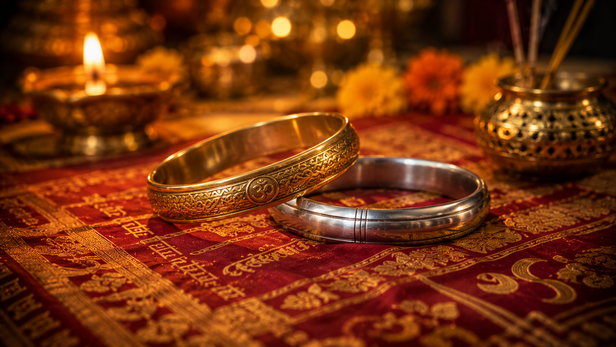
Sacred Brass and Steel Kada on Prayer Cloth
A kada has long been viewed as more than a piece of jewelry. In Indian traditions, it symbolizes protection, discipline, confidence, and spiritual awareness. Different metals are believed to carry different energies. Brass is traditionally linked with wisdom and prosperity, while steel is associated with strength and resilience. Because of these beliefs, many people wear kadas as spiritual reminders rather than fashion accessories. However, traditions suggest that the intention behind wearing the kada is just as important as the metal itself. Without proper preparation, its symbolic value may remain incomplete.
The Common Mistake Most People Never Realize

Panchamrit Preparation for Sacred Ritual
One of the most common mistakes is wearing a newly purchased kada straight away. Traditional practices recommend cleansing and consecrating the metal before putting it on. The belief is that a kada may carry old energies from handling, manufacturing, or storage. While modern perspectives may view this symbolically, spiritual traditions emphasize purification as a way of beginning with positive intentions. Skipping this step is considered one of the biggest reasons people feel disconnected from the spiritual meaning of their bracelet.
Why Purification Is Considered So Important
The Surprising Role Of Mantras In Consecration
Choosing The Right Day Can Make A Difference
The Hidden Importance Of Wearing It Correctly
The Powerful Lesson Behind The Kada Tradition
Unlock insightful tips and inspiration on personal growth, productivity, and well-being. Stay motivated and updated with the latest at My Life XP.
Frequently Asked Questions (FAQs)
A brass or steel kada is often viewed as more than just an ornament. Traditional beliefs associate it with protection, discipline, positive energy, confidence, and spiritual awareness. Many people wear it as a reminder of their faith and values.
2. Is it necessary to purify a kada before wearing it?
According to traditional customs, purifying a kada before wearing it is considered important. The ritual is believed to cleanse previous energies and prepare the bracelet for spiritual use. Many people use Panchamrit, Ganga water, or clean water during this process.
3. What is Panchamrit, and why is it used?
Panchamrit is a sacred mixture made from milk, yogurt, honey, ghee, and holy water. It is traditionally used in Hindu rituals to purify and consecrate religious objects, including kadas.
4. Which day is considered auspicious for wearing a brass kada?
Thursday is traditionally considered the most favorable day for consecrating and wearing a brass kada because brass is associated with Jupiter (Guru), the planet linked to wisdom, prosperity, and spiritual growth.
5. Which day is best for wearing a steel or Sarbaloh kada?
Tuesday and Saturday are generally regarded as auspicious days for wearing a steel or Sarbaloh kada. These days are associated with Lord Hanuman and Shani Dev in traditional beliefs.