Two signs, one planet. In both Vedic and Western astrology, Mercury rules Virgo and Gemini, a pairing that puzzles people at first, because the two signs are described so differently. Gemini is associated with quick conversation, scattered curiosity, and a mind that moves between ideas the way a hummingbird moves between flowers. Virgo is associated with precision, quiet observation, and a preference for getting things right over getting things said. The same planet is said to govern both. That apparent contradiction is where the most interesting part of the tradition lives.
How Virgo Is Described in the Tradition
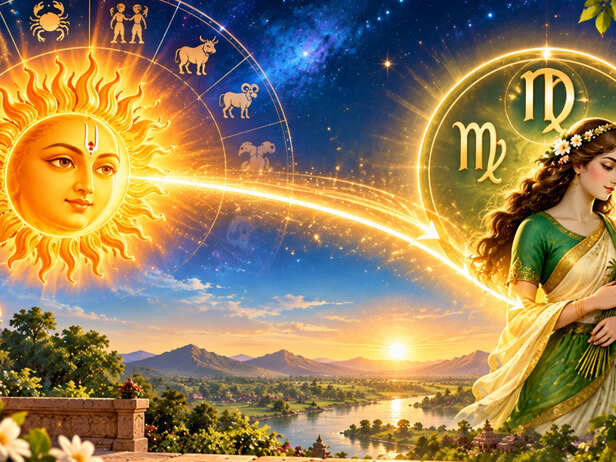
![Sun Transit in Virgo for Virgo Zodiac Sign]()
Sun Transit in Virgo for Virgo Zodiac Sign
Virgo is the sixth sign in the zodiac, an earth sign, and is typically described in astrology as analytical, methodical, and attentive to detail in a way most other signs are not. Where some signs are said to see the broad shape of a situation, Virgo is described as the one who notices what is slightly off about it, the number that doesn't add up, the word that was chosen carelessly, the step in the process that everyone else skipped over.
The tradition also describes Virgo as modest and often self-critical. Unlike Leo, which precedes it in the zodiac and is associated with display and self-expression, Virgo is said to turn that same sharp attention inward. The result, in many astrological descriptions, is a sign that holds itself to a high standard and can find it difficult to extend to itself the patience it readily gives to a problem it is trying to solve.
Virgo's symbol is the maiden, often depicted carrying a sheaf of wheat, and the tradition reads this as a sign connected to work, craft, service, and the satisfaction of doing something well. It is not a sign associated with grand gestures. It is associated with the quiet competence of someone who has thought the thing through before attempting it.
What Mercury Actually Represents in Astrology
In Vedic astrology, Mercury, called Budha, is the planet of intellect, communication, discrimination, and the capacity to analyse and categorise. It is associated with language, mathematics, logic, trade, and the kind of mind that can take a complex thing apart to understand how it works.
What matters here is that Mercury is not simply the planet of talking. It is the planet of the mind's relationship to information, how information is received, processed, sorted, and expressed. That is a broader function than conversation alone, and it is why the tradition can place two apparently different signs under its domain without contradiction.
In Vedic astrology specifically, Mercury is considered to be in its own sign when it occupies either Gemini or Virgo, which means it is thought to function with particular clarity in both. But the tradition also holds that Mercury is exalted, at its strongest, in Virgo alone. That distinction matters: the planet is at home in both signs, but it reaches its highest expression in Virgo.
Why Gemini and Virgo Express Mercury Differently
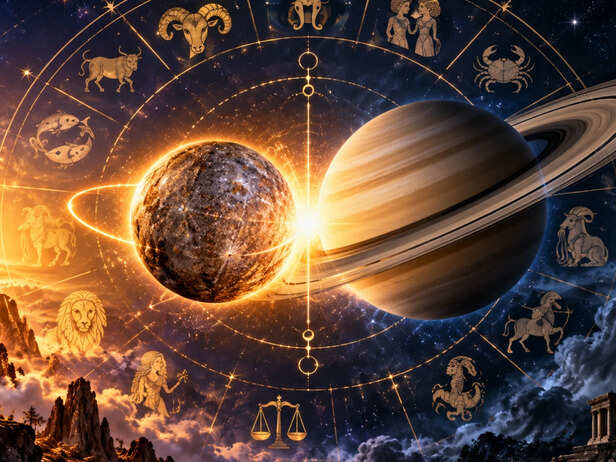
![Mercury Meets Saturn in the Zodiac]()
Mercury Meets Saturn in the Zodiac
Image credit : CHATGPT(AI)
The difference between how the two signs carry Mercury comes down to element and mode. Gemini is an air sign and a mutable sign. Air in astrology is associated with thought and communication as movement, ideas flowing outward, connecting with other ideas, being shared. Mutable means adaptable, changeable, responsive to what is in front of it. Gemini's Mercury is therefore described as expressive, sociable, and quick: a mind that generates and broadcasts.
Virgo is an earth sign and also a mutable sign. Earth is associated with the material, the practical, the concrete. Where air takes an idea and sends it outward, earth takes an idea and asks what it is for and whether it actually holds up. Virgo's Mercury is therefore described as inward-facing and discriminating: a mind that receives, tests, refines, and applies. The same planetary energy moves through a different medium and produces a different quality.
A useful way the tradition frames it: Gemini is Mercury thinking aloud. Virgo is Mercury thinking carefully before it speaks, and sometimes deciding not to speak at all, because the thought is not yet precise enough.
The Exaltation Question: Why Virgo Specifically
In Vedic astrology, each planet has one sign where it is said to be exalted, where its qualities are expressed most fully and without distortion. For Mercury, that sign is Virgo. The reasoning the tradition offers is that Virgo's earth quality and its orientation toward precision, analysis, and practical application give Mercury's intellectual energy exactly the conditions it needs to produce something useful rather than merely interesting.
A mind that is quick but untethered can produce brilliant fragments. A mind that is quick and also disciplined, that can take an insight and work it into something accurate and applicable, is described in the tradition as Mercury functioning at its best. Virgo provides the discipline. Gemini provides the speed. The tradition values both, but it considers the earth-grounded, refined expression the higher one.
This is also why Virgo is associated in many astrological texts with editing, craftsmanship, medicine, and any field where the difference between almost right and exactly right matters. Mercury's discrimination, operating through earth, becomes a capacity for mastery rather than facility.
What This Means for How Virgo Is Understood
Reading Virgo through its Mercury rulership makes several of its described traits more legible. The attention to detail is not perfectionism for its own sake, it is Mercury's analytical function expressed through an earth sign that cares about whether something actually works. The self-criticism is Mercury's discrimination turned inward, applying the same standard to the self that it applies to everything else. The modesty is partly a Mercurian preference for accuracy over impression: a Virgo-described person, in the tradition's framing, would rather understate than overstate, because overstating is imprecise.
The shared rulership with Gemini is not an inconsistency in the system. It is the tradition's way of saying that intelligence takes more than one form, that the same planet can produce a mind that loves conversation and a mind that loves precision, depending on the element it moves through. Mercury in air talks. Mercury in earth builds.
Understanding that distinction is the key to understanding why Virgo is described the way it is, not as a quieter version of Gemini, but as a different expression of the same underlying capacity, one that the tradition considers, in its own terms, the more refined of the two.
Unlock insightful tips and inspiration on personal growth, productivity, and well-being. Stay motivated and updated with the latest at
My Life XP.