Most people blame the helmet for bad hair days and leave it there. The more useful question is what the scalp experiences during the hours the helmet sits on it, because the problems that show up later, the flaking, the itch, the thinning along the hairline, trace back to specific changes in that enclosed environment rather than to the helmet as an object.
Heat and Humidity Build Up Faster Than You Expect
![Liner and Water Still Life]()
Liner and Water Still Life
Image credit : AI
A helmet fits close to the skull and traps the heat the scalp radiates naturally. The scalp is one of the warmest surfaces on the body because it sits directly over bone with a dense blood supply beneath. Under a helmet, that warmth has nowhere to go. Temperature at the scalp surface rises within the first few minutes and stays elevated for as long as the helmet is worn.
Humidity follows. Sweat glands on the scalp are active even at rest; under heat and physical effort they become considerably more so. Because air cannot circulate freely inside a closed shell, the moisture those glands produce stays close to the skin. The result is a warm, wet environment that persists for the entire ride or commute.
That combination, sustained heat, high moisture, limited airflow, is exactly the condition in which the fungi naturally present on every scalp multiply more readily. Malassezia, the genus most associated with dandruff and seborrhoeic dermatitis, is lipid-dependent and thrives when sebum production is elevated by heat. This is not a contamination problem. The organism is already there. The helmet changes the conditions that keep it in check.
Friction Runs Along Predictable Lines
A helmet that fits correctly still moves slightly with head turns, braking, and road vibration. That movement creates low-grade friction against the scalp at the contact points, typically the forehead, the temples, and the crown where padding sits. Over a single journey the friction is minor. Over weeks of daily wear along the same lines, the story changes.
Repeated mechanical stress on hair follicles at a fixed point is one of the recognised contributors to traction-related hair changes. The follicle is not damaged in the way a chemical burn damages it; the stress is physical and cumulative. Hair along the hairline and at the temples, already the most common sites for early thinning in people who wear tight styles regularly, takes the same repeated load from a helmet that a tight braid or a pulled ponytail delivers.
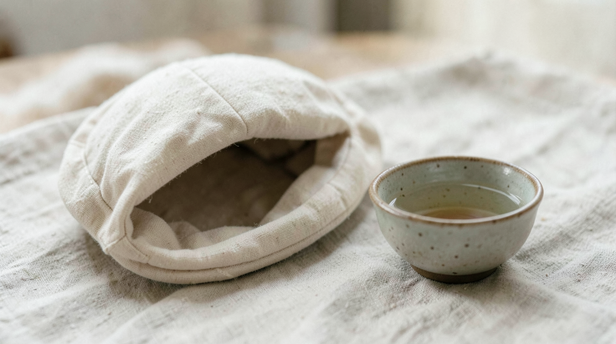
The padding material matters here. A foam liner that has absorbed sweat over months and dried repeatedly becomes stiffer and less yielding than it was new. It also carries residue that can irritate the follicle opening. Washing or replacing the liner is a mechanical fix for a mechanical problem, and it is the one most people skip.
Sebum Distribution Changes When You Can't Touch Your Hair
![Wood Comb and Oil]()
Wood Comb and Oil
Image credit : AI
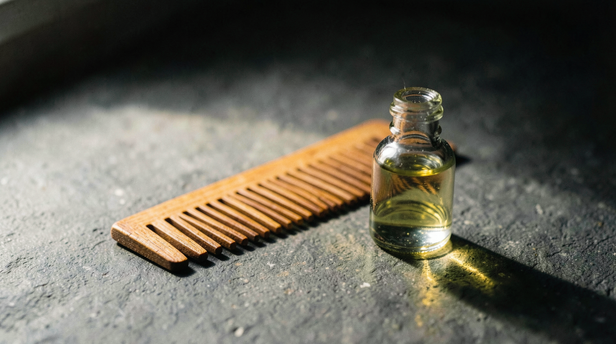
The scalp produces sebum continuously. Under normal conditions, brushing and touching distribute it along the hair shaft, which is why hair that has not been washed for a day or two can look better than hair washed that morning, the sebum has had time to spread. Under a helmet, that distribution does not happen. Sebum pools at the roots while the shaft stays dry.
When the helmet comes off, the root looks greasy and the length looks dull. This is not excess oil production; it is uneven distribution. Washing every day in response to the greasiness removes the sebum entirely, which prompts the scalp to produce more to compensate, and the cycle tightens.
A scalp that is consistently over-washed in response to helmet greasiness often becomes more reactive over time, more prone to itch, more sensitive to products, quicker to flake. The fix is not less washing but different timing: washing after the helmet comes off rather than before it goes on, so the scalp is not sealed into a clean but sebum-depleted state for hours.
The Hairline Takes a Specific Kind of Pressure
Where the front edge of a helmet rests is rarely where the manufacturer intends it to rest after the first month. Helmets compress slightly with use, straps loosen and get readjusted, and most people unconsciously push the helmet back a centimetre or two for comfort. That shifts the pressure point from the mid-forehead to the hairline itself.
The skin at the hairline is thinner than the skin on the scalp proper, and the follicles there sit shallower. Sustained pressure at this point, not pain, just weight and contact, reduces local circulation modestly. Circulation to the follicle is not the whole story of hair growth, but it is part of it, and a follicle that is repeatedly compressed and then released is working in a different mechanical environment than one that is not.
People who notice their hairline receding or becoming uneven after years of regular helmet use are not imagining a connection. The mechanism is real, even if the degree varies considerably between individuals depending on follicle sensitivity, helmet fit, and duration of wear.
What Changes the Environment Without Removing the Helmet
The helmet is not optional for most people who wear one. The question is which parts of the environment it creates are modifiable.
Airflow is the most tractable. A helmet with ventilation channels, even partial ones, reduces heat accumulation significantly compared to a fully closed shell. For urban commuting where speed is lower, an open-face or half-shell design changes the thermal picture entirely. Where safety requirements demand a full-face helmet, a moisture-wicking liner that is washed regularly does more than a foam one that is not.
Friction is reduced by fit. A helmet that is the correct size for the head, fitted properly rather than pushed back for comfort, distributes contact across a larger area rather than concentrating it at a few points. A thin cotton or bamboo liner worn under the helmet reduces direct contact between padding and scalp.
Sebum distribution is addressed after the fact. A gentle rinse or dry shampoo at the roots after removing the helmet, rather than a full wash, lets the scalp rebalance without stripping it. Full washing is saved for the end of the day when the helmet is off for good.
The liner is the most overlooked variable. A helmet liner that is washed every week or two removes the accumulated sweat residue, skin cells, and product buildup that would otherwise sit against the scalp on every subsequent journey. It is a small maintenance habit with a disproportionate effect on the scalp environment.
The helmet does not damage the scalp. It creates a set of conditions, heat, humidity, friction, pressure, disrupted sebum movement, that the scalp was not designed to sit in for extended periods. Each of those conditions has a specific, addressable cause, and addressing them one at a time is more effective than treating the symptoms after they appear.
Unlock insightful tips and inspiration on personal growth, productivity, and well-being. Stay motivated and updated with the latest at
My Life XP.