Reach for talcum powder on a humid morning and the skin feels drier almost immediately. That sensation is real, but it is not the whole story. The powder is not intercepting sweat at its source. It is managing what sweat does once it reaches the surface, and those two things are far enough apart that confusing them leads to genuinely wrong expectations.
What Talc Actually Is, and Why It Absorbs
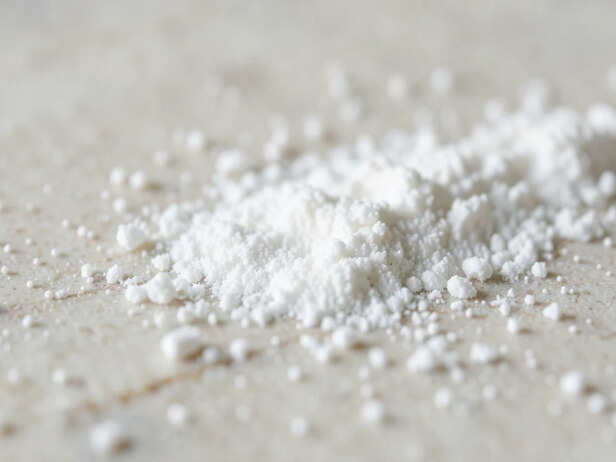
![Fine Mineral Powder Detail]()
Fine Mineral Powder Detail
Image credit : MyLifeXP Bureau
Talc is a naturally occurring mineral, a form of magnesium silicate, and it is one of the softest solid materials found in nature. Its softness is structural: the mineral is built in flat, layered sheets that slide easily over each other. When those sheets are ground into a fine powder, the result is a substance with an enormous surface area relative to its weight. That surface area is what makes it absorb. Moisture, sweat, humidity, excess sebum, is drawn into the spaces between the particles and held there. The skin beneath feels dry because the water has moved off the surface and into the powder. The sweat itself was never stopped. It arrived, and the powder took it in.
Sweat Glands Do Not Know Talc Is There
Sweating is thermoregulation. When core temperature rises, the hypothalamus signals the eccrine sweat glands, the ones distributed across most of the body, to release water and dissolved salts onto the skin surface. Evaporation carries heat away. This is involuntary, continuous at a low level even when you feel dry, and entirely unaffected by what is sitting on the skin's outer surface. Talcum powder sits above the stratum corneum, the outermost layer of dead skin cells. The eccrine glands open through pores that pass through all the skin layers below it. Powder at the surface has no way to signal the gland, block the pore in any lasting sense, or change the thermal trigger that started the process. A gland producing sweat in response to heat will keep producing it whether or not powder is present. What changes is what the sweat meets when it arrives.
The Friction Mechanism Is Separate from Absorption
![Frosted Dropper & Botanicals]()
Frosted Dropper & Botanicals
Image credit : MyLifeXP Bureau
Skin against skin, or skin against fabric, generates friction. In dry conditions, that friction is moderate. When sweat is present, the surface becomes tacky, the water creates a thin adhesive layer between surfaces that increases the drag felt with movement. Talc reduces this not primarily through absorption but through its physical structure. Those flat, sliding mineral sheets act as a lubricant between surfaces. Even before the powder has absorbed much moisture, it reduces the coefficient of friction between skin and whatever it contacts. This is why talc has been used in surgical gloves, in mechanical applications, and in textile manufacturing, the slip it provides is a property of the mineral's geometry, not just its absorbency. On skin, both effects operate together: the powder absorbs arriving sweat and simultaneously reduces the drag that sweat would have created. The result feels like dryness, but the underlying mechanism is partly lubrication.
Where This Matters in Practice
The practical consequence of understanding the distinction is knowing where powder helps and where it does not. Areas where skin surfaces press and move against each other, the inner thighs, under the arms, beneath the chest, are where friction reduction matters most. Powder applied there before activity will reduce chafing even before significant sweating begins, because the lubricating effect is immediate. In areas where the concern is visible wetness rather than friction, the face, the upper lip, the back, powder absorbs surface moisture but the sweat glands continue working at the same rate. Once the powder is saturated, the wet sensation returns. Reapplication manages this, but it does not change the underlying rate. For anyone whose sweating is heavy enough to cause real discomfort or social difficulty, powder is a surface intervention, not a solution. That is a conversation worth having with a doctor, because clinical options exist that work at the gland level rather than above it.
The Safety Question Is Worth Knowing Plainly
Talcum powder used on the body has been the subject of genuine scientific and regulatory attention, primarily around two concerns. The first is inhalation: fine mineral particles inhaled in quantity over time can irritate lung tissue, which is why powder should not be shaken into the air near an infant's face, a practice that has largely passed out of common use but is worth naming. The second concern relates to genital application and ovarian cancer risk, where research has produced conflicting findings and no settled consensus. The International Agency for Research on Cancer classifies perineal talc use as possibly carcinogenic to humans, a category that signals ongoing uncertainty rather than established harm. Cornstarch-based powders avoid both concerns and perform similarly for friction and absorption, which is why many dermatologists suggest them as an alternative where there is any uncertainty about long-term talc use. Neither option stops sweat. Both change what the skin surface feels like once sweat arrives.
The gap between what talcum powder does and what most people expect it to do is exactly the width of one misunderstood mechanism. It works on the surface, not at the source, and that is not a limitation so much as a description of what it was always doing.
Unlock insightful tips and inspiration on personal growth, productivity, and well-being. Stay motivated and updated with the latest at
My Life XP.