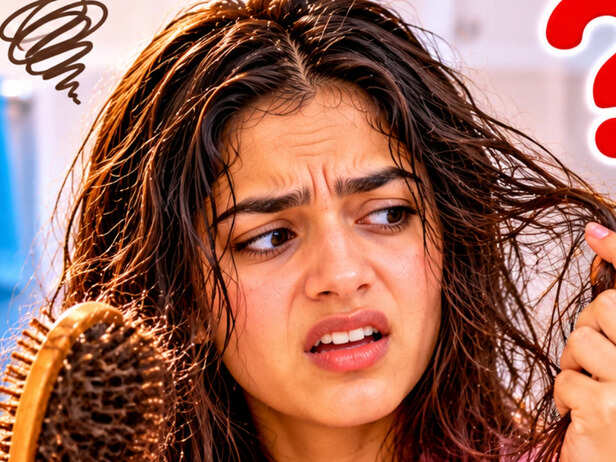
Hair strands naturally rub against one another throughout the day. However, when the outer protective layer of the hair, known as the cuticle, becomes rough or raised, individual strands can catch on each other and form knots.Washing can make this problem more noticeable. Water causes hair fibres to swell, while shampooing, rubbing and rinsing can increase friction. If your hair is already dry, damaged or prone to tangling, it may become difficult to detangle after a shower.
Here are seven common reasons behind the problem.
![Why Does Your Hair Become Tangled So Easily After Washing?]()
Why Does Your Hair Become Tangled So Easily After Washing?
Image credit : ChatGPT AI
1. Your Hair Is Naturally Dry
Dry hair is more likely to become tangled because it lacks sufficient lubrication to allow strands to slide smoothly against one another.When hair loses moisture and its natural oils, the cuticle can become rough. This increases friction and makes knots more likely, particularly around the ends.People with curly, coily or naturally thick hair may experience this more often because natural scalp oils do not travel as easily along the length of the strands.
What can help?- Use a moisturising conditioner after shampooing.
- Apply a suitable leave-in conditioner to the lengths and ends.
- Avoid washing your hair with very hot water.
- Use a lightweight hair serum if your hair needs additional smoothness.
2. You Are Using the Wrong Shampoo
Not every shampoo works for every hair type. Strong cleansing shampoos, particularly when used too frequently, may leave some hair types feeling dry and rough.If your shampoo removes too much of the hair's natural oil, strands may develop more friction and become harder to manage.This does not mean you should avoid shampoo. Your scalp needs regular cleansing, but the product should suit your scalp condition and hair type.
What can help?Choose a gentle shampoo suitable for your scalp. If your hair is dry or chemically treated, look for a formula designed for those concerns. Apply shampoo mainly to the scalp and let the lather rinse through the lengths instead of aggressively rubbing the ends.
3. You Are Skipping Conditioner
One common mistake is shampooing the hair but skipping conditioner.Shampoo helps remove oil, sweat and product buildup. Conditioner helps smooth the hair surface, reduce friction and make strands easier to comb.Without conditioner, hair may feel rough after washing, especially if it is already dry, curly, bleached or chemically treated.
What can help?Apply conditioner mainly to the middle lengths and ends after shampooing. Leave it on for the time mentioned on the product label, usually a few minutes, and rinse as directed.If your hair is particularly dry or prone to knots, a leave-in conditioner may also help.
4. Your Hair Is Damaged From Heat or Chemical Treatments
Frequent straightening, curling, blow-drying, bleaching and colouring can damage the hair cuticle.When the cuticle becomes worn or damaged, the surface of the strand becomes less smooth. This can cause neighbouring strands to catch on one another, leading to tangles and breakage.You may also notice split ends, rough texture, increased hair breakage and a lack of shine.
What can help?- Reduce frequent heat styling.
- Use a heat protectant before using hot styling tools.
- Avoid repeated chemical treatments within short intervals.
- Trim split ends when needed.
- Use conditioning treatments to improve manageability.
Conditioners can make damaged hair feel smoother, but they cannot permanently repair a severely damaged hair shaft.
5. You Are Rubbing Your Hair With a Towel
Rubbing wet hair vigorously with a regular towel can increase friction between the strands.Wet hair is more vulnerable to stretching and breakage, especially when it is already damaged. Aggressive towel drying can also make existing knots tighter.
What can help?After washing, gently squeeze excess water out of your hair using a soft cotton T-shirt or microfibre towel. Avoid twisting, pulling or rubbing your hair.Let it air-dry when possible, or use a hair dryer on a lower heat setting.
6. Your Hair Is Not Being Detangled Properly
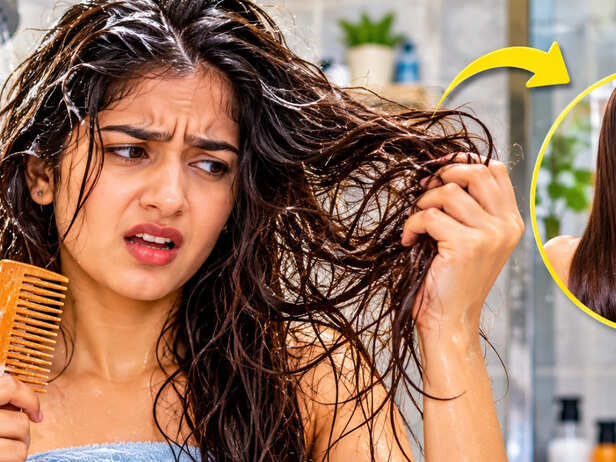
![Tangled Hair Shower Fix]()
Tangled Hair Shower Fix
Image credit : ChatGPT AI
If you shampoo hair that already has knots, the washing process can make them tighter.
Trying to pull a comb through tangled wet hair can also cause unnecessary breakage. This is particularly common with long, curly and thick hair.
What can help?- Gently detangle your hair before washing.
- Apply conditioner before trying to remove difficult knots.
- Use a wide-tooth comb or your fingers.
- Start detangling from the ends and gradually move towards the roots.
- Hold the section of hair above the knot to reduce pulling on the scalp.
Avoid forcing a comb through stubborn knots. Take your time and work through them gently.
7. Your Hair Is Experiencing Friction From Everyday Habits
Sometimes, the reason behind frequent tangling is not your shampoo or conditioner but everyday friction.Loose hair can rub against clothing, pillowcases, scarves and bags. Long hair may also become tangled when it is left open during windy weather or while sleeping.This is especially noticeable in people with long, fine or curly hair.
What can help?- Tie your hair loosely before sleeping.
- Use a soft scrunchie instead of tight elastic bands.
- Consider a satin or silk pillowcase if friction is a recurring problem.
- Protect long hair from wind and friction when outdoors.
- Avoid tight hairstyles that pull on the roots.
How to Prevent Hair From Tangling After Every Wash
A few simple changes to your hair-washing routine can make a noticeable difference:
- Detangle your hair gently before shampooing.
- Use a shampoo suited to your scalp and hair type.
- Apply conditioner after every shampoo, focusing on the lengths and ends.
- Avoid very hot water.
- Never rub wet hair aggressively with a towel.
- Use a wide-tooth comb and work from the ends upwards.
- Limit excessive heat styling and chemical treatments.
When Should You Be Concerned?
Occasional tangling is usually a hair-care issue. However, if your hair suddenly becomes difficult to manage and you also notice excessive breakage, unusual hair loss, scalp itching, scaling or redness, consider consulting a dermatologist.A professional can examine your scalp and hair to identify possible causes, including scalp conditions or damage from styling practices.
Make Your Hair Easier to Manage
Hair tangling after washing does not always mean that your hair is unhealthy. Dryness, damaged cuticles, unsuitable products and rough handling can all increase friction between strands.The solution often begins with small changes: using conditioner regularly, avoiding aggressive towel drying and detangling gently. Understanding your hair type and adjusting your routine accordingly can help reduce knots and make your hair easier to manage.
Unlock insightful tips and inspiration on personal growth, productivity, and well-being. Stay motivated and updated with the latest at
My Life XP.